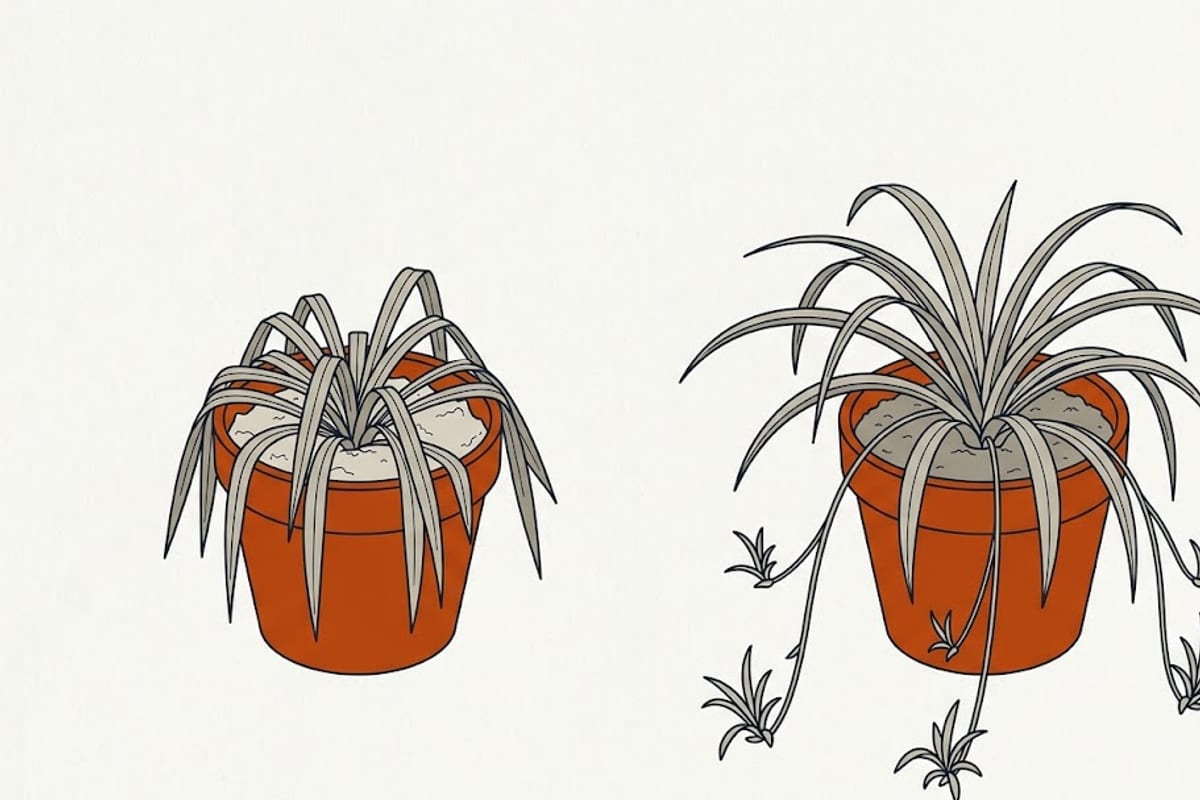
A spider plant droops for four reasons, and one non-reason. It droops limp when it is thirsty, which happens within a day or two in a pot packed solid with its thick roots. It droops limp with yellowing when its roots have rotted in soil that stays wet. It droops after a scorching afternoon in a hot window or a cold night by a door. And it droops, firmly and healthily, when a mature plant is carrying so many runners and plantlets that their weight pulls the leaves down, which is not a problem at all.
Feel the leaves: firm and arching, or limp and folded. Then lift the pot.
What the leaves and the pot tell you
| What you see | Most likely cause | Check this first |
|---|---|---|
| Leaves limp and folded, pot light, soil dry, roots pushing out of the drainage hole | Underwatering, usually root-bound | Pot weight; slide the plant out |
| Leaves limp with yellowing and soft bases, pot heavy, soil wet days after watering, sour smell | Root rot from overwatering | Root check |
| Leaves limp and bleached on the side facing a hot window, soil moist | Heat and sun | Position; afternoon sun |
| Leaves limp and darkened after a cold night or a draft | Cold | Where the plant sat |
| Leaves firm, arching low, many runners with plantlets hanging below the pot | Weight of plantlets | Leaf firmness; count the runners |
| Leaves limp within days of a move or repot, soil neither wet nor dry | Shock | Recent changes |
Underwatering and the root-bound pot
Spider plants fill a pot with thick white roots within a year or two, and once the pot is solid roots there is almost no soil left to hold water. The plant drinks the pot dry in a day, the leaves go limp and fold along their length, the tips brown, and water poured on top runs straight through and out the bottom. Roots push up through the soil surface and out of the drainage hole.
What to do: stand the pot in a basin of water for twenty to thirty minutes so the root mass soaks through, then drain. The leaves firm up within hours. Then repot into a pot one or two sizes larger with fresh mix, or divide the plant into two or three clumps, so it can hold water again. Until then it will need watering every day or two.
Root rot from overwatering
The same thick roots rot when the soil never dries. The plant droops limp, the leaves yellow and go soft at their bases, the pot is heavy and the soil wet days after watering, and it smells sour. Water does not help; it makes it worse.
What to do: slide the plant out. Healthy roots are white, fat and firm; rotted ones are brown, soft and stringy. Cut rotted roots back to firm tissue, remove the old soil, and repot in fresh airy mix in a pot with drainage, no larger than the roots need. Water once to settle the mix and then not again until the top few centimetres are dry. If most roots are gone, pot up the plantlets from the runners instead; each roots within a week or two in moist mix.
Heat and sun
In a hot south or west window in summer the leaves lose water faster than the roots can replace it, and the plant droops in the afternoon even with moist soil, with bleached or scorched patches on the leaves facing the glass. What to do: move it to bright indirect light, out of hot direct sun.
Cold
Below about 10 degrees Celsius, a night by a cold window or in a draft leaves the leaves limp and darkened. What to do: move it to a warmer spot away from cold glass. Darkened leaves are lost; the plant regrows from the centre.
The weight of plantlets
A mature spider plant in good light sends out long runners, each carrying several plantlets, and their combined weight pulls the whole crown of leaves down over the pot rim. The leaves are firm, green and healthy; they are just loaded. What to do: nothing, or cut the runners and pot the plantlets to lighten the plant and make new ones.
Shock
A spider plant moved, repotted or newly bought may droop for a few days while it settles. The soil is fine and the leaves are green. What to do: leave it in one bright spot for a week.
The root check
Spider plants slide out of their pots easily. Tip the pot, support the base of the leaves, and lift. A solid mass of fat white roots shaped like the pot means root-bound; brown, soft, stringy roots with a sour smell mean rot. This one look separates the two most common causes.
What to do today, by cause
- Underwatering: soak from below, then repot larger or divide.
- Root rot: unpot, trim rotted roots, repot in airy mix, water only when the top is dry, or pot up plantlets.
- Heat and sun: move to bright indirect light.
- Cold: move to a warmer spot.
- Plantlets: nothing, or cut and pot them.
- Shock: leave it in one spot for a week.
Frequently asked questions
Why is my spider plant drooping even though I water it?
Because the pot is so full of roots that the water runs straight through without wetting them, or because the roots have rotted from too much water. Slide the plant out: a solid white root mass means repot larger; brown soft roots mean trim and repot in fresh mix, and water less.
How long does a drooping spider plant take to recover?
A thirsty spider plant firms up within a few hours of a thorough soak. One recovering from root rot takes two to four weeks to grow new roots. One in shock from a move settles within a week.
Is it normal for spider plant leaves to droop?
Yes, the leaves arch and hang by nature, and a plant carrying many plantlets hangs lower still. The sign of a problem is limpness: leaves that fold along their length and collapse rather than arching firmly.
Should I cut the plantlets off a drooping spider plant?
If the plant is healthy and simply weighed down, cutting the runners and potting the plantlets lightens it and gives you new plants. If the plant is limp from thirst or rot, fix the roots first; the plantlets can be potted at the same time as a backup.