Wrinkled, leathery orchid leaves mean the leaf is not getting water, and on a phalaenopsis that happens for two opposite reasons: the roots are dry because the plant has not been watered enough, or the roots have rotted in wet bark and cannot take up water at all. The fixes are opposite too, soaking for the first and not soaking for the second, so the roots must be looked at before anything is done. Old bark that no longer holds water, dry hot air, and direct sun add to the thirst; a new leaf wrinkled while the older ones are firm is a separate small problem.
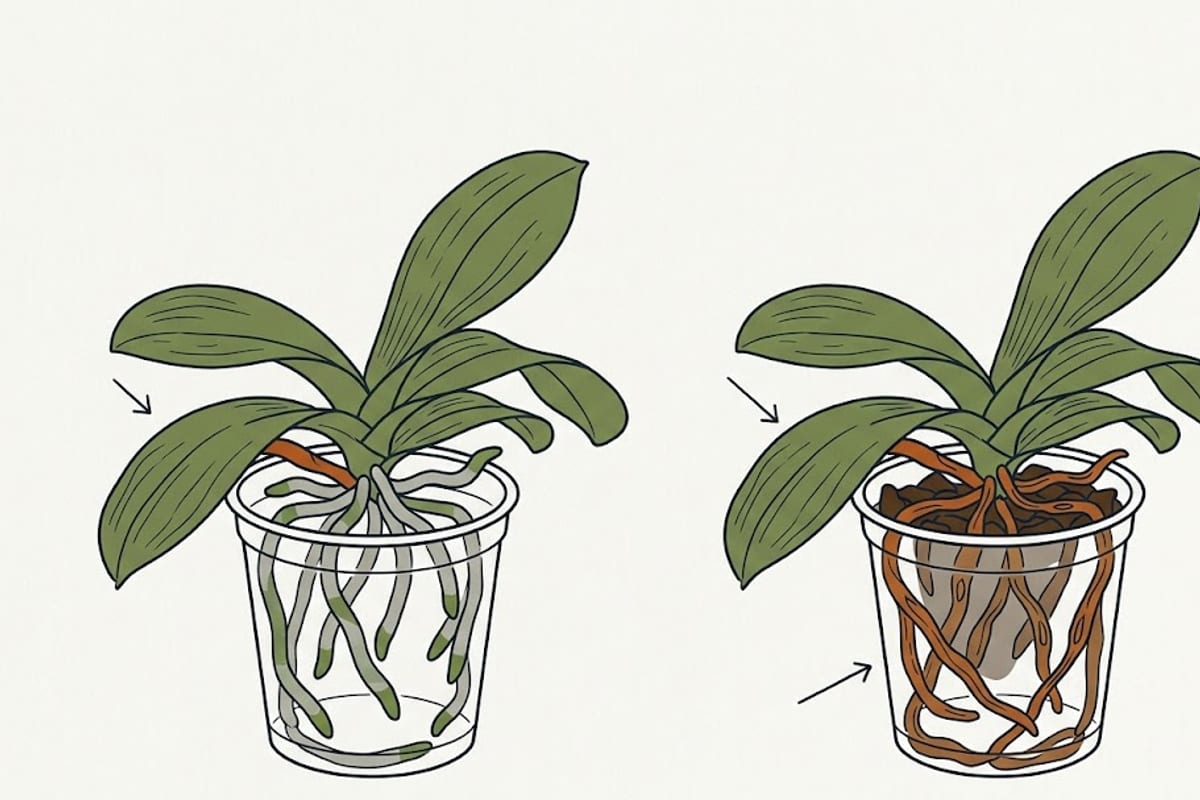
Most orchids come in clear pots. Look at the roots through the pot before touching the watering can.
Why orchid leaves wrinkle
A phalaenopsis stores water in its thick leaves, and when the roots stop supplying it the leaves lose plumpness, wrinkle lengthwise and go leathery. The roots stop supplying water when they are dry, when they are dead, or when the bark around them has broken down into a dense mush that holds no air.
Underwatering and dry roots
Roots through the pot look silver, thin and shrivelled but firm, the bark is bone dry, and the leaves are wrinkled and leathery. What to do: soak the pot in room-temperature water for fifteen to twenty minutes, drain fully, and repeat weekly until the leaves firm up, which takes several weeks. Deep wrinkles may not fully disappear; new leaves come in plump.
Overwatering and root rot
Roots through the pot look brown, flat, hollow or stringy, the bark is dark and wet, sometimes with a sour smell, and the leaves are wrinkled because the dead roots cannot take up the water around them. What to do: unpot, cut every dead root back to firm tissue with clean scissors, remove all the old bark, and repot in fresh orchid bark in a clear pot with drainage. Keep the plant warm, bright and humid, but do not soak it until new green root tips appear, which takes several weeks. Mist the surface of the bark lightly if the air is very dry.
Old bark that no longer holds water
Orchid bark breaks down over two or three years into a dense, water-logged mush that suffocates roots, and the leaves wrinkle the same way. What to do: repot in fresh bark every couple of years, or as soon as the bark looks dark, crumbly and compacted.
Heat, dry air and direct sun
Near a radiator, in very dry winter air, or in direct sun through glass, the leaves lose water faster than healthy roots can replace it and wrinkle, often with yellowing on the sun side. What to do: move the plant to bright indirect light away from heat, and raise the humidity with a pebble tray or humidifier.
Wrinkled new leaves
A new leaf that emerges wrinkled or creased while the older leaves are firm was short of water while it was forming, or the air was very dry. What to do: correct the watering and humidity; the leaf keeps its creases but the next one comes in smooth.
How to rehydrate an orchid
Stand the pot in a basin of room-temperature water so the bark is submerged, leave it for fifteen to twenty minutes, lift it out and let it drain completely so no water sits in the crown or the bottom of the pot. Repeat weekly, or whenever the roots have turned silver and the bark is dry. Never leave the pot standing in water.
The root check through a clear pot
Healthy roots are plump, green when wet and silver when dry, with green growing tips. Dehydrated roots are silver, thin and wrinkled but firm. Rotted roots are brown, flat, hollow or stringy. The bark should be loose and dry between waterings; dark, soggy, compacted bark needs replacing.
| What the roots look like | What it means | What to do |
|---|---|---|
| Silver, thin, shrivelled, firm; bark dry | Underwatered | Soak weekly until leaves firm |
| Brown, flat, hollow or stringy; bark wet | Root rot | Unpot, trim, repot in fresh bark, do not soak |
| Plump and green; leaves wrinkled anyway | Heat, dry air or sun | Move and raise humidity |
| Bark dark and mushy regardless of roots | Old bark | Repot in fresh bark |
What to do today, by cause
- Dry roots: soak fifteen to twenty minutes, drain, repeat weekly.
- Rotted roots: unpot, trim, repot in fresh bark, wait for new roots before soaking.
- Old bark: repot in fresh bark.
- Heat, dry air or sun: move and raise humidity.
- New leaf wrinkled: correct watering and humidity, wait for the next leaf.
Frequently asked questions
Will wrinkled orchid leaves recover?
Partly. Leaves that wrinkled from dehydration firm up over several weeks of weekly soaking, though deep wrinkles may remain. Leaves that wrinkled because the roots rotted recover only after new roots have grown, which takes longer. New leaves come in plump either way.
How do I know if my orchid is overwatered or underwatered?
Look at the roots through the pot. Silver, shrivelled but firm roots and dry bark mean underwatered: soak it. Brown, flat or mushy roots and wet bark mean overwatered: repot it and do not soak.
Should I cut off wrinkled orchid leaves?
No, unless a leaf is yellow and dying. A wrinkled leaf still feeds the plant and firms up once the roots are sorted.
How long does an orchid take to recover from dehydration?
Several weeks of weekly soaking for the leaves to firm up, and a few months for new roots and a new leaf. An orchid recovering from root rot takes longer, because it must grow new roots before it can take up water again.