An overwatered plant and an underwatered plant look alike because they have the same problem at the leaf: not enough water arriving. The difference is why. An underwatered plant has healthy roots and a dry pot. An overwatered plant has a wet pot and roots that have suffocated and rotted, so they cannot take up the water around them. Water fixes the first within hours and kills the second faster.
Three checks separate them: the weight of the pot, the soil a few centimetres down, and, when those disagree, the roots. Every plant on this site comes back to these three, and they take two minutes.
What you see on the plant
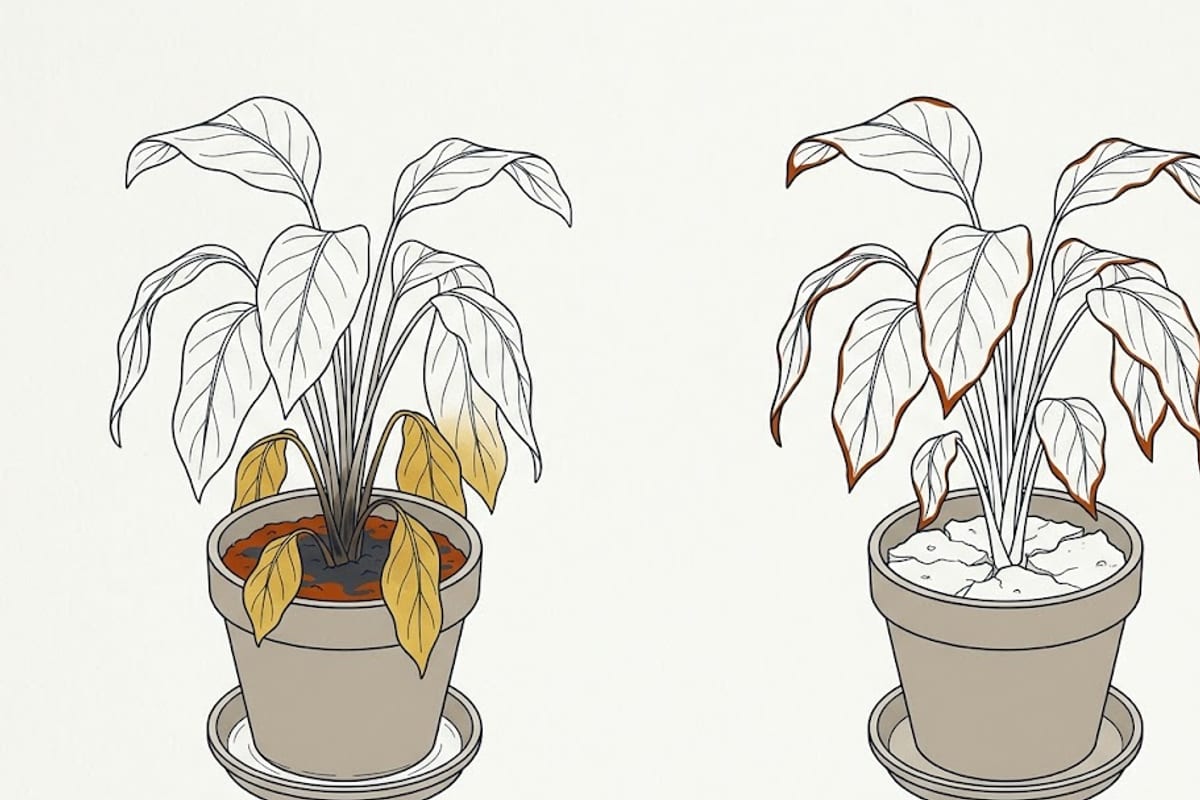
| What you see | Overwatered | Underwatered |
|---|---|---|
| Leaves | Yellowing, often lower leaves first, soft, sometimes with dark or brown soft patches; dropping while still partly green | Drooping, then yellowing, edges and tips crisp and brown; curling inward; dropping when dry |
| Stems | Soft or dark at the soil line; may smell sour | Firm; may wrinkle on succulents |
| Soil | Dark and wet days after watering; may grow mould or fungus gnats; may smell | Pale, dry, hard; often shrunk away from the pot rim; water runs straight through the gap |
| Pot | Heavy; water sitting in the saucer | Light |
| Roots | Brown or black, soft, slimy, slide apart; sour smell | White to tan, firm; on succulents may be thin and dry |
| Recovery after watering | None, or worse | Leaves lift within hours |
Check one: lift the pot
Water is heavy. A pot that has just been watered weighs noticeably more than the same pot dry, and after a few days with the same plant you learn the difference by hand. A drooping plant in a light pot is thirsty. A drooping plant in a heavy pot is not, and pouring more water in is the wrong move.
Check two: the soil at depth
The surface dries first and lies. Push a finger, a wooden skewer or a chopstick into the soil to a depth of a few centimetres, or to the bottom of a small pot. Dry all the way down means underwatered. Wet at depth days after watering means the soil is holding too much water for the roots to breathe. A skewer comes out dark and damp from wet soil and clean and pale from dry.
Check three: the roots
When the pot and the soil disagree with the plant, or when you want to be sure before repotting, slide the plant out. Water the soil lightly first if it is bone dry so the root ball holds together, tip the pot on its side, support the base of the stems, and ease the root ball out.
Healthy roots are white, cream or tan, firm, and smell of soil; on succulents and orchids they may be thin, dry or silvery but they are intact. Rotted roots are brown or black, soft, slimy or hollow, slide off their core when pinched, and smell sour. A healthy root ball on a drooping plant means underwatering or something else entirely, such as cold or shock. A rotted root ball means overwatering, whatever the watering schedule was.
Why overwatering rots roots
Roots breathe. Soil that stays wet has no air in its pores, the fine roots suffocate within days, and fungi and bacteria move into the dead tissue and spread. The usual causes are not too much water at once but water too often, a pot with no drainage hole, a saucer that stays full, a dense peat-based mix that never dries, a pot far larger than the plant, or a plant in a cool dim room that uses water slowly while being watered on a summer schedule.
What to do for an underwatered plant
Water slowly and thoroughly until water runs from the drainage hole, then wait a few minutes and water again. If the soil has shrunk away from the pot rim, stand the pot in a basin of room-temperature water for twenty to thirty minutes so the root ball rewets from below, then drain. Most plants lift within a few hours to a day. Leaves that crisped stay crisp; the rest recover. Then check the soil by finger every few days and water when it is dry to the depth the plant prefers, rather than on a calendar.
What to do for an overwatered plant
Stop watering. Tip out any water in the saucer. Slide the plant out and look at the roots. Cut every soft root back to firm tissue with clean scissors, shake off the old wet soil, and repot in a fresh, airy mix in a pot with a drainage hole, no larger than the root ball needs. Water once, lightly, to settle the mix, and then not again until the top few centimetres are dry. Remove leaves that are more than half yellow. Keep the plant warm and in bright indirect light while new roots grow, which takes two to six weeks depending on the plant. If almost no roots are left, take cuttings from healthy stems where the plant allows it.
Plants that make it harder
Some plants blur the picture. Peace lilies, pothos and philodendrons droop dramatically from thirst and recover in hours, which trains owners to water by wilt, until the day the wilt is rot. Succulents, snake plants and ZZ plants store water and show thirst only after months, but rot within weeks of wet soil, so with them the default assumption is overwatering. Orchids show their roots through the pot and are the easiest of all to read. Fiddle leaf figs show overwatering as dark spots from the midrib and underwatering as crisping from the edges, on the same leaf shape.
What to do today
- Lift the pot. Light and dry means water thoroughly; heavy and wet means stop.
- Push a skewer to depth. Dry all the way means underwatered; wet at depth days after watering means overwatered.
- If in doubt, slide the plant out. Firm pale roots mean water; brown soft roots mean trim and repot.
- Never water a drooping plant without checking the pot first.
Frequently asked questions
How can I tell if my plant is overwatered or underwatered?
Lift the pot and feel the soil at depth. A light pot with dry soil and a drooping plant is underwatered; a heavy pot with wet soil and a drooping plant is overwatered. When they disagree with what the plant looks like, slide the plant out and look at the roots: firm and pale means thirst, brown and soft means rot.
Can an overwatered plant recover on its own if I stop watering?
Sometimes, if the rot has only just begun and the soil dries quickly. Usually not, because the rotted roots keep rotting in wet soil and the soil in a large or dense pot stays wet for weeks. Unpotting, trimming and repotting in fresh airy mix is the reliable fix.
Why does my plant droop after I water it?
Either the water ran down the gap between shrunken soil and the pot without wetting the root ball, in which case rewet from below, or the roots have rotted and cannot take up water, in which case the pot will be heavy and the soil wet, and the plant needs repotting rather than more water.
How often should I water houseplants?
There is no correct number of days. Check the soil at depth every few days and water thoroughly when it is dry to the depth the plant prefers: the top couple of centimetres for thin-leaved tropicals, all the way down for succulents and snake plants. A plant in a bright warm room uses water several times faster than the same plant in a cool dim one.