A ZZ plant browns in two ways that mean opposite things. Soft, dark brown starting at the base of a stem, with wet soil, is rot in the rhizome and roots, and it needs a knife and a repot today. Crisp, dry brown at the tips and edges of the leaflets, on a firm stem, is dry air, fertiliser salts or sun, and the roots are fine. A third case, one whole stem slowly turning brown and dry from the tip down while the rest of the plant is glossy and firm, is an old stem dying back, which the plant does on its own schedule.
Press the base of the browning stem at the soil line. Firm means the roots are not the problem. Soft means they are.
What the brown tells you
| What you see | Most likely cause | Check this first |
|---|---|---|
| Soft dark brown at the base of one or more stems, stems leaning, leaflets yellowing, soil wet, sour smell | Rhizome and root rot from overwatering | Squeeze the stem base; unpot and look at the rhizomes |
| Crisp brown tips on many leaflets, stems firm, plant near a heater or vent | Low humidity or dry heat | Position |
| Brown tips with a yellow band, white crust on the soil, recent feeding | Fertiliser salts | Soil surface; feeding history |
| Brown or bleached patches on the leaflets facing the window | Direct sun scorch | Hours of direct light |
| One old stem browning from the tip down over weeks, rest of the plant firm and glossy, soil not wet | An old stem finishing | Everything else unchanged |
| Stems wrinkled and brown-tipped after months of no water, soil bone dry | Long underwatering | Soil to the bottom; rhizomes wrinkled |
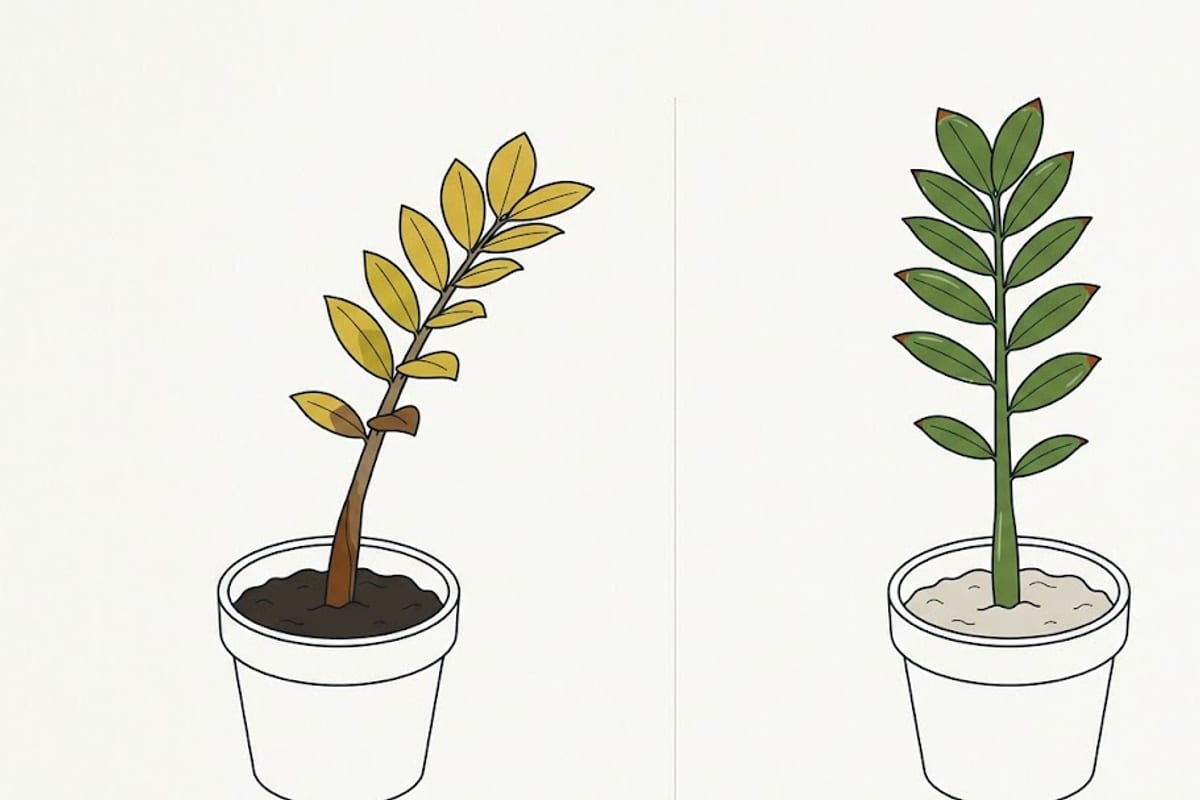
Rhizome and root rot from overwatering
A ZZ plant stores water in potato-like rhizomes under the soil and in its thick stems, and it draws on that store for weeks. In soil that stays wet the rhizomes cannot breathe, they soften and rot, and the rot moves into the base of the stems. The stem goes soft, dark and brown at the soil line and leans or falls; the leaflets above it yellow and drop; the soil smells sour. Several stems can go at once because they share a rhizome.
What to do: slide the plant out of the pot and look. Healthy rhizomes are firm, pale and rounded like small potatoes, with white roots. Rotted ones are brown, soft and often hollow. Cut away every soft rhizome, root and stem base with a clean knife back to firm pale tissue. Keep every stem whose base and rhizome are firm. Let the cut surfaces dry in the air for a day or two. Repot the firm remainder in a fresh, gritty, fast-draining mix (cactus mix, or potting soil with plenty of perlite) in a pot with drainage, no larger than needed. Do not water for a week or two. Then water thoroughly and let the soil dry completely before watering again.
A stem that is soft at the base is lost, but its firm leaflets can be rooted: a leaflet pressed into barely moist gritty mix grows a small rhizome in a few months.
Low humidity and dry heat
ZZ plants tolerate dry rooms, but next to a radiator or a heating vent the leaflet tips dry and brown in a thin crisp line, on many leaflets at once, with the stems firm. What to do: move the plant away from the heat source. The tips stay brown; new stems come in clean.
Fertiliser salts
ZZ plants need very little feeding, and salts from too much fertiliser build up in the pot and brown the leaflet tips with a yellow band beside the brown, often with a white crust on the soil. What to do: flush the pot slowly with plenty of water until it drains clear, and feed at quarter strength no more than a few times a year.
Direct sun scorch
A ZZ plant moved into hours of direct sun develops brown or bleached patches on the leaflets facing the glass. What to do: move it to bright indirect light; it tolerates shade far better than sun.
An old stem finishing
A ZZ plant's stems live for years and then die back one at a time, usually the oldest and outermost, turning yellow and then brown and dry from the tip downward over a few weeks while the plant pushes new stems from the rhizome. The soil is not wet and the other stems are firm and glossy. What to do: cut the finished stem at the soil line and change nothing.
Long underwatering
It takes months, but a ZZ plant left dry for too long uses up its stored water. The stems wrinkle lengthwise, the leaflets thin and brown at the tips, and the rhizomes shrink. What to do: water thoroughly, let it drain, and resume checking the soil every few weeks. The plant plumps up over a couple of weeks.
The rhizome check
Whenever a ZZ stem is soft at the base, unpot the plant and look at the rhizomes; they are the plant's store and the seat of any rot. Firm, pale, rounded rhizomes with white roots are healthy. Brown, soft or hollow rhizomes are rotted and must be cut away. Everything above a firm rhizome can be kept.
What to do today, by cause
- Rot: unpot, cut away soft rhizome, roots and stems, dry the cuts, repot in gritty mix, wait before watering.
- Dry heat: move away from heaters and vents.
- Salts: flush the pot, feed rarely at quarter strength.
- Sun scorch: move to bright indirect light.
- Old stem: cut it at the base and change nothing.
- Long underwatering: water thoroughly and check the soil every few weeks.
Frequently asked questions
Can a ZZ plant with brown stems be saved?
Usually, if some rhizome is still firm. Cut away everything soft, dry the cuts, repot in gritty mix, and hold off watering. Stems that were soft at the base are lost, but their firm leaflets can be rooted to make new plants.
Why are my ZZ plant leaves turning brown at the tips?
Crisp brown tips on firm stems come from dry heat, fertiliser salts or direct sun, not from the roots. Move the plant away from heaters and the window, flush the pot if you have been feeding, and leave the roots alone.
Should I cut brown stems off a ZZ plant?
Cut a stem at the soil line if it is soft at the base or if it has died back dry from an old age. Leave a firm stem with brown tips; trim the tips if you like, following the leaflet shape.
How often should I water a ZZ plant?
Only when the soil is dry all the way through, which in most rooms means every three to six weeks, longer in winter. When in doubt, wait another week. Wet soil is the only thing that reliably kills this plant.