A rubber plant drops leaves in protest, and the protest is usually about water or light. Leaves that yellow before falling, over wet soil, are root rot from overwatering. Leaves that droop, curl and fall over dry soil are thirst. Lower leaves that go one at a time in a dark corner are too little light. Green leaves that fall within weeks of a move are shock, and leaves that fall after a cold night by the glass are the cold. The lowest leaves go first in every case, so look at their colour before they fall.
What the fallen leaf tells you
| What you see | Most likely cause | Check this first |
|---|---|---|
| Lower leaves yellow before dropping, soil wet days after watering, sour smell | Overwatering and root rot | Root check |
| Leaves droop, curl and drop with dry soil shrunk from the pot, pot light | Underwatering | Soil to the bottom; pot weight |
| Lower leaves drop slowly over months in a dark corner, stems bare between leaves | Too little light | Distance from a window |
| Leaves drop after a cold night near glass or a door, or near a heater | Cold drafts and temperature swings | Position; temperature |
| Green leaves drop within weeks of a move, repot or purchase | Shock | Recent changes |
| Leaves with sticky residue, stippling, webbing or brown bumps | Pests | Undersides and stalks |
| One old lower leaf yellows and drops now and then, plant otherwise growing | Old leaves dropping naturally | Nothing else changed |
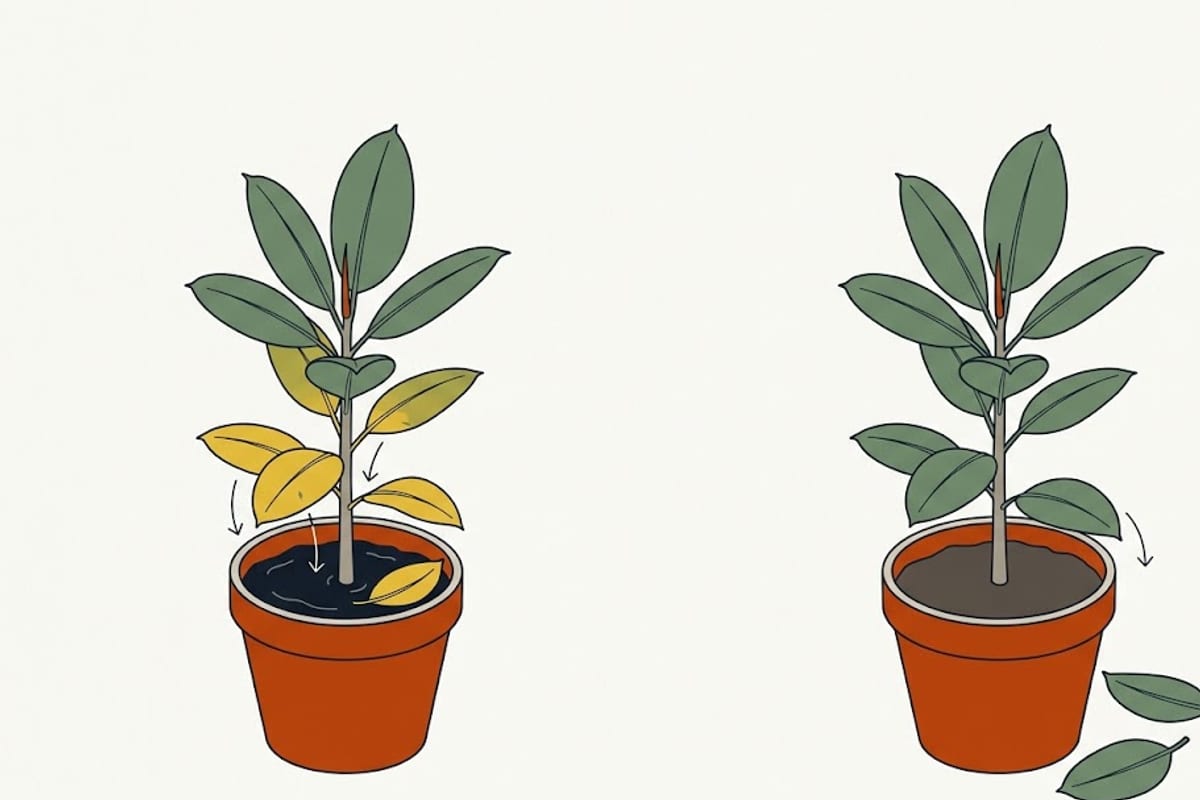
Overwatering and root rot
The most common cause. In soil that stays wet, rubber plant roots suffocate and rot, and the plant sheds the leaves it can no longer supply, from the bottom up, yellowing them first. The soil is wet days after watering, the pot is heavy, and it may smell sour.
What to do: slide the plant out. Healthy roots are white to tan and firm; rotted ones are brown, soft and pull apart. Trim rotted roots, remove the old soil, repot in fresh airy mix in a pot with drainage no larger than the roots need, and water only when the top few centimetres are dry. Leaf drop stops within a couple of weeks as new roots form.
Underwatering
A rubber plant left dry droops and curls its leaves, then drops them, over soil that is dry to the bottom and often shrunk from the pot rim. What to do: water thoroughly, rewet from below if the soil has shrunk by standing the pot in water for twenty to thirty minutes, and then check the soil by finger weekly.
Too little light
Rubber plants want bright indirect light. In a dark corner they shed lower leaves slowly and grow bare stems with long gaps. What to do: move near a bright window, out of hours of hot direct sun. New leaves come in at the top; the bare stem stays bare unless the plant is cut back to branch.
Cold drafts and temperature swings
Keep a rubber plant above about 15 degrees Celsius and away from cold glass, outside doors, air conditioning vents and radiators. A cold night or a hot dry draft makes it drop leaves within days. What to do: move it to steady warmth.
Shock after moving or repotting
Rubber plants dislike change and drop a few green leaves within weeks of a move, a repot or coming home from a shop, while the soil is fine and the remaining leaves are firm. What to do: leave it in one bright spot; the drop stops within a few weeks.
Pests
Spider mites, scale and mealybugs weaken a rubber plant and cause yellowing and drop. Look for stippling and webbing on the undersides, brown bumps on the stalks and midribs, white cottony specks and a sticky film. What to do: wipe, treat with insecticidal soap or horticultural oil weekly for a month, and isolate.
Old lower leaves dropping naturally
A rubber plant retires an old lower leaf now and then as it grows: the leaf yellows evenly and drops while the plant keeps growing at the top. What to do: nothing.
The root check
When the soil is wet and leaves are dropping, look at the roots before changing anything: tip the pot, support the stem, slide the root ball out. White and firm is healthy; brown and soft is rot.
What to do today, by cause
- Overwatering: unpot, trim rotted roots, repot in airy mix, water only when the top is dry.
- Underwatering: soak thoroughly, rewet from below if needed, check weekly.
- Too little light: move to bright indirect light.
- Drafts: move to steady warmth.
- Shock: leave it in one spot for a few weeks.
- Pests: wipe, treat weekly for a month, isolate.
- Old leaf: nothing.
Frequently asked questions
Will a rubber plant regrow lost leaves?
New leaves grow from the growing tip once the cause is fixed. A bare lower stem does not regrow leaves along its length; cutting the stem back above a leaf node makes it branch and fill in.
Why is my rubber plant dropping green leaves?
Shock after a move, a repot or a purchase, or a cold or hot draft. Green leaf drop with a firm stem and moist soil stops within a few weeks in one steady bright spot.
How often should I water a rubber plant?
When the top few centimetres of soil are dry, thoroughly, and not again until it dries to that depth. That is roughly every one to two weeks in a bright warm room and longer in winter.
Should I remove yellow leaves from a rubber plant?
Yes, once a leaf is mostly yellow; cut its stalk near the stem with clean scissors. The white sap can irritate skin, so wipe it off your hands.