Aloe leaves should stand up and feel firm. When they lean, bend or flop, the plant is telling you about its light or its roots. Long, thin, flat leaves bending outward are a plant stretching for light. Thick leaves gone soft and folding at the base, over wet soil, are rot. A firm, healthy plant leaning out of a pot it has outgrown is root bound and top heavy. Thin, wrinkled, inward-curling leaves over bone-dry soil are thirst, and mushy leaves after a cold night are chill.
Press a drooping leaf: firm means light or the pot; soft means water.
What the leaf shape tells you
| What you see | Most likely cause | Check this first |
|---|---|---|
| Long thin flat leaves bending outward, pale green, plant leaning toward the window | Too little light | Distance from a window; months in that spot |
| Leaves soft, translucent or dark at the base, folding at the soil line, soil wet | Overwatering and root rot | Squeeze the base; root check |
| Thick firm leaves but the whole plant leaning out of a small light pot | Root bound and top heavy | Slide the plant out; pot size |
| Thin wrinkled leaves curling inward, soil bone dry for months | Underwatering | Soil to the bottom; leaf plumpness |
| Mushy leaves after a cold night near glass | Cold damage | Where the plant sat |
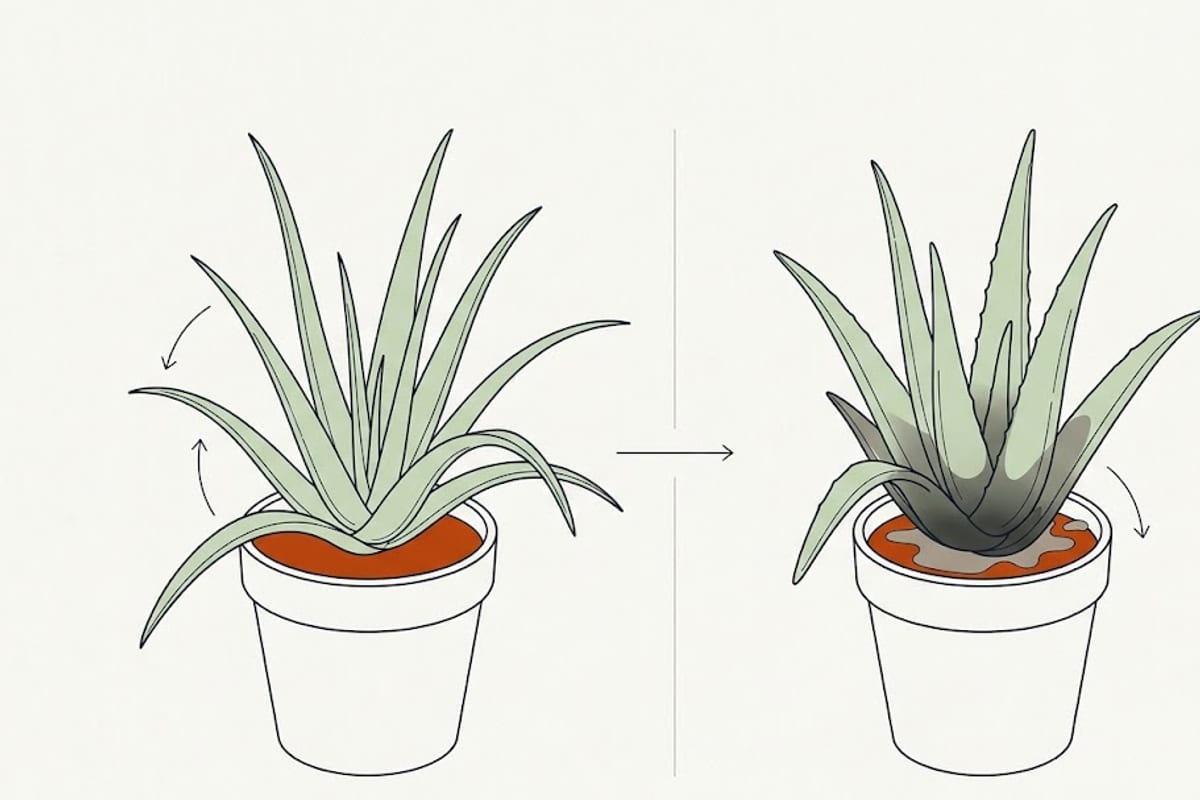
Too little light
Aloe needs bright light with some direct sun. In a dim room it grows long, thin, flat leaves that cannot hold themselves up and bend outward, the plant pales, and it leans toward whatever light there is. The leaves stay firm.
What to do: move the plant to a bright window with a few hours of direct sun, gradually over a couple of weeks so it does not scorch. New leaves come in thick and upright; the old bent ones stay bent and can be removed once new growth has taken over.
Overwatering and root rot
Aloe stores water in its leaves and rots when its soil stays wet. The roots die first, then the base of the leaves, which go soft, translucent or dark at the soil line and fold over. The soil is wet days after watering and smells sour.
What to do: slide the plant out. Healthy roots are pale and firm; rotted ones are brown, soft and few. Cut away all soft roots and any leaf that is soft at the base, back to firm tissue, with a clean knife. Let the plant sit out of soil in a dry shaded place for two or three days so the cuts callus. Repot in a gritty cactus mix in a pot with drainage no larger than the roots need, and do not water for a week or two. Then water thoroughly and let the soil dry completely between waterings. A plant with no firm roots left can still be saved: callus the base for several days and set it on dry gritty mix; roots form within a few weeks.
Root bound and top heavy
A healthy aloe fills its pot with roots and pups within a couple of years, and a tall plant in a small light pot leans and tips over even though every leaf is firm. Roots push out of the drainage hole and water runs straight through.
What to do: repot into a heavier, wider pot one size up in gritty mix, firm the soil around the base, and separate the pups into their own pots.
Underwatering
Aloe can go weeks without water, but months without it leave the leaves thin, wrinkled and curling inward, and eventually drooping. What to do: water thoroughly, let it drain, and check the soil every few weeks. The leaves plump up within a couple of weeks.
Cold damage
Below about 10 degrees Celsius, especially where leaves touch cold glass, aloe leaves go mushy and dark within a day or two. What to do: move the plant away from cold windows, cut damaged leaves back to firm tissue, and let the cuts dry.
How to stand an aloe back up
A firm plant that has fallen sideways from a light pot or from stretching can be repotted slightly deeper in gritty mix in a heavier pot, with the soil firmed around the base, and staked loosely for a few weeks. Do not bury the leaves. A plant that has bent from low light straightens only in its new growth; the old leaves keep their bend.
What to do today, by cause
- Too little light: move to a bright window gradually.
- Overwatering: unpot, cut away soft roots and leaves, let callus, repot in gritty mix, wait before watering.
- Root bound: repot in a heavier wider pot, separate the pups.
- Underwatering: water thoroughly and check every few weeks.
- Cold: move away from cold glass, trim damaged leaves.
Frequently asked questions
Will drooping aloe leaves stand back up?
Leaves drooping from thirst plump up within a couple of weeks of a thorough watering. Leaves bent from low light do not straighten; new leaves come in upright once the light is right. Leaves soft from rot must be cut away.
Why is my aloe plant leaning to one side?
Because it is reaching for light on that side, or because it has outgrown a light pot. Turn the plant regularly, move it to brighter light, and repot in a heavier pot if it is top heavy.
How do I know if my aloe is overwatered?
Squeeze the leaf bases. Soft, translucent or dark bases with wet soil mean rot. Slide the plant out: brown soft roots confirm it.
Should I cut off bent aloe leaves?
Only once new upright growth has replaced them, or if they are damaged. A bent leaf still stores water and feeds the plant.