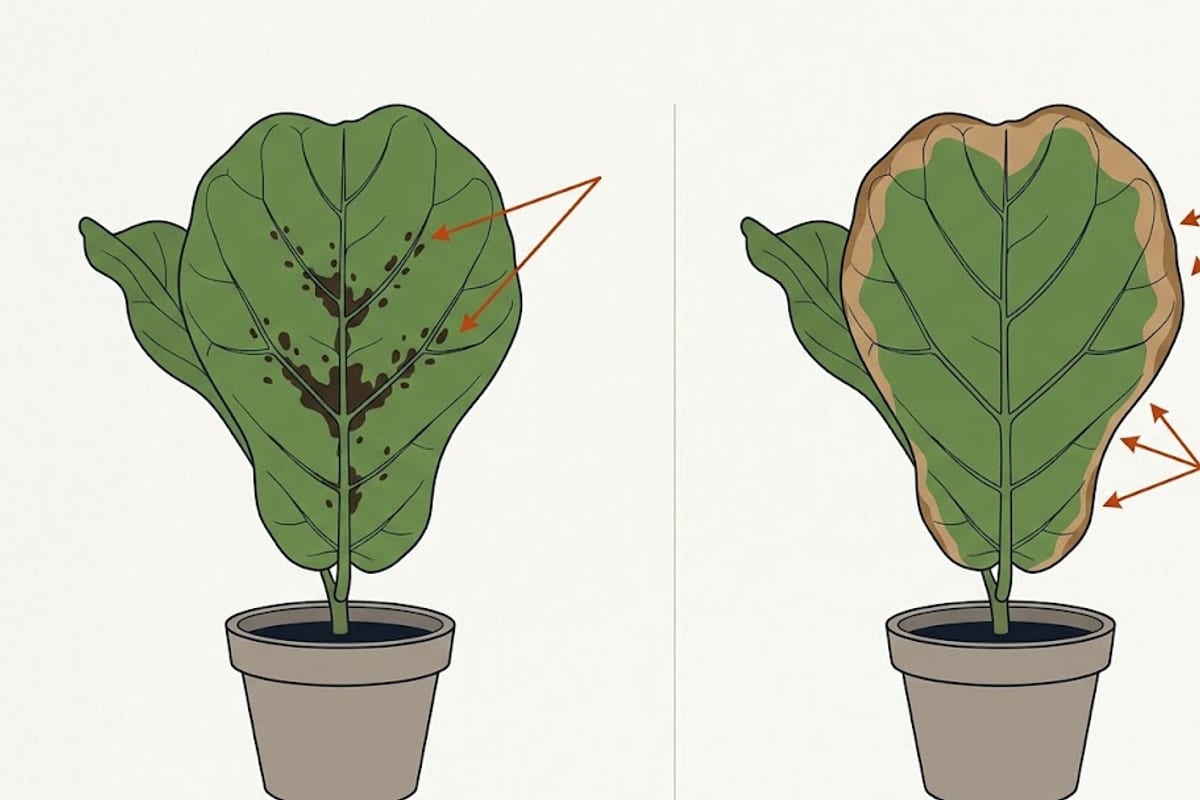
A fiddle leaf fig drops leaves for shock, for water stress in either direction, for too little light, for cold or hot drafts, and for pests, and the leaf it drops tells you which. A green, healthy leaf that falls within two weeks of a move is shock. A lower leaf with dry brown edges is thirst. A leaf with dark spots spreading from the middle, over wet soil, is root rot. Lower leaves yellowing evenly in a dark corner are light. Leaves dropping near a vent, a radiator or a cold window are the draft.
Pick up the fallen leaf and look at it, then feel the soil a few centimetres down and lift the pot.
What the fallen leaf tells you
| What you see | Most likely cause | Check this first |
|---|---|---|
| Green healthy leaves dropping within two weeks of a move, repot or purchase, soil neither wet nor dry | Shock | Recent changes |
| Lower leaves with dry brown edges dropping, soil dry, pot light | Underwatering and dry air | Soil to the bottom; pot weight |
| Leaves with dark spots from the midrib dropping from anywhere on the plant, soil wet, sour smell | Overwatering and root rot | Root check |
| Lower leaves yellowing evenly and dropping slowly, plant away from a window | Too little light | Distance from a large window |
| Leaves dropping near a vent, radiator, fireplace or cold window | Cold drafts and heaters | Position; temperature |
| Leaves with stippling, brown bumps, cottony specks or sticky film | Pests | Undersides and stems |
Shock after moving or repotting
Fiddle leaf figs dislike change more than almost any houseplant. A plant brought home from a greenhouse, moved across a room, or repotted often drops a few green leaves within a fortnight while it adjusts to different light, humidity and root space. The soil is fine and the remaining leaves are firm.
What to do: choose one bright spot and leave the plant there. The drop stops within a few weeks and new leaves follow at the top.
Underwatering and dry air
A fig left dry droops its leaves, browns them dry and crisp from the edges inward, and drops the worst-affected, lower leaves first. The soil is dry to the bottom, the pot is light, and often the soil has shrunk from the pot's rim so water runs down the gap. Very dry air near heaters produces the same crisp edges with moist soil.
What to do: water thoroughly until it runs from the drainage hole; if the soil has shrunk, stand the pot in a basin of water for twenty to thirty minutes to rewet from below. Then check the soil by finger weekly and water when the top few centimetres are dry. Move the plant away from heaters.
Overwatering and root rot
In soil that stays wet, fig roots suffocate and rot, and the plant sheds leaves it can no longer supply. The dropped leaves carry dark brown or black spots spreading from the midrib and veins, often with yellowing around them, and they fall from anywhere on the plant. The soil is wet days after watering and the pot may smell sour.
What to do: slide the plant out. Healthy roots are white to tan and firm; rotted ones are brown, soft and pull apart. Trim rotted roots, remove the old soil, repot in fresh airy mix in a pot with drainage no larger than the roots need, and water only when the top few centimetres are dry. Leaf drop may continue for a couple of weeks and then stops as new roots form.
Too little light
A fiddle leaf fig needs the brightest spot in the house, directly beside a large window. Several metres from one, it cannot support all its leaves and sheds the lower ones slowly, yellowing them evenly first, while new leaves come in small.
What to do: move it beside an east window, or a south one with a sheer curtain, gradually over a couple of weeks. Judge the fix by the next new leaves.
Cold drafts and heaters
Figs dislike anything below about 15 degrees Celsius and dislike hot dry air. A spot near an outside door, a cold window in winter, an air conditioning vent, or a radiator makes them drop leaves. What to do: move the plant to a spot with steady warmth and no draft.
Pests
Spider mites, scale and mealybugs weaken a fig and cause yellowing and drop. Look for fine stippling and webbing on the undersides, brown bumps along the midribs and stems, white cottony specks, and a sticky film. What to do: wipe, treat with insecticidal soap or horticultural oil weekly for a month, and isolate.
The soil and root checks
Press a finger into the soil to the second knuckle and lift the pot. Dry and light means thirst; wet and heavy means look at the roots. To look, tip the pot, support the trunk, and slide the root ball out: white and firm is healthy, brown and soft is rot.
What to do today, by cause
- Shock: leave it in one bright spot for a few weeks.
- Underwatering: soak thoroughly, rewet from below if the soil has shrunk, check weekly.
- Root rot: unpot, trim rotted roots, repot in airy mix, water only when the top is dry.
- Too little light: move beside a large window, gradually.
- Drafts: move to steady warmth.
- Pests: wipe, treat weekly for a month, isolate.
Frequently asked questions
Will my fiddle leaf fig grow new leaves after dropping them?
Yes. New leaves grow from the top of each stem once the cause is fixed and the plant is in good light. Dropped leaves do not regrow on the bare stem below, which is why a leggy fig is often cut back to encourage branching.
Should I remove damaged leaves from a fiddle leaf fig?
Remove leaves that are more than half brown or yellow. A leaf with a small burn or a crisp edge and plenty of green still feeds the plant and can stay.
How much water does a fiddle leaf fig need?
A thorough watering whenever the top few centimetres of soil are dry, until water runs from the drainage hole, and then nothing until it dries to that depth again. In most rooms that is every one to two weeks, longer in winter.
Why is my fiddle leaf fig dropping leaves after repotting?
Shock from the root disturbance, which passes within a few weeks in one bright spot, or a new pot so much larger than the old one that the soil stays wet and rot begins. Check the soil below the surface a few days after watering.