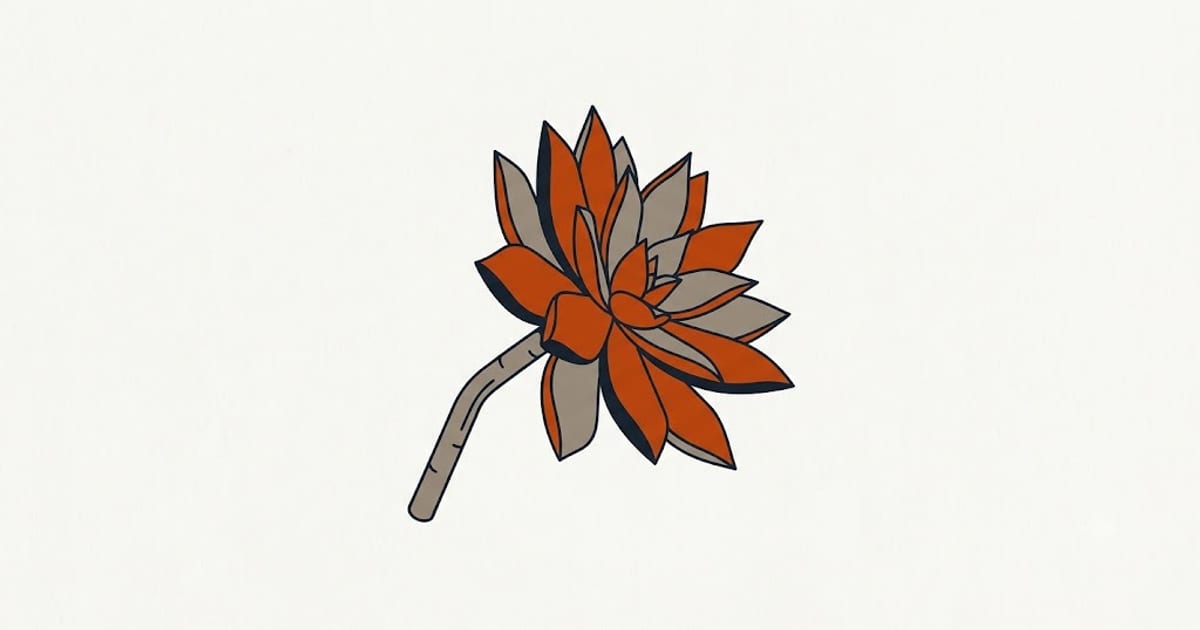
A drooping succulent is one of two problems, and they need opposite responses. Squeezing the stem at soil level separates them in seconds.
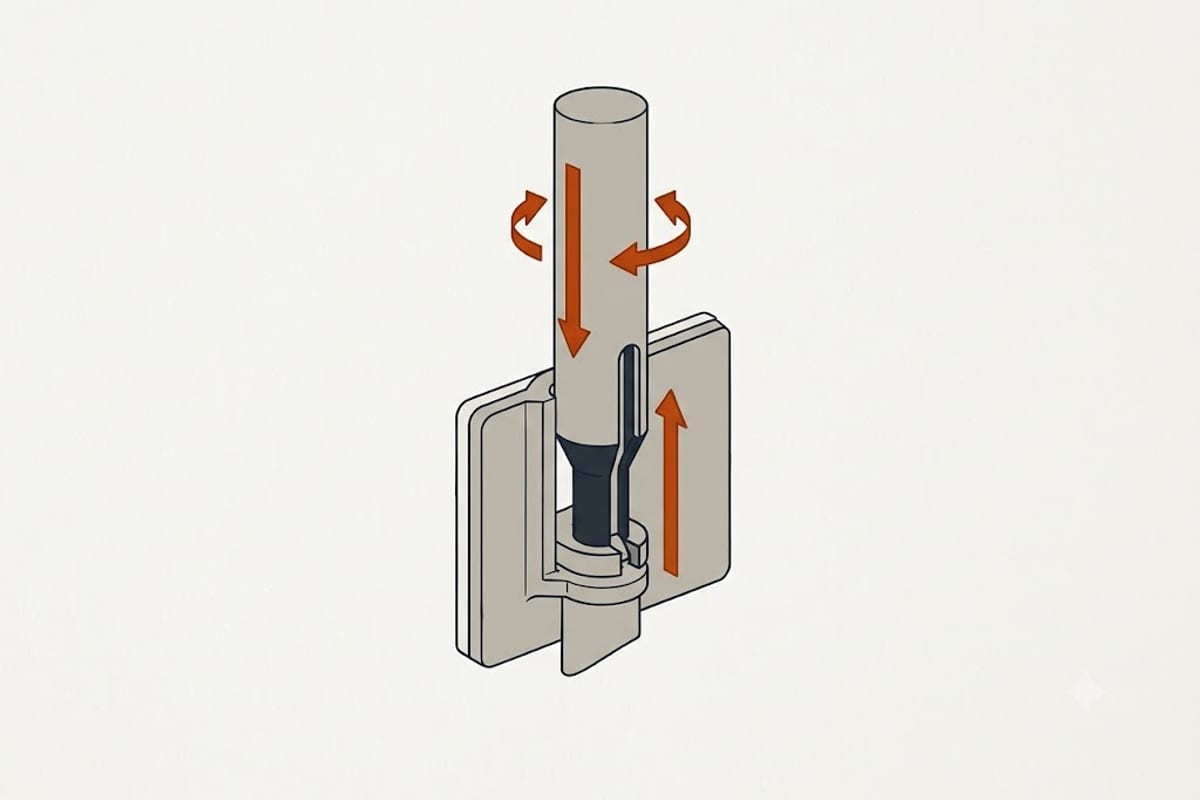
Soft, mushy, darker, sometimes with a smell — rot. Act today.
Firm, but the plant is leaning and the leaves are spaced out along a long stem — not enough light. Nothing is dying; the plant is reaching.
Stretching for light
Succulents evolved in bright, exposed places. Indoors, most windowsills give them a fraction of that, and they respond by growing a longer stem with wider gaps between leaves, leaning toward the brightest direction.
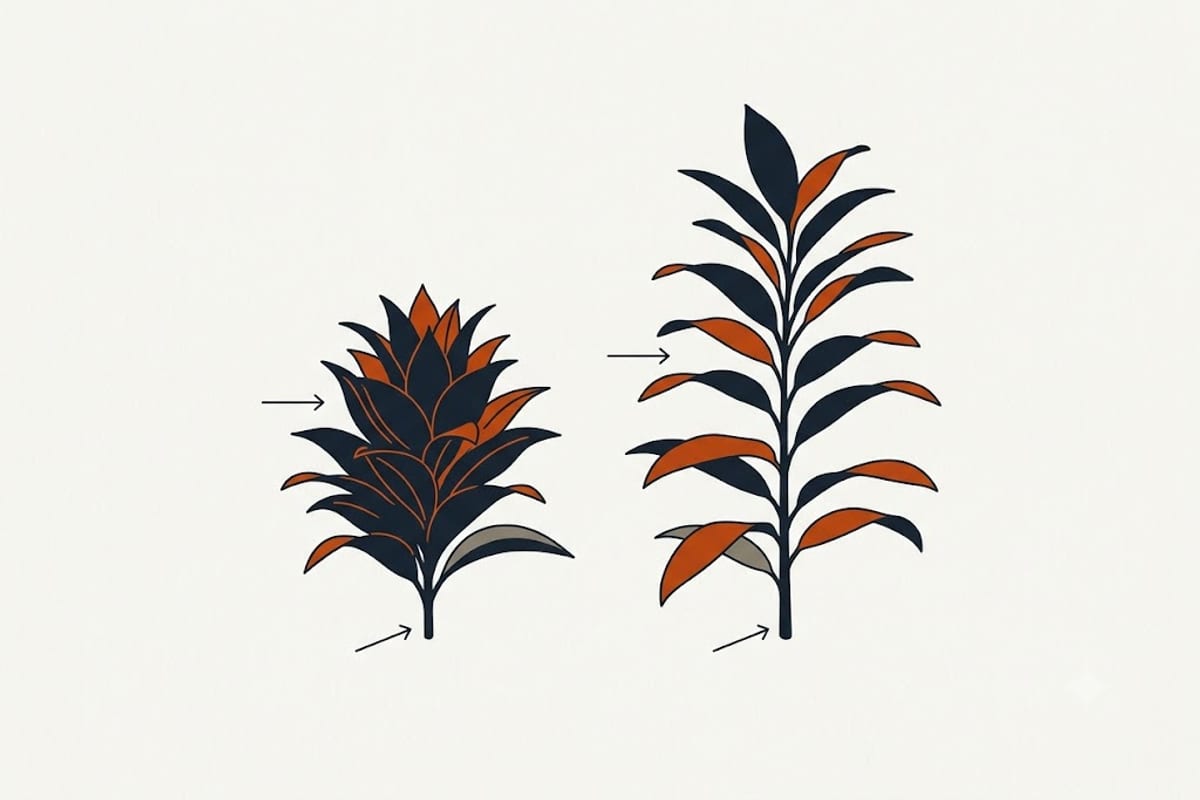
The signs together:
- Visible gaps between leaves where there used to be a tight rosette.
- New leaves smaller and paler than old ones.
- The whole plant leaning consistently one way.
- Colours fading — a red-tipped plant going plain green.
Stretched growth does not un-stretch. More light stops it getting worse but will not compact what has already grown. To restore the look, behead the rosette, let the cut dry for a few days until it callouses, and root it in dry gritty mix. The stump usually sprouts new offsets.
Move it to the brightest window you have, and increase light gradually over a couple of weeks — a plant moved suddenly from a dim corner to full sun scorches.
Rot
The soft-stem case is urgent because rot travels upward through the stem, and once it reaches the rosette the plant is gone.
Tip it out and look. Cut the stem above the damage, checking the cut face each time until it is clean and pale all the way through. Discoloured tissue in the centre of the cut means keep going.
Then let the cutting dry for several days — a week is not too long — until the cut face is hard and dry. Root it in dry gritty mix, and do not water for another week after that. Succulent cuttings root far more reliably dry than wet.
The pot and the old soil go in the bin rather than being reused.
What caused the rot
Almost always one of:
- A pot with no drainage hole. Decorative pots without holes kill more succulents than anything else.
- Compost instead of gritty mix. Standard houseplant compost holds far too much water.
- Watering little and often. Succulents want a thorough soak and then a long dry period, not a splash every few days.
- Cold plus wet. Winter on a cold windowsill with damp soil is the classic combination.
What normal looks like
- The lowest leaves shrivelling and drying while the rosette stays firm — normal. Pull them off.
- Leaves wrinkling slightly before you water — normal, and a better watering signal than any schedule.
- Reaching for a window over months — light, as above.
Watering that works
Soak until water runs out of the bottom, then wait until the soil is dry all the way down and the leaves are just starting to wrinkle. In a bright warm room that might be every two weeks; in winter it can be once a month or less.
Underwatering a succulent is recoverable in a day. Overwatering one often is not.
Why winter is when most of them are lost
Succulents slow down or stop growing in low light and cool temperatures, which means they use far less water than they did in summer. A watering interval that was correct in July becomes an overdose in December without anything visibly changing.
Cold makes it worse in a second way: wet roots at low temperature rot much faster than wet roots in warmth. A pot on a cold windowsill behind a curtain at night can sit several degrees below room temperature, which is exactly the combination that kills.
The practical response is to water noticeably less from autumn to early spring — for many succulents that means once a month or less — and to move pots off cold sills at night.
Choosing a pot that forgives mistakes
Terracotta is porous, so it loses moisture through the walls and dries the mix faster than plastic or glazed ceramic. That single choice buys a lot of tolerance for watering slightly too often.
A drainage hole is not optional. Decorative pots without holes are the most common cause of succulent rot, and the usual workaround — a layer of gravel at the bottom — does not work. It raises the saturated zone rather than draining it. If you want to use a pot without a hole, keep the plant in a plastic nursery pot inside it and lift it out to water.