A snake plant turns yellow for five reasons, and where the yellow sits on the leaf tells you which. Yellow that starts soft and translucent at the soil line is rot from overwatering, the most common cause and the only urgent one. Firm leaves gone evenly pale yellow-green over months are short of light. Yellow patches with crisp brown tips on the side facing a window are sun scorch. Yellow mushy patches after a cold night are chill damage. And one outer leaf yellowing while the rest stand firm is the plant retiring an old leaf.
Squeeze the base of the yellow leaf between finger and thumb. Firm means water is not the problem. Soft means it is, and the plant needs unpotting today.
What the location of the yellow tells you
| What you see | Most likely cause | Check this first |
|---|---|---|
| Yellow and soft at the base near the soil, leaves leaning or folding over, soil wet, sour smell | Overwatering and root or base rot | Squeeze the leaf base; unpot and look at the rhizome |
| Firm leaves evenly pale yellow-green, thinner new leaves, plant in a dim spot for months | Too little light | Distance from a window |
| Yellow patches with brown crisp tips on the side facing the window, after a move into sun | Too much direct sun | Hours of direct light; recent move |
| Yellow with mushy patches after a cold night near a window or door | Cold damage | Where the plant sat; temperature |
| One outer leaf yellowing and drying while the rest are firm and upright | Old leaf dying naturally | Nothing else changed |
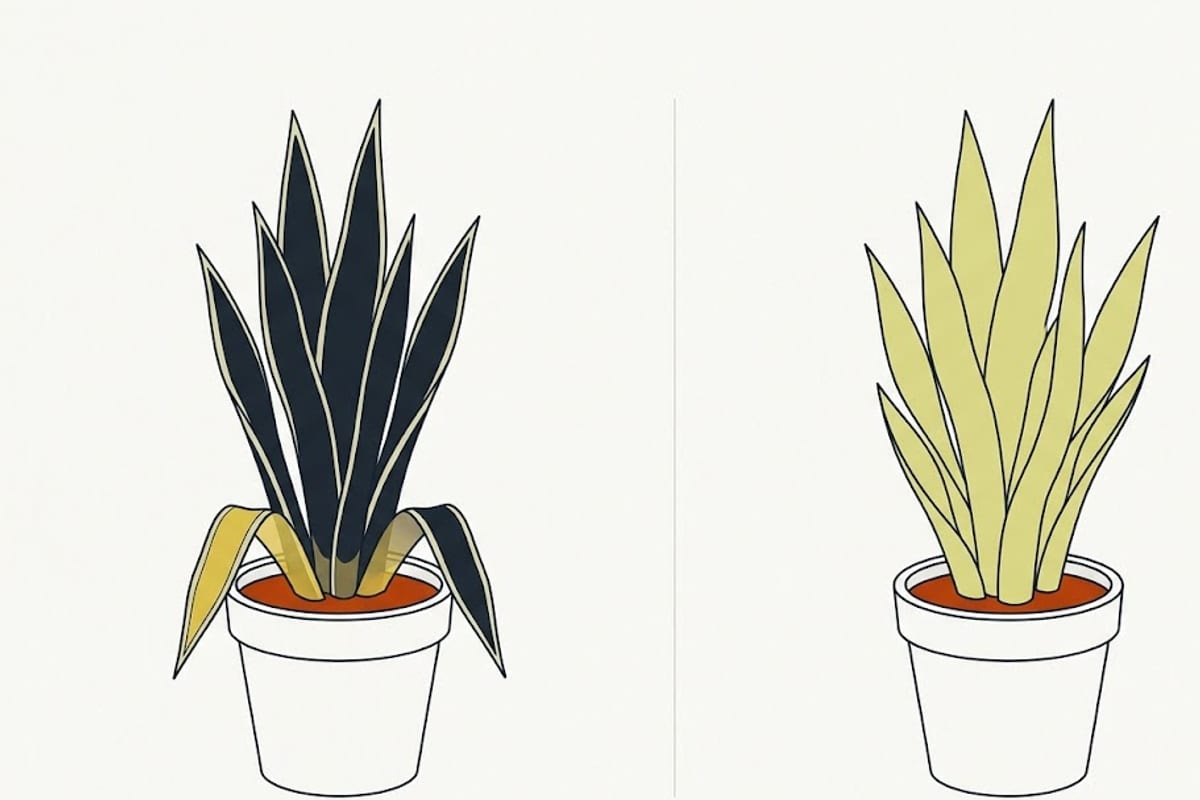
Overwatering and root or base rot
A snake plant stores water in its leaves and rhizomes and takes it from the soil slowly. In soil that stays wet, the roots and the rhizome rot, and the rot works up into the base of the leaves. The leaf goes yellow and translucent from the soil line upward, feels soft or watery at the base, and leans or folds over. The soil is wet days after watering and the pot smells sour.
What to do: slide the plant out. Healthy rhizome is pale and firm with white roots; rotted rhizome is brown, soft and often hollow. Cut away every soft leaf at the rhizome and every soft piece of rhizome, back to firm pale tissue, with a clean knife. Let the cuts dry in the air for a day or two. Repot the firm remainder in a gritty fast-draining mix in a pot with drainage and do not water for a week. Then water thoroughly and let the soil dry completely between waterings. A leaf that is soft at the base cannot be saved, but its firm upper section can be cut off, dried, and rooted as a cutting.
Too much direct sun or a sudden light change
Snake plants tolerate bright light, but one moved suddenly from a dim corner into hours of direct sun through glass scorches on the side facing the light: yellow patches that brown and crisp at the tips, while the leaf stays firm.
What to do: pull the plant back from the glass or filter the light, and move plants into stronger light gradually over a couple of weeks. Scorched patches stay; new leaves come up clean.
Too little light over many months
In a dim room a snake plant slowly loses colour, the leaves grow thinner and paler, and the plant leans toward whatever light there is. The change takes months and the leaves stay firm.
What to do: move it to brighter indirect light, gradually. New leaves come up firm and green; old pale ones stay as they are.
Cold damage
Below about 10 degrees Celsius, especially where the leaves touch cold glass, a snake plant's leaves go yellow and mushy in patches within a day or two, and the soil need not be wet. What to do: move the plant away from cold windows in winter, cut damaged leaves back to firm tissue, and let the cuts dry.
Old leaves dying naturally
The oldest, outermost leaf yellows, dries and shrivels as the plant makes new leaves from the rhizome. If the other leaves are firm and upright and the base of the yellow leaf is firm, nothing is wrong. What to do: cut the leaf off at the soil line once it is fully yellow.
The base squeeze test
Gently squeeze the base of each leaf at the soil line, not just the yellow one, because rot in the rhizome reaches neighbouring leaves before they show it. A healthy base is firm like a green pepper. A rotting base gives, feels soft or hollow, and may be yellow, brown or translucent. Firm all round means the roots are not the problem and the cause is light, sun, cold or age. Any soft base means unpot the plant and look at the rhizome.
What to do today, by cause
- Rot: squeeze every base, cut away soft leaves and rhizome, dry the cuts, repot in gritty mix, do not water for a week.
- Direct sun: pull back from the glass, move into sun gradually.
- Too little light: move to brighter light gradually.
- Cold: move away from cold windows, trim damaged leaves.
- Old leaf: cut it at the base and change nothing.
Frequently asked questions
Can a yellow snake plant leaf turn green again?
No. Yellowed tissue does not regain its colour. A leaf yellow from rot must be cut away; a leaf yellow from sun or low light stays as it is while new leaves come up green once the light is right.
Should I cut yellow leaves off a snake plant?
Cut a leaf at the soil line if its base is soft, and cut an old leaf once it is fully yellow. Leave a firm leaf with a yellow patch from sun; it still feeds the plant.
How do I know if my snake plant is overwatered?
Squeeze the leaf bases at the soil line. Soft, yellow or translucent bases and wet soil that smells sour mean rot. Slide the plant out and look at the rhizome: brown and soft confirms it.
Can I save a snake plant with root rot?
Usually. Cut away everything soft, keep everything firm, let the cuts dry for a couple of days, and repot in gritty mix without watering for a week. If no rhizome survives, root firm leaf sections as cuttings and they become new plants in a few months.