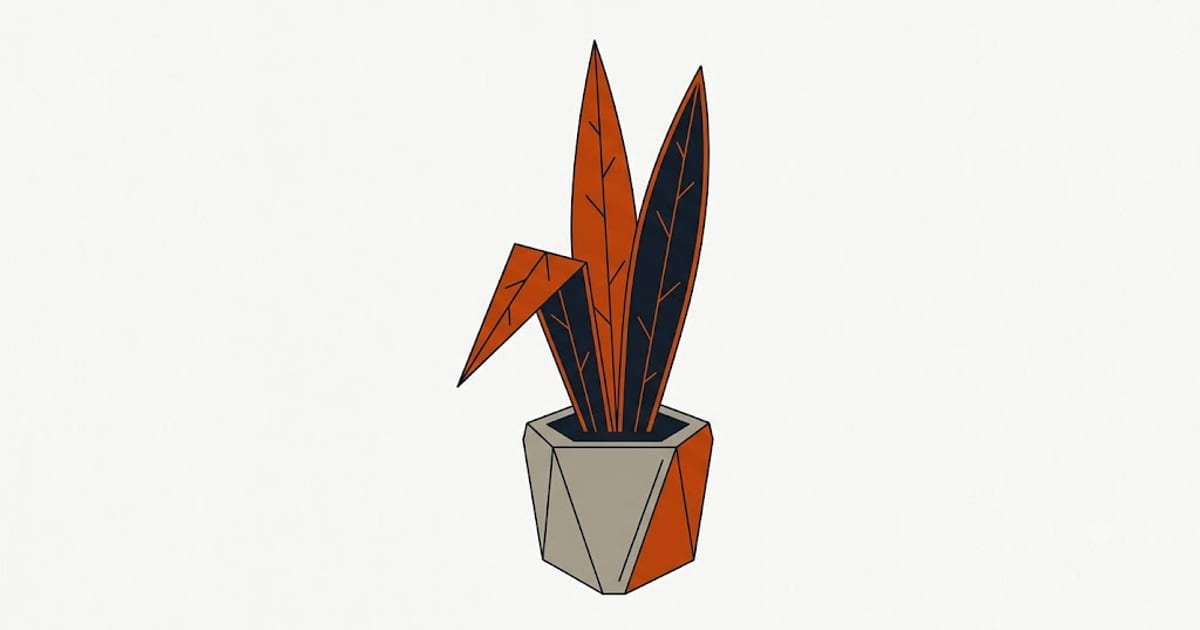
Snake plants survive dark corners, long absences and being forgotten. What they do not survive is being watered like a normal houseplant.
That single fact explains most of what looks like a dying snake plant, and it is why the diagnosis is short.
Check the base, not the leaf
Grip a failing leaf near soil level and squeeze gently.
Soft, squashy, sometimes darker and with a smell — the base is rotting. The leaf will fall over or pull out with almost no resistance. This is the single most common way snake plants die, and by the time a leaf falls, the rot has usually been underway for weeks.
Firm at the base but wrinkled or curling along its length — the opposite problem. The plant is drawing on its own reserves because it has had no water in a long time. Snake plants store water in their leaves, so wrinkling is a late signal, not an early one.
Those two look similar from across a room and mean opposite things. The base tells you which.
Why rot is so easy here
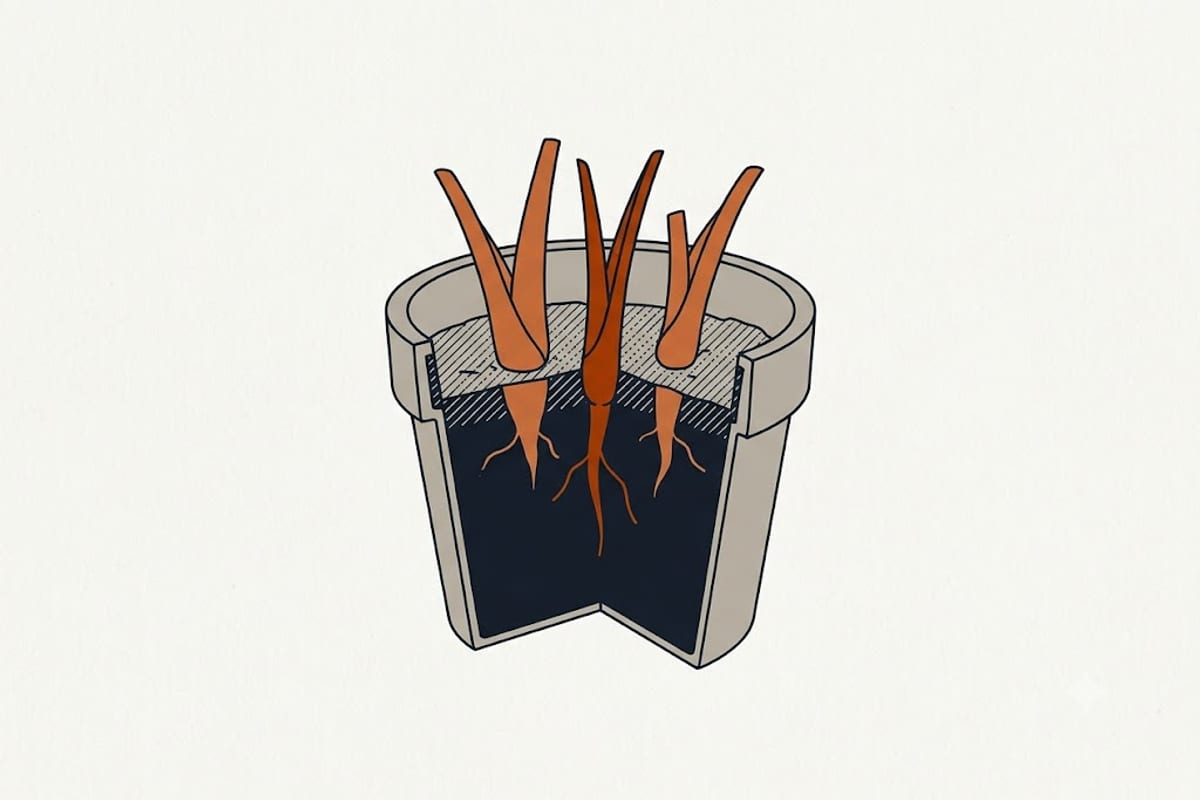
Snake plants are adapted to dry, gritty soil that drains fast. Standard houseplant compost holds water around the roots far longer than they can tolerate, and a pot without drainage makes it certain.
Three things multiply the risk:
- A pot with no drainage hole. Water has nowhere to go and the bottom stays saturated indefinitely.
- Dense, peat-heavy compost rather than a gritty or cactus mix.
- Watering on a schedule rather than by checking. A fortnightly routine that works in July drowns the plant in January, when growth slows and evaporation drops.
Cold makes all of it worse. Wet roots at low temperature rot much faster than wet roots in warmth, which is why so many snake plants die over winter on a windowsill.
What to do about a rotting plant
Take it out of the pot and look. There is no way to judge this from the surface.
- Roots firm and pale, only one or two leaves soft — remove those leaves at the base, let the plant dry out for a week, and repot into gritty mix with drainage.
- Roots brown, soft, falling apart — the pot is lost, but the plant may not be. Cut healthy leaf sections, let the cut ends dry for a day or two until they callus, and root them in dry-ish mix.
Cuttings from a variegated snake plant often come back plain green, because the variegation is in the tissue rather than the genetics. If the pattern matters, propagate by dividing the rhizome instead.
Light is rarely the killer
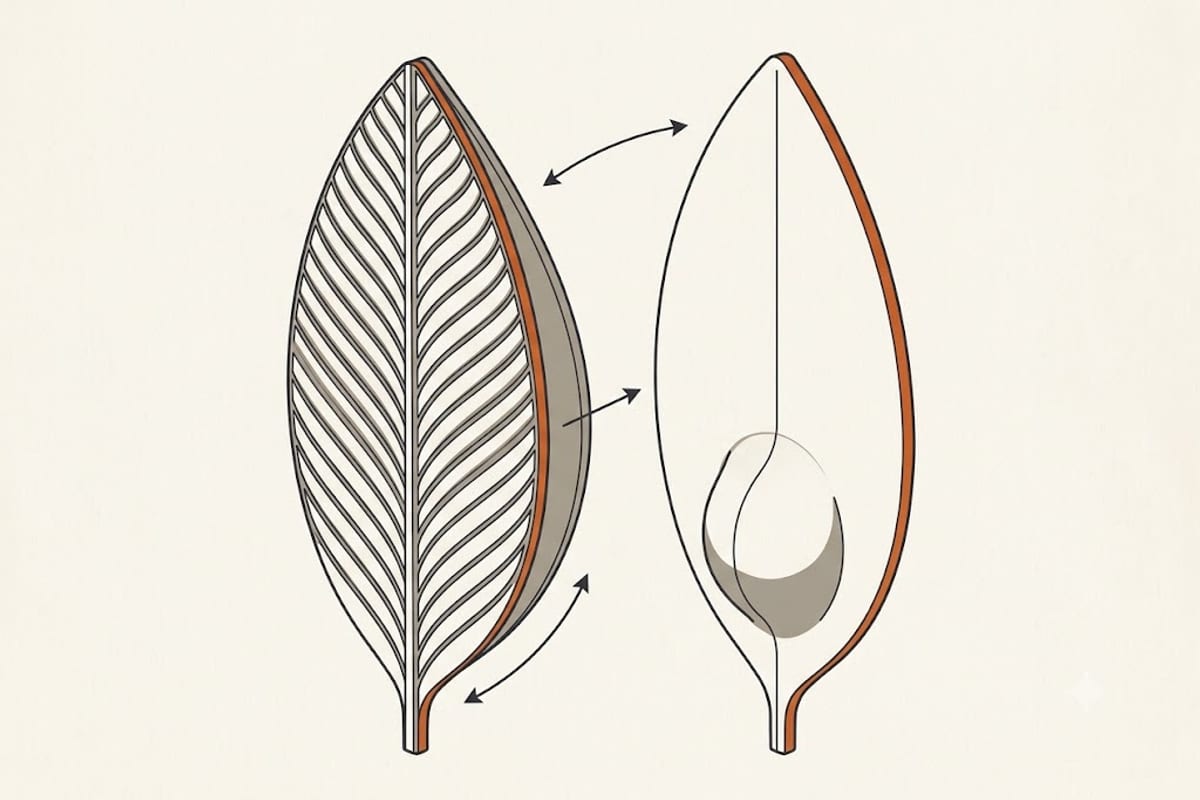
Snake plants tolerate low light better than almost any houseplant. Too little light makes them slow and stretched, with new leaves narrower and floppier than old ones. It does not make them mushy.
Very strong direct sun can scorch pale bleached patches, but that is uncommon indoors.
So if a snake plant is failing and the light has not changed, light is almost certainly not the answer.
How much water it actually wants
Soak the mix thoroughly, let water run out of the bottom, then do not water again until the mix is dry all the way through. Push a skewer to the bottom of the pot; if it comes out damp, wait.
In a warm room that might be every three weeks. In a cool room in winter it can be every two months, and that is normal rather than neglect.
The most useful thing to do with a snake plant is usually nothing.