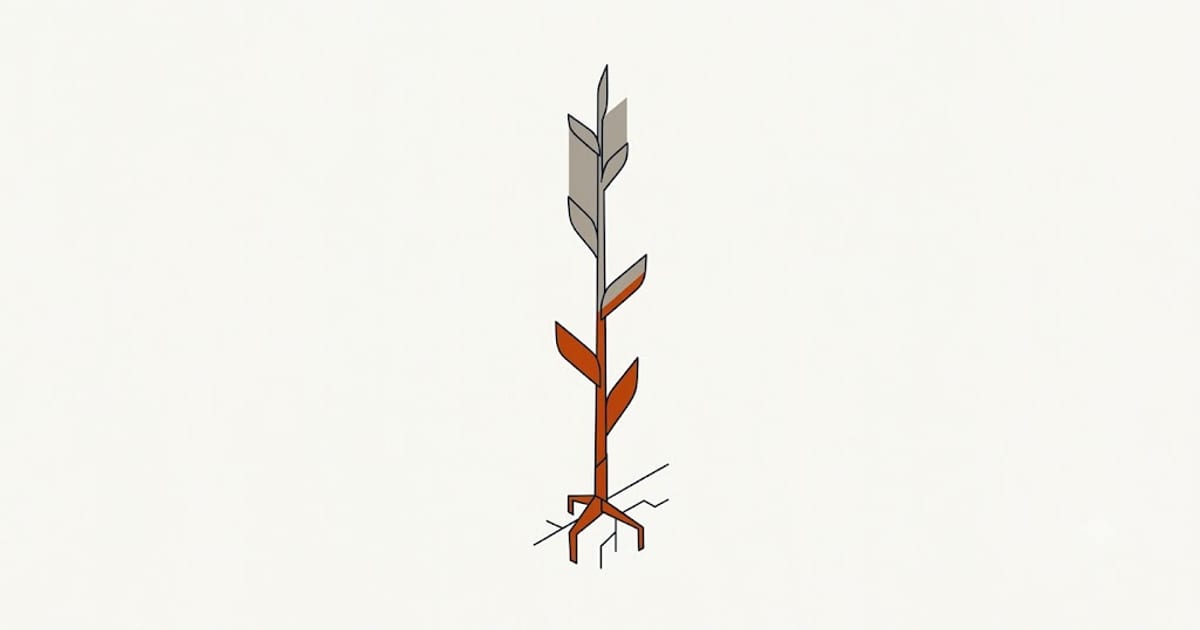
Two quite different things get described as an orchid stem going brown, and they have almost nothing in common except the colour.
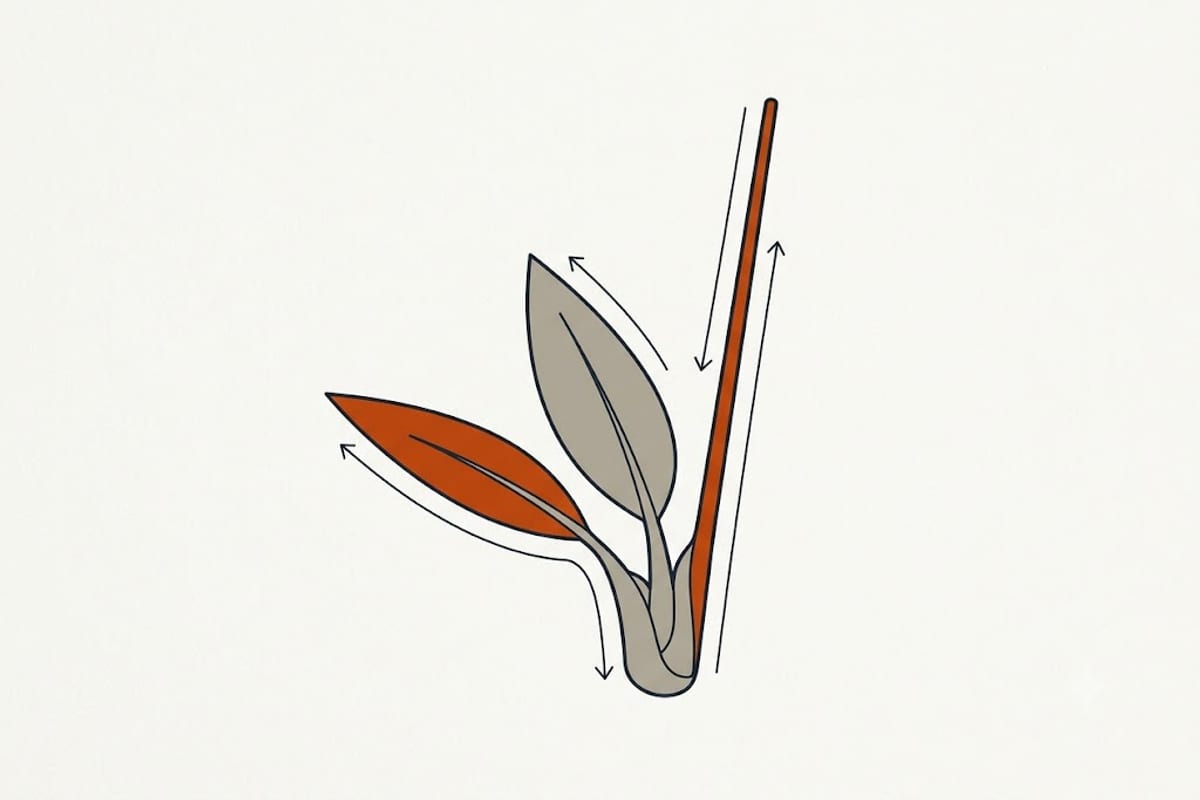
The flower spike
The tall slender stem that carried the flowers is called the spike, and it is not permanent. A phalaenopsis flowers for two to four months, drops its blooms, and then the spike either stays green or dies back. Both outcomes are normal, and browning from the tip downward is simply the plant reclaiming what it can and abandoning the rest.
This is by far the most common version of the question, and the answer is that nothing is wrong.
What to do depends on what the spike does. If it browns along its whole length, cut it off at the base with a clean blade. If it stays green, you have a choice: leave it and the plant may flower again from the same spike, or cut it just above one of the small triangular nodes lower down, which sometimes prompts a branch to form and flower from there.
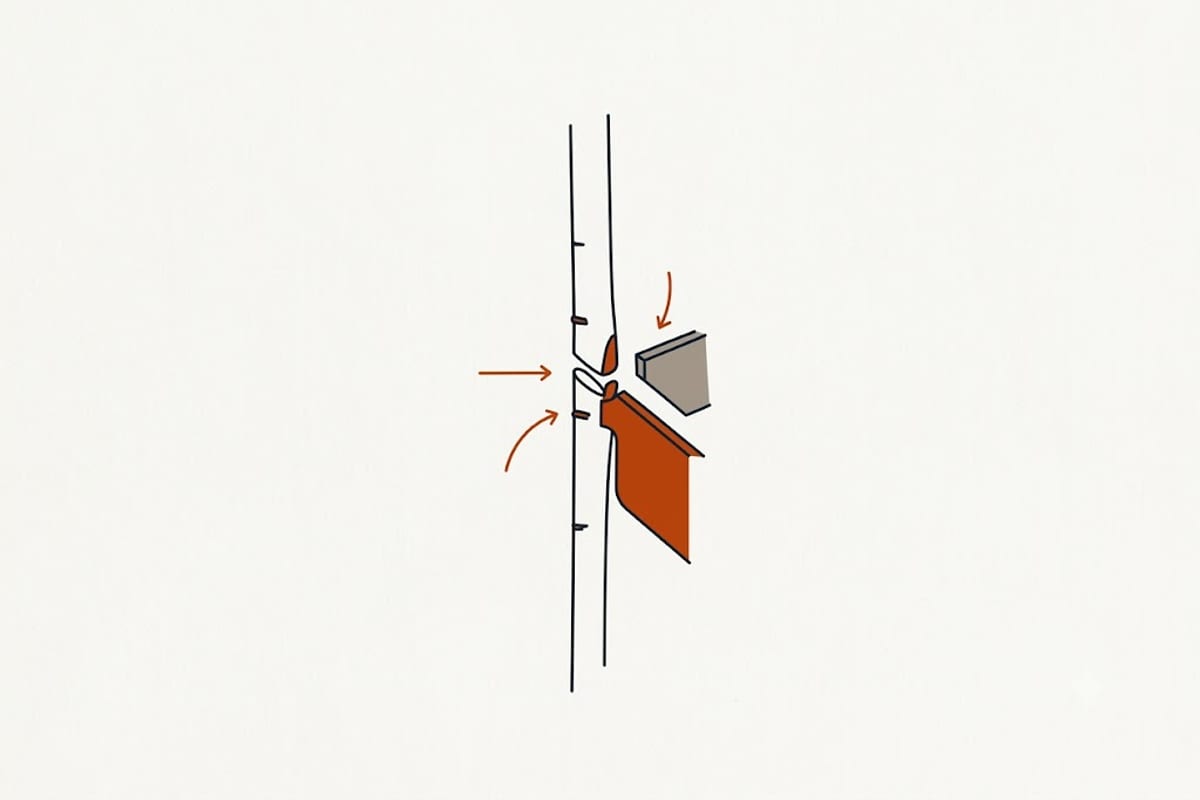
Cutting above a node is worth trying on a strong plant. On a plant that has just lost roots or leaves, cutting the whole spike off is kinder — flowering is expensive, and a struggling plant does better putting its energy into leaves and roots.
The crown
This is the serious one. The crown is the point at the centre of the plant where the leaves emerge, and it is the growing point. A phalaenopsis has only one, and it does not regenerate.
Browning or blackening there, particularly soft and wet rather than dry, is crown rot. It usually follows water sitting in the crown after watering or misting — the plant has no way to shed it, and in still air it does not evaporate.
If it is caught very early, some growers remove the affected tissue with a sterile blade, dry the area thoroughly, and keep the plant somewhere with good air movement. Often the plant is lost, and the realistic hope is a keiki — a plantlet — forming on an old spike.
Prevention is straightforward and completely reliable: water at the roots, never over the plant, and blot out any water that lands in the centre.
The base of the plant and the roots
Browning at the very base where the plant meets the bark, with soft leaves and no firm roots, is root rot rather than crown rot. That is recoverable if any firm roots remain, and the approach is to repot into fresh bark after cutting away every soft root.
Roots themselves are misleading in colour. A phalaenopsis root can be stained brown by old bark and still be perfectly alive. The test is the squeeze: firm and round means alive regardless of colour, and soft, flat or hollow means dead.
Telling them apart quickly
Look at where the brown is relative to the leaves. Above and separate from them, on a thin stem that used to carry flowers, is the spike. Between and below them, at the centre of the plant, is the crown. Underneath, among the bark, is the roots.
Those three have different urgency: the spike needs nothing, the roots need attention this week, and the crown needs attention today.
Keikis, and what to do with one
Occasionally an old spike produces a small plantlet rather than more flowers. This is called a keiki, and it is a genetically identical clone growing directly on the parent's flower stem. It usually appears at a node, starts as a tiny leaf, and slowly develops its own roots.
The temptation is to remove it immediately. Leave it. A keiki should stay attached until it has two or three roots of its own at least five centimetres long, which commonly takes several months. Detached earlier it rarely establishes.
When it is ready, cut the spike a couple of centimetres either side of the keiki and pot it into fine orchid bark in a small pot. Keep it slightly more humid than an adult plant for the first few weeks.
Keikis appear more often on stressed plants than on thriving ones, which is worth knowing: a plant that has lost roots and then produces a keiki may be making a last effort rather than showing how happy it is. In that situation the keiki is often the part worth saving.
Why a spike sometimes stops mid-development
A spike that starts, grows a few centimetres, and then stops or browns at the tip is usually responding to a change — a move to a different room, a drop in temperature, a period of drying out, or a repot. Phalaenopsis initiate spikes in response to a cool period and abandon them readily if conditions become unfavourable.
Nothing is broken, and the plant will usually try again at the next opportunity. The response is to keep conditions stable rather than to intervene.