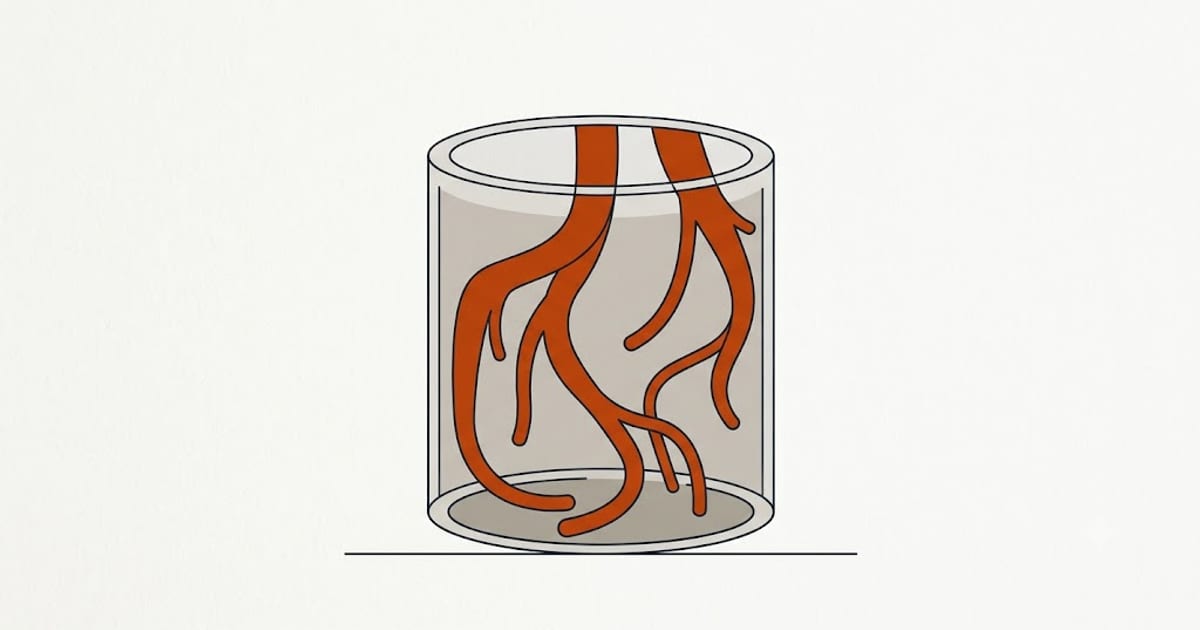
Supermarket orchids are sold in clear plastic pots, and that is not packaging. Phalaenopsis roots photosynthesise, and the clear pot lets you see the single most informative part of the plant without disturbing it.
Look at the roots before anything else.
Reading the roots
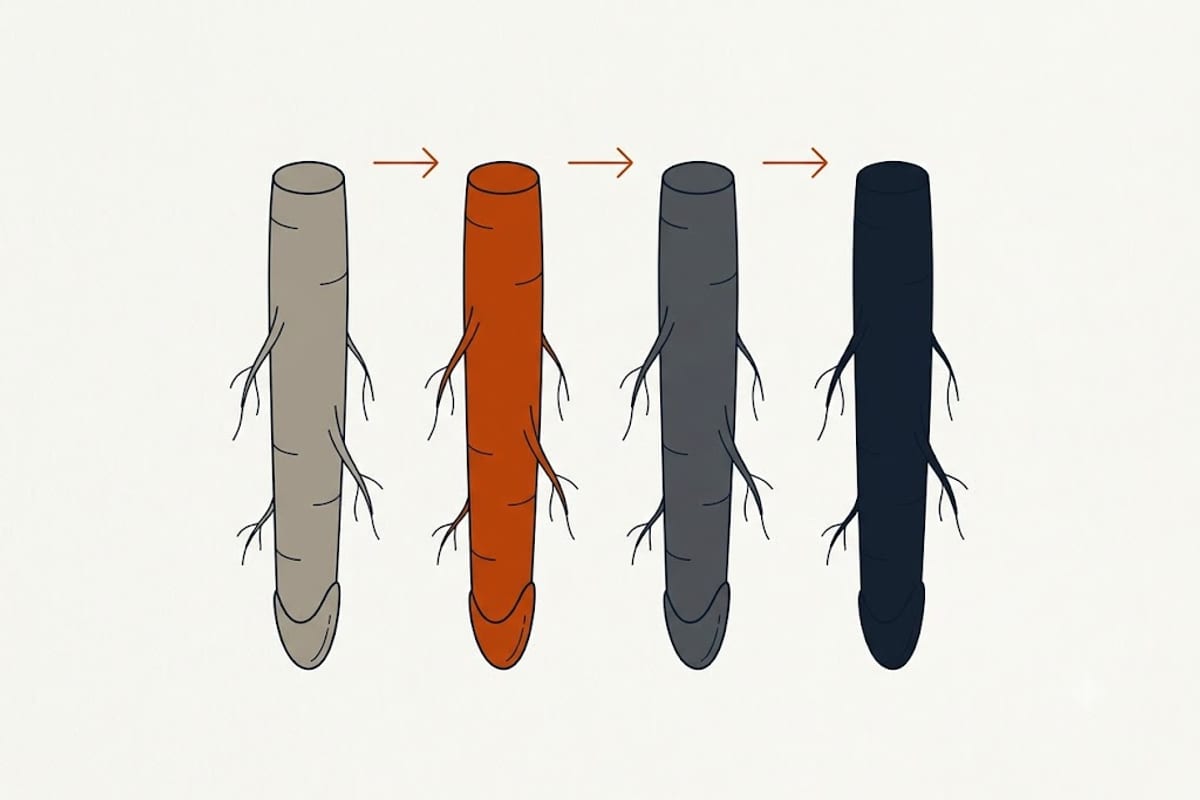
- Silvery-white and plump — healthy and thirsty. This is what roots look like when dry.
- Bright green and plump — healthy and recently watered. The green is the root drinking.
- Brown, soft, flattened, or hollow when squeezed — dead. These do not come back.
- Firm but wrinkled and grey — alive but dehydrated for a long time.
A plant with several firm roots is recoverable no matter how bad the leaves look. A plant with no firm roots left is usually not.
The most common way they die
Water sitting in the crown or around the roots. Phalaenopsis grow on tree bark in the wild, with roots exposed to air and rain that drains away in minutes. In a pot of compost, or in a decorative outer pot holding a reservoir of water, they rot.
Three specific mistakes account for most losses:
- The plant left standing in water in its decorative sleeve after watering.
- Ice cubes on the surface. Common advice, and it delivers cold water directly to the crown at a temperature no tropical plant meets in nature.
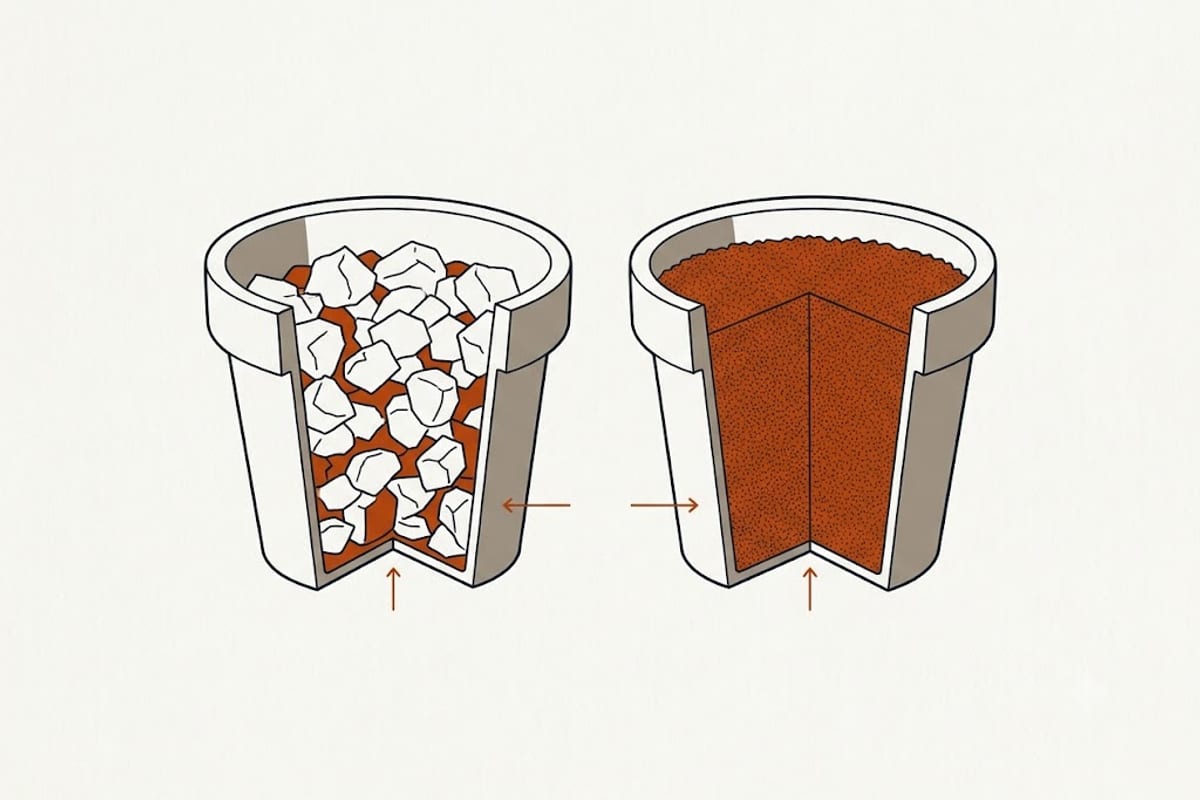
- Potted in ordinary compost rather than bark. Compost holds water around roots designed to be dry between soakings.
Water it the way rain works
Take the pot to the sink. Run tepid water through the bark for thirty seconds or so, letting it pour straight out of the bottom. Let it drain completely — really completely — then put it back in its outer pot.
Do that again when the roots have turned silvery and the pot feels light. In a warm room that is roughly every seven to ten days; in a cool room, longer. Watering by the calendar rather than by root colour is how most of them are killed.
Never leave water sitting in the crown, the point where the leaves meet. Tip it out or blot it. Crown rot kills the growing point and the plant cannot recover from it.
Losing flowers is not dying
A phalaenopsis flowers for two to four months and then stops. The flowers drop, the spike may go brown, and the plant looks finished. It is not — it is between flowerings.
When the spike browns completely, cut it off at the base. If it stays green, you can cut just above a node and it may branch and flower again from there.
The plant will then spend months producing leaves and roots before spiking again. A new leaf is the sign it is doing well, not a new flower.
Yellow leaves
The lowest leaf yellowing and dropping, slowly, one at a time — normal. Orchids shed old leaves.
Several leaves yellowing at once, or leaves going limp and leathery — a root problem. Go back to the pot and look.
Yellow with black soft patches — rot, and it needs affected tissue removed with a clean blade.
Repotting a struggling plant
Bark breaks down in about two years and starts holding water like compost, which is why an orchid that was fine for two years can decline without any change in care.
Tip it out, cut off every dead root, and repot into fresh orchid bark in a pot only slightly larger than the root mass. Then leave it alone for a week before watering.
Do not fertilise a plant with damaged roots. It cannot take it up, and the salts make the remaining roots worse.