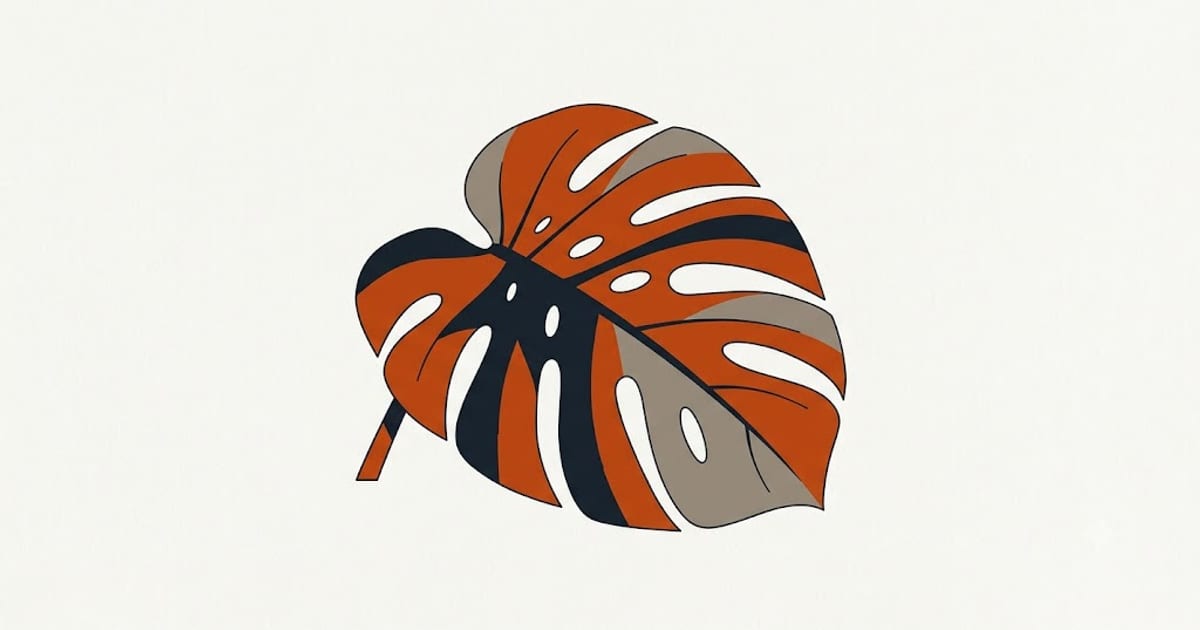
Black tissue on a monstera is different from brown tissue, and the distinction is worth making because black usually means something is actively rotting rather than something has dried out.
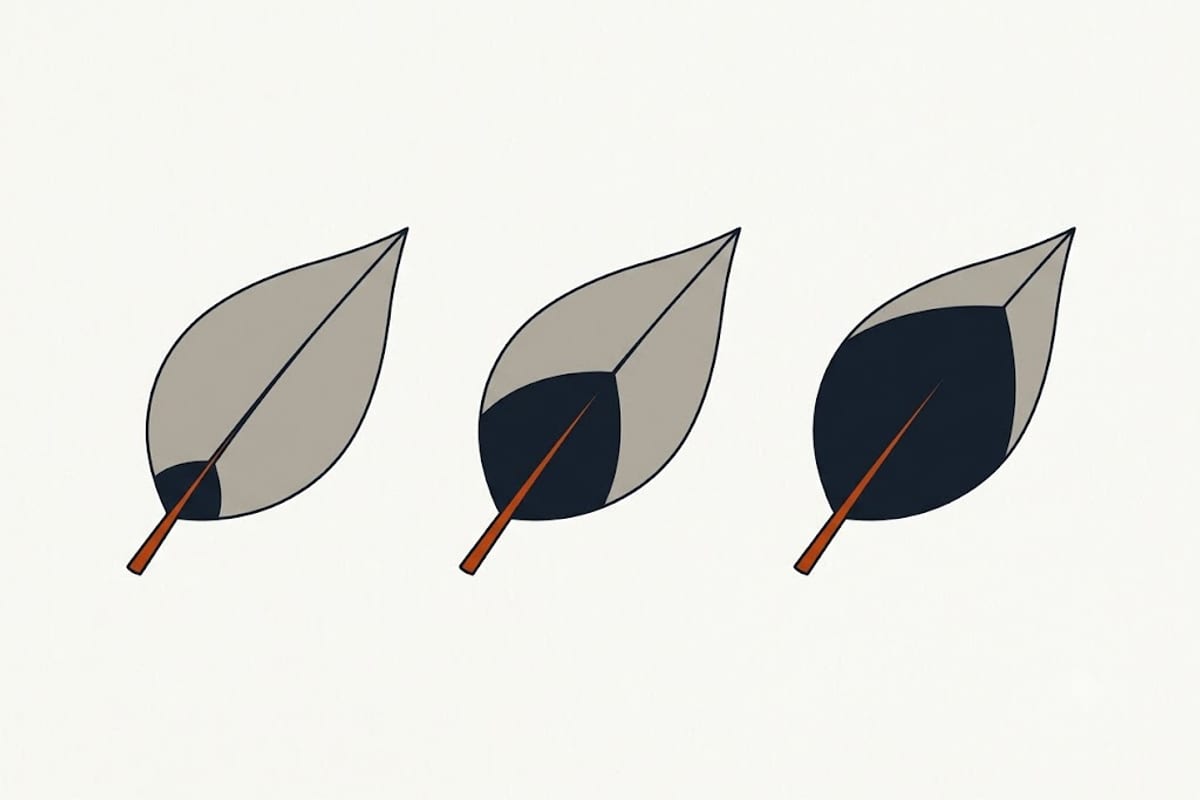
Where the black starts
From the stem end of the leaf, spreading outward, soft to the touch, often on the lowest leaves first. This is the pattern that points at the roots. The plant is losing its ability to move water and nutrients, and the leaves furthest down the pecking order fail first.
From the edges and tips, dry and crisp, going brown before black. This is water stress at the extremities — either the pot dried out badly or the air is very dry. Less serious and easier to correct.
Discrete black spots in the middle of the leaf, soft, sometimes with a yellow ring. A leaf infection rather than a root problem. These spread between leaves, particularly where leaves stay wet and air is still.
Checking the roots
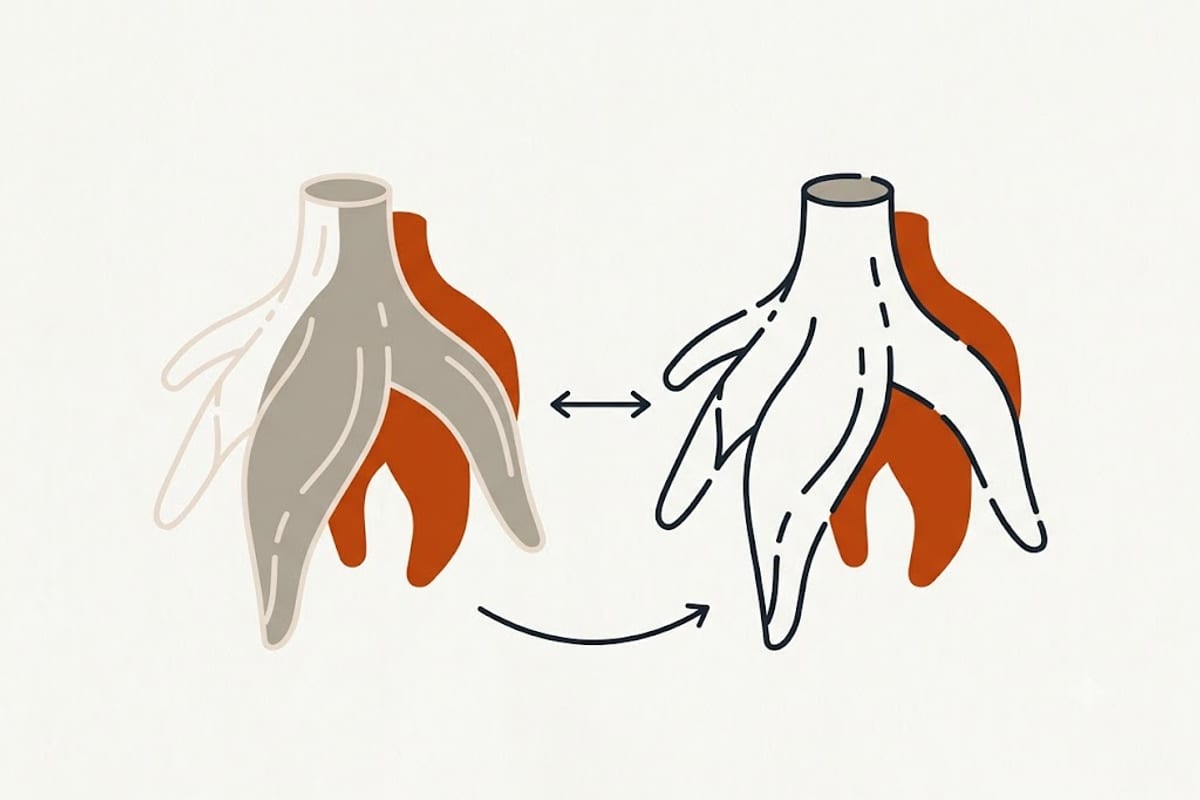
If the black is spreading from the base, take the plant out of its pot rather than guessing. There is no way to judge root health from the surface, and every day of delay costs more root.
Healthy monstera roots are firm and pale — white through to light tan — and they snap rather than squash. Rotting roots are dark brown or black, soft, and pull apart between the fingers. There is often a sour smell.
If most of the root mass is still firm, cut away the dead material with a clean blade, remove the worst leaves, and repot into fresh chunky mix in a pot with drainage. Water sparingly until new growth appears. If almost nothing firm remains, the better use of the plant is cuttings — a stem section with a node and an aerial root will produce a new plant far more reliably than a rotted root ball will recover.
Why it happened
Monstera roots are adapted to grow along and into bark and leaf litter, with plenty of air around them. In a pot of dense compost they sit in something much closer to permanently wet.
The specific combinations that cause it are consistent: a pot that is much larger than the root ball, so a great volume of soil stays wet; a mix with no bark, perlite or coarse material in it; a decorative outer pot that holds water after watering; and watering on a schedule rather than by checking. Cold makes all of it worse, which is why so many monsteras are lost between November and February rather than in summer.
What not to do to a plant that is already struggling
Do not fertilise. Damaged roots cannot take it up and the salts add stress to what is left. Do not move it to a brighter spot as well as repotting it — one change at a time, or you will not know what worked. Do not water on a schedule while it recovers; check the mix each time.
And do not cut every affected leaf off immediately. A leaf that is half black is still doing some photosynthesis, and a plant with a damaged root system needs whatever it can get. Remove leaves that are more than about half gone, and leave the rest until new growth appears.
Judging recovery
Existing damage never reverses. A black patch stays black, and a leaf that has gone soft will not firm up.
The only meaningful evidence is a new leaf. In the growing season a recovering monstera should produce one within a month or two; if nothing appears by then, take it out of the pot and look again.