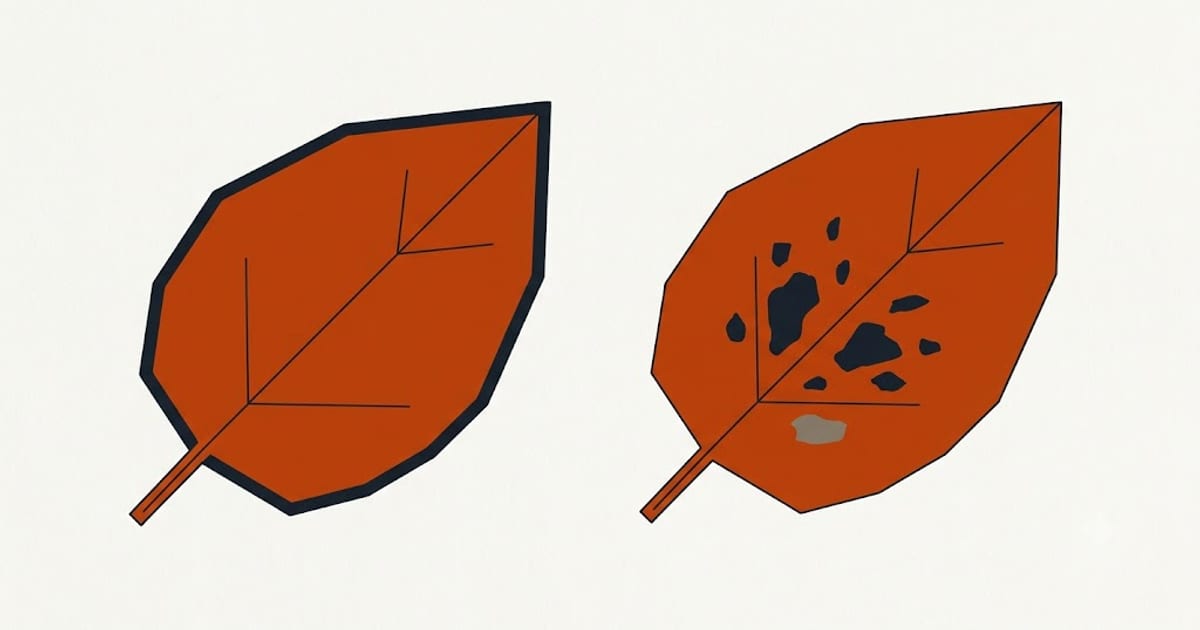
Brown on a monstera leaf is not one problem. It is at least three, and they are told apart by where the brown starts and how it feels.
Before deciding anything, touch the damaged part. Crisp and papery is one family of causes. Soft, damp or slimy is a completely different one.
Brown at the edges and tips, crisp
The most common pattern, and the least serious.
This is water stress at the extremities of the leaf — the parts furthest from the stem, which lose out first. It usually means one of:
- The soil dried out too far between waterings, at least once.
- Air is very dry, typically near a radiator or a vent in winter.
- Salt build-up from fertiliser or hard water, concentrating at the leaf margins.
The tell for salts: a whitish crust on the soil surface or around the drainage holes, and browning that keeps returning on new leaves too. Flushing the pot — watering heavily until a good volume runs out of the bottom, several times — clears it.
Edge browning that appeared once and has not spread needs nothing done. The damaged tissue will not recover, but the leaf is still working.
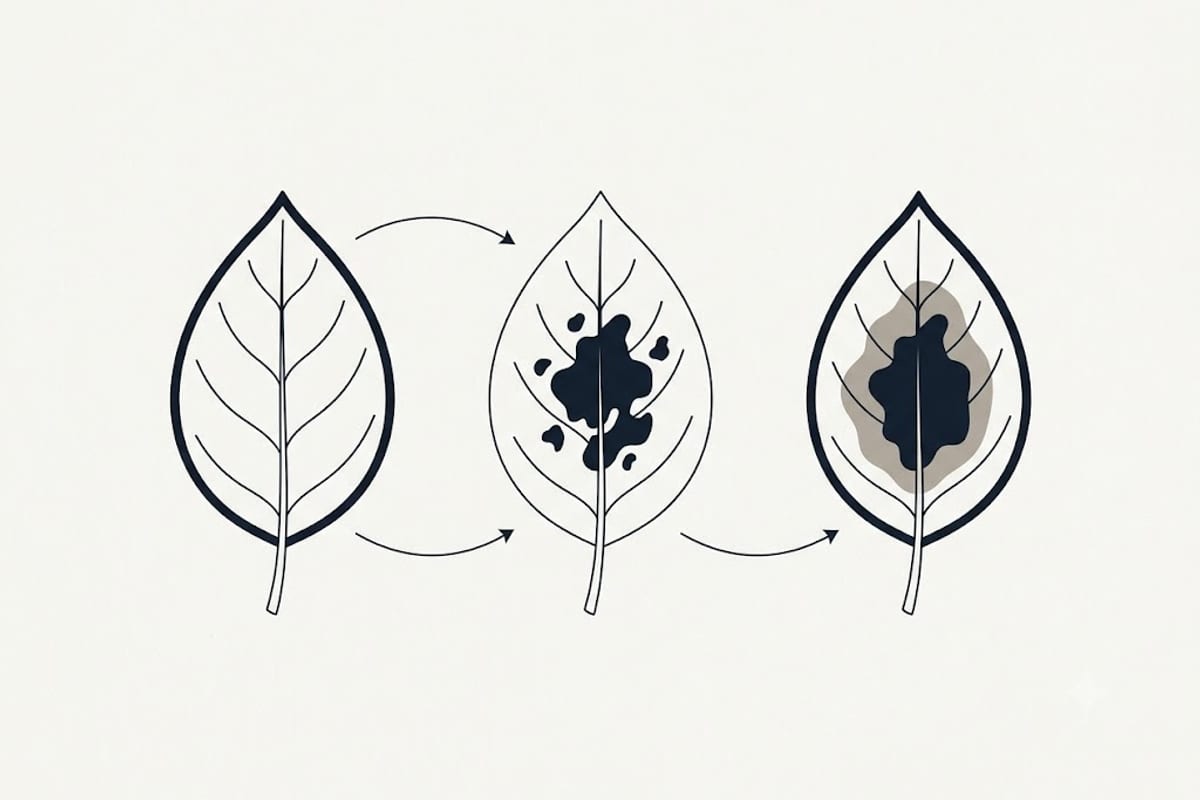
Brown spots in the middle of the leaf, soft, often with a yellow ring
This is the pattern to take seriously.
A soft spot surrounded by a yellow halo is the classic signature of a bacterial or fungal leaf infection. The halo is the plant's tissue reacting around the infected area. These spots enlarge, and they spread to other leaves, particularly when leaves are wet and air is still.
What helps:
- Remove affected leaves with a clean blade, cutting the whole leaf at the stem rather than trimming around the spot.
- Stop misting and stop watering over the foliage.
- Increase air movement. A stagnant, humid corner is where this thrives.
- Keep the plant away from others until it stops appearing on new growth.
Brown or black spots that start near the base, with limp stems
Look at the roots. This pattern usually means root rot has already begun, and what you see on the leaf is the consequence rather than the cause.
Slide the plant out of the pot. Healthy monstera roots are firm and pale. Rotting roots are brown, soft, and pull apart between the fingers, often with a sour smell.
If most roots are still firm, cut away the dead ones, repot into fresh mix in a pot with drainage, and water less often. If most are gone, the salvage route is cuttings from healthy stem sections rather than trying to rescue the pot.
Small dry spots with fine webbing
Check the undersides of the leaves and the leaf joints in good light. Fine webbing and tiny moving dots are spider mites, which thrive in the same dry indoor air that causes edge browning — so the two often appear together and get confused.
What does not cause brown spots
- Too little light causes small leaves, long gaps between them, and no fenestrations. It does not cause brown spots.
- Repotting causes wilting and leaf drop for a couple of weeks. Brown patches appearing weeks later are something else.
- Tap water causes crisp edges and tips, not soft central spots.
The one habit that prevents most of it
Water thoroughly, then let the top third of the mix dry before watering again — and pour at the soil, not over the leaves. Most of what shows up as brown spots on a monstera traces back to either the roots staying wet too long or the foliage staying wet at all.
A brown patch will never turn green again. Judge whether a change worked by watching the next leaf, not the damaged one.