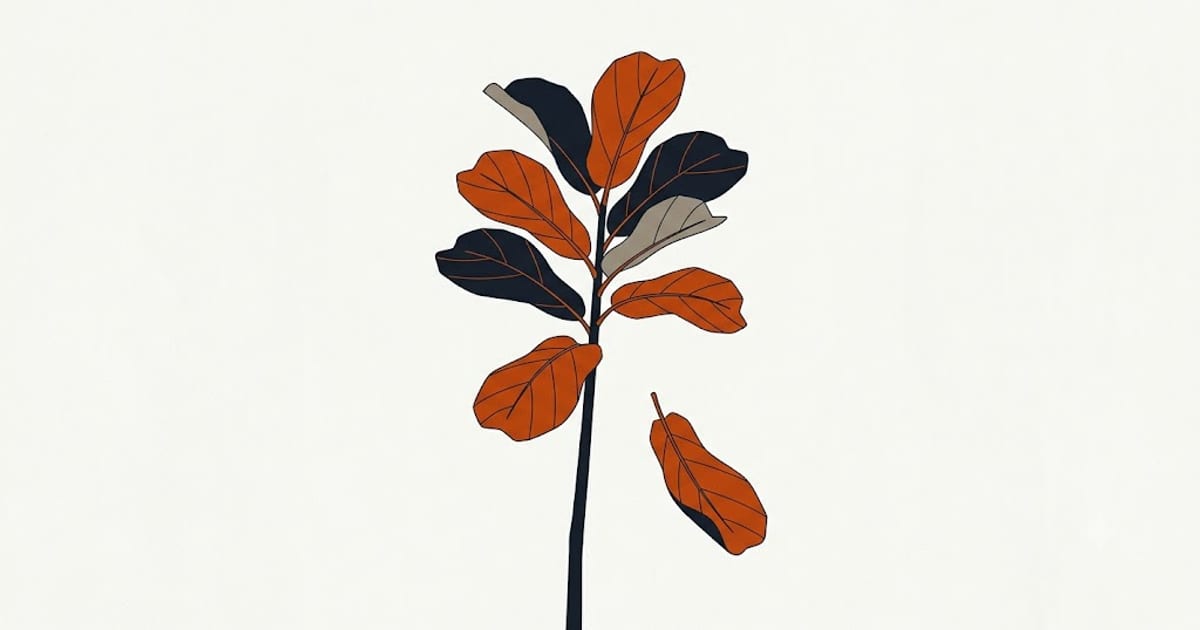
Fiddle leaf figs are sold as difficult. They are not difficult about many things — they are extremely particular about two, and nearly every failure traces back to one of them.
1 · They hate being moved
Ficus lyrata responds to a change in light, temperature or humidity by dropping leaves. Not slowly — within days.
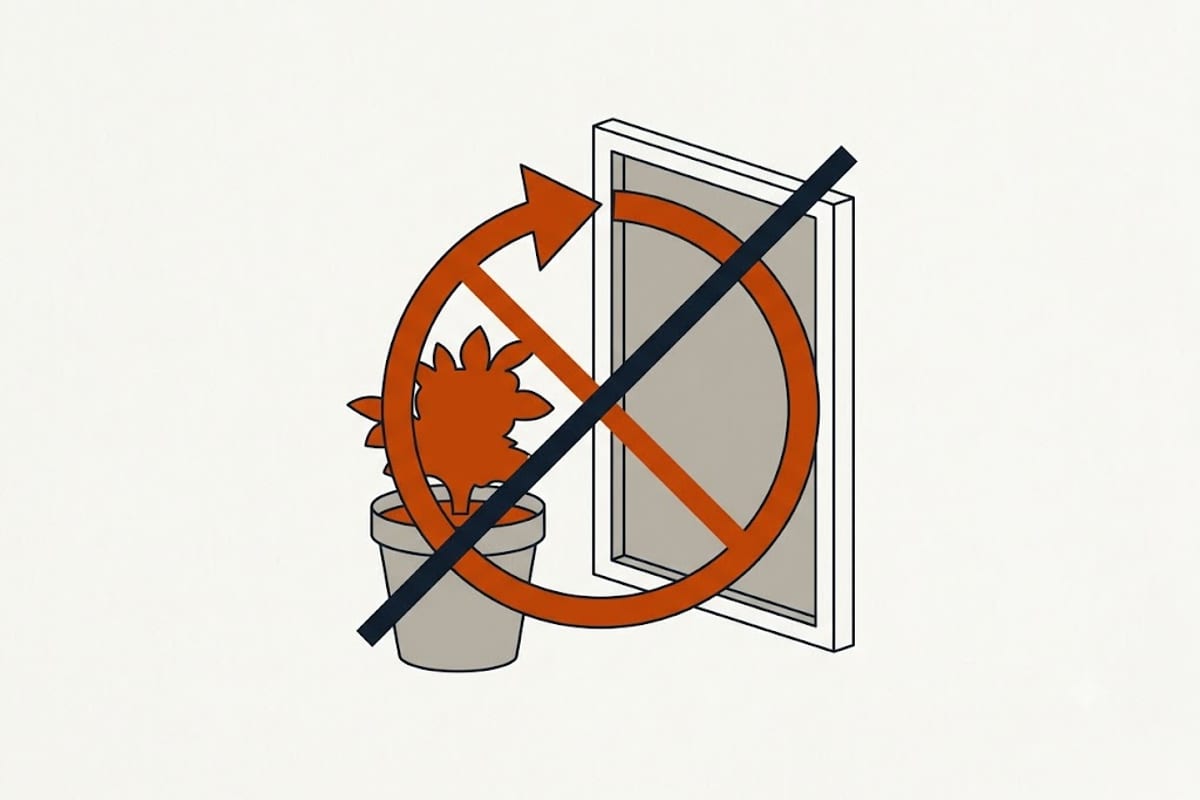
That includes:
- Coming home from the shop
- Being moved from one room to another
- Being turned around
- A radiator being switched on for the season
- A draught from a door that is now being used more
Leaf drop after a move is normal and the plant usually recovers, but the response is to stop moving it, not to try something else. Pick the brightest spot you have that is out of direct midday sun and away from draughts, and leave it there.
The most common way people kill one is by moving it repeatedly in response to each new symptom, which produces a new symptom each time.
2 · They will not tolerate wet roots
Fiddle leaf figs rot readily. The specific combination that does it: a dense compost, a pot that is too large, and watering on a schedule.
The tell is in where the brown appears on the leaf.
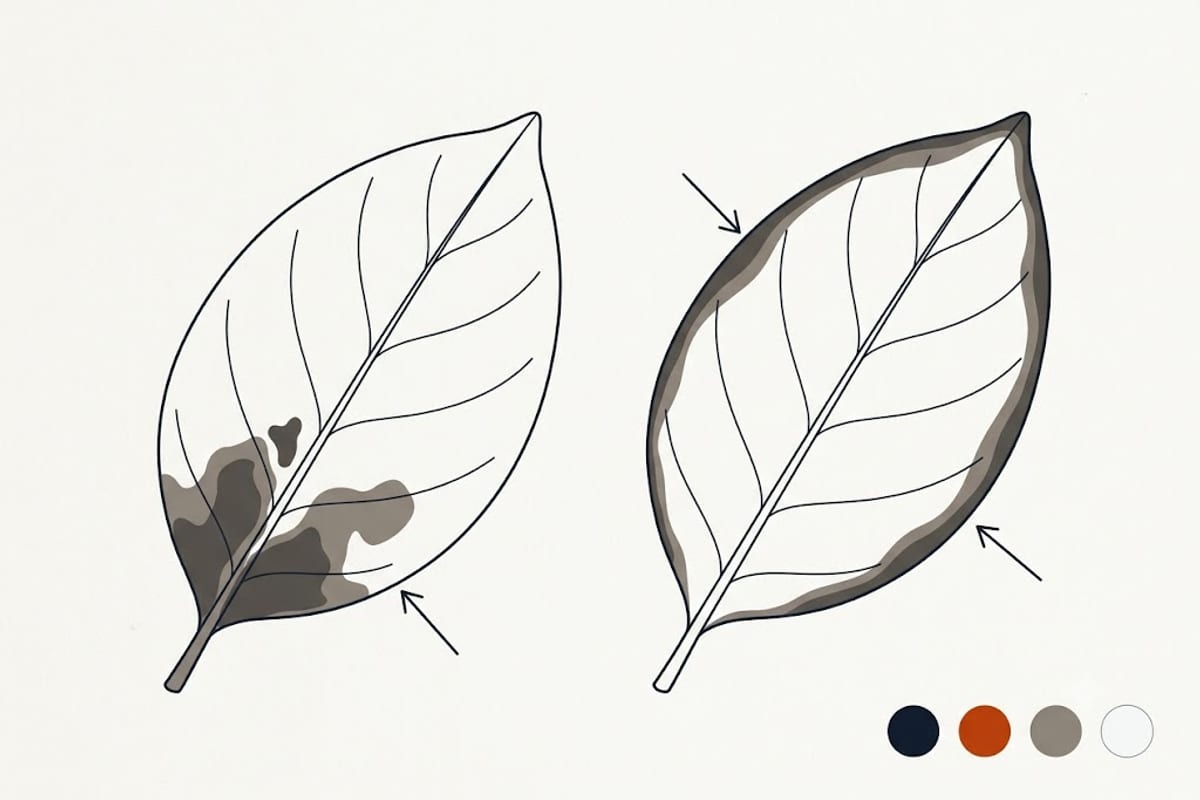
Dark brown or black patches starting near the stem end of the leaf, often on lower leaves first, sometimes with a yellow surround — root rot. This is the serious one. Tip the plant out and look at the roots; firm and pale is fine, brown and soft is not.
Light brown, crispy browning at the edges and tips of leaves — the opposite. Under-watering or very dry air.
Those two get confused constantly and need opposite responses.
Watering that works for this plant
Water thoroughly until it runs out of the bottom, then wait until the top few centimetres are properly dry before doing it again. Check with a finger rather than a calendar. In a bright warm room that is roughly weekly; in winter it can be every two or three weeks.
Never leave the pot standing in a saucer of water. If it lives in a decorative outer pot, lift it out to water and let it drain fully before putting it back — a reservoir of water in the bottom of a cachepot is one of the most reliable ways to rot one.
Light
Bright, indirect, and as much of it as you can give without direct midday sun on the leaves. Near a large window is ideal.
Signs of too little light: new leaves smaller than old ones, long bare stem between leaves, no growth for months in spring or summer. Signs of too much direct sun: pale bleached patches in the middle of leaves facing the window.
Brown spots that are neither
- Small dry brown spots with a yellow halo, spreading — a leaf infection. Remove affected leaves, improve air movement, keep foliage dry.
- Damage along one edge only, matching the shape of something — physical, from a wall, a curtain or being knocked in passing.
- Fine speckling with webbing — spider mites, common in dry heated rooms.
What not to do to a struggling one
- Do not repot immediately. A stressed plant with damaged roots does worse in fresh disturbance.
- Do not fertilise. Damaged roots cannot use it and the salts add stress.
- Do not move it to a better spot. See above — that is another change.
Change one thing, then wait. Fiddle leaf figs grow slowly enough that a month is a reasonable observation window, and new growth is the only real evidence that a change worked.