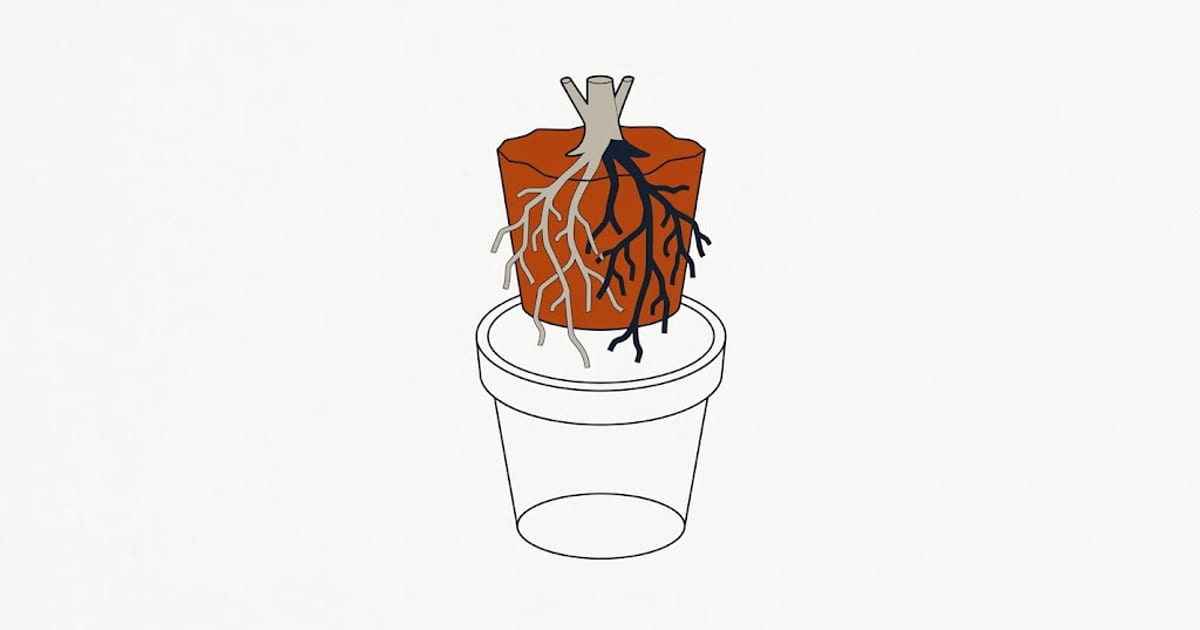
Orchid roots do not look like ordinary roots, and that is why healthy ones get cut off and dead ones get left in.
The squeeze test
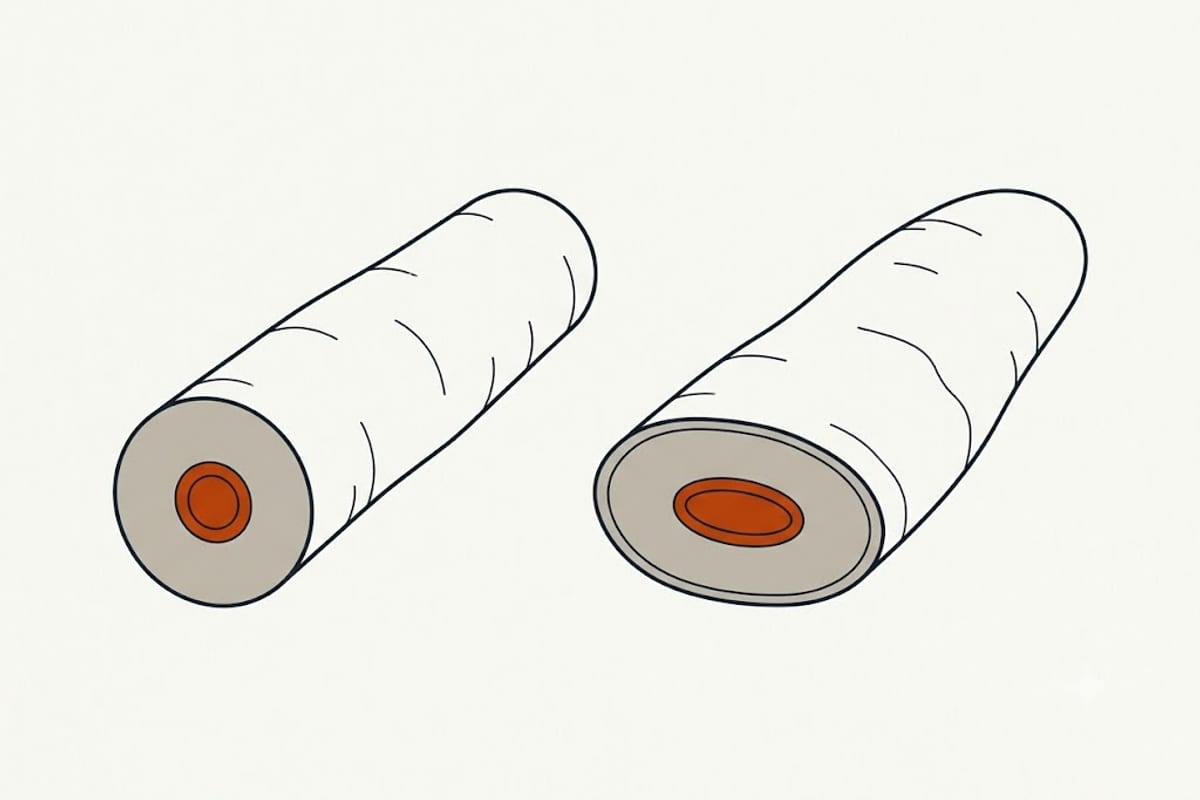
Take the plant out of its pot and squeeze each root gently between finger and thumb.
- Firm and round, silvery-white — alive and dry. This is what a healthy root looks like when it needs water.
- Firm and round, green — alive and recently watered. The green is the root photosynthesising.
- Soft, flat, collapsing, hollow, or the outer layer sliding off to leave a thin thread — dead. Cut it.
- Brown but firm — usually still alive. Colour alone is not enough; feel is.
That last case is where most healthy roots get lost. A root can be stained brown by old bark and still be working perfectly.
Doing the job
Work with clean tools and a clean surface.
- Remove all the old bark. Soak the root ball briefly if it is stuck.
- Cut every soft root back to firm tissue with a sterilised blade — flame it or wipe it with alcohol between cuts.
- Cut yellow or mushy leaves at the base.
- Let the plant sit dry for a few hours so the cuts seal.
- Repot into fresh orchid bark in a pot only slightly larger than the remaining roots.
- Wait a week before watering.
Use a pot that is too small rather than too large. Fewer roots need less volume, and a large pot full of damp bark is what caused the problem.
How few roots are enough
A phalaenopsis with two or three firm roots can recover, slowly, if kept in good light and humidity and not overwatered.
With no firm roots at all but a healthy crown and leaves, some growers succeed with a semi-water culture method — the base sitting in a small depth of water with the crown well clear, changed regularly. It works often enough to be worth trying, and it is a better bet than potting a rootless plant into bark.
Recovery takes months. A new root emerging from the base is the sign it is working; a new leaf is the sign it has worked.
What caused it
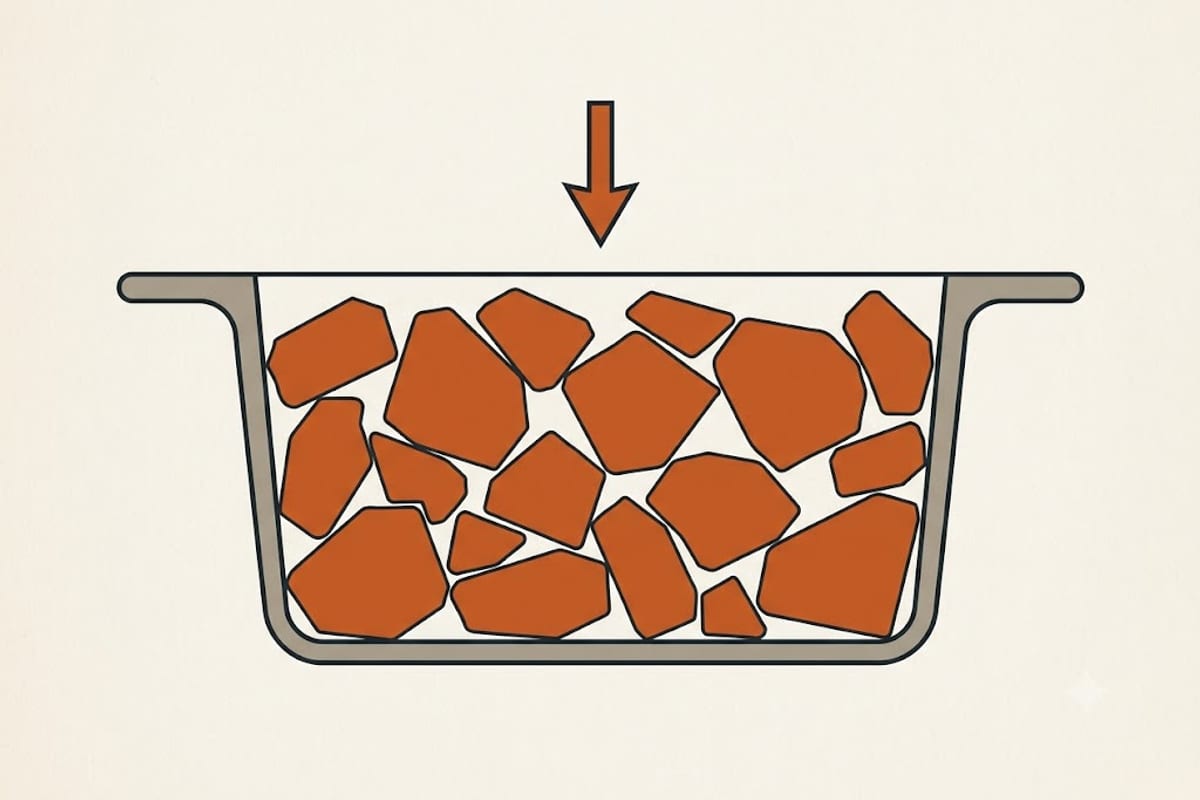
Almost always one of these:
- Compost instead of bark. Phalaenopsis roots grow on tree bark in the wild, exposed to air. Compost holds water against them permanently.
- Standing in water. A decorative outer pot holding a reservoir after watering is the classic cause.
- Watering on a schedule rather than when the roots turn silver.
- Old bark. It breaks down in about two years and begins to hold water like compost. An orchid that was fine for two years and then declined usually needs repotting rather than treatment.
- Ice cubes, which deliver cold water directly to the crown.
Watering afterwards
Take the pot to the sink, run tepid water through the bark for half a minute, let it drain completely, and put it back. Do it again when the roots have gone silver and the pot feels light — commonly every 7 to 10 days in a warm room, longer in a cool one.
Never leave water sitting in the crown, where the leaves meet. Blot it out. Crown rot kills the growing point and there is no recovery from it.
Aerial roots are not a problem to fix
Phalaenopsis produce roots that wander out of the pot and into the air. They look untidy and people tuck them back into the bark or cut them off, and both are mistakes.
Those roots are doing exactly what the plant evolved to do — absorbing moisture from humid air and photosynthesising. Forcing them into damp bark exposes them to the conditions that rot roots, and cutting them removes working tissue from a plant that may not have much to spare.
Leave them. If they are in the way, guide them gently rather than bending them sharply; they are brittle and they snap.
Preventing it happening again
Repot into fresh bark every 18 months to 2 years, before the old mix breaks down. Water by looking rather than by the calendar: silver roots mean water, green roots mean wait. Never leave the pot standing in liquid, and blot any water that lands in the crown.
Those four habits between them prevent almost every case of orchid root rot, and none of them requires any product or equipment.