A pothos droops when its leaves lose water faster than the roots supply it. That single mechanism has two opposite causes that look identical from across the room: there is no water in the pot, or there is plenty of water in the pot and the roots have rotted and cannot take it up. A third group of causes, cold, heat, a recent move and pests, produce the same droop for a few days and usually resolve on their own.
The diagnosis takes ten seconds. Lift the pot and feel its weight. Press a finger into the soil to the second knuckle. A light pot with dry soil is thirst, and water fixes it by tonight. A heavy pot with wet soil and a drooping plant is root trouble, and water makes it worse.
What the pot tells you
| What you see | Most likely cause | Check this first |
|---|---|---|
| Limp vines, leaves hanging, pot light, soil dry and shrunk from the rim | Underwatering | Soil two or three centimetres down; pot weight |
| Limp vines, pot heavy, soil wet days after watering, lower leaves yellowing, sour smell | Overwatering and root rot | Root check |
| Droop within days of a move, a repot or a new home, soil neither wet nor dry | Shock | Wait a week with steady care |
| Droop after a cold night on a windowsill or near a door | Cold | Temperature at the leaf |
| Droop in a hot window or above a radiator, leaves warm to the touch | Heat and dry air | Position |
| Droop with sticky film, webbing or cottony spots | Pests | Undersides of leaves |
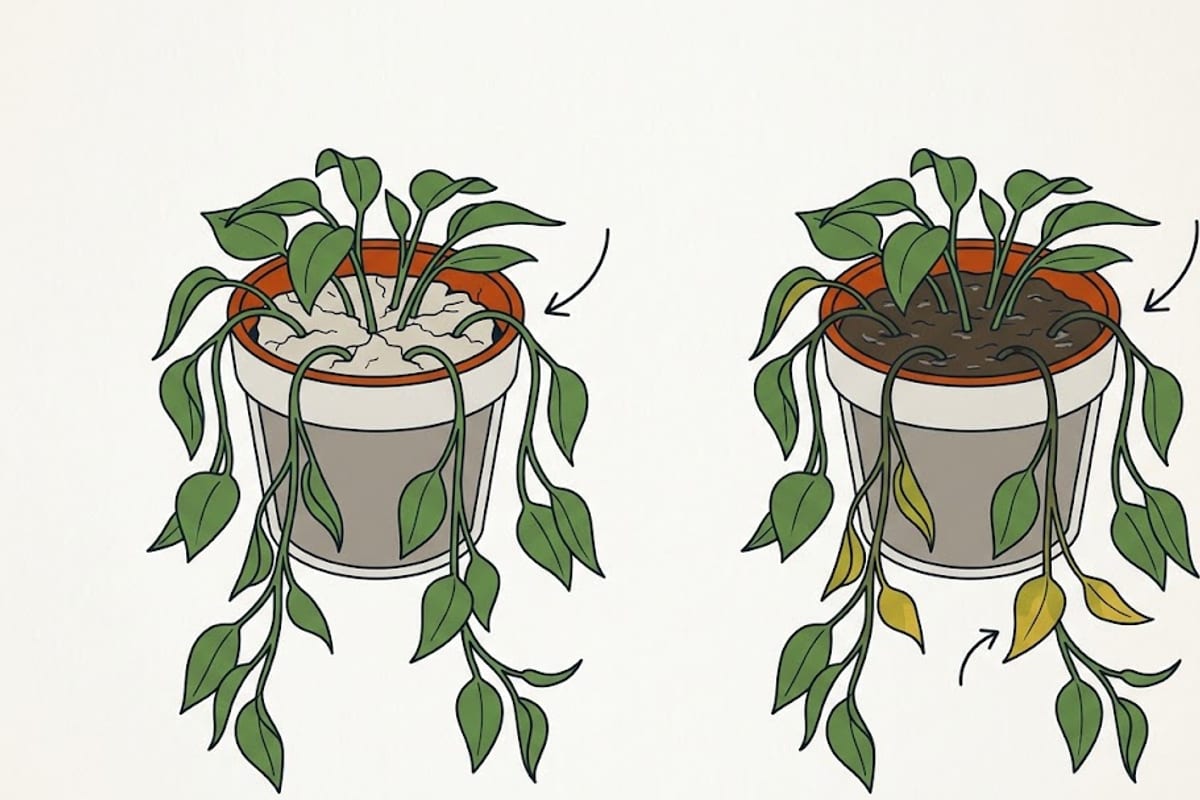
Underwatering
A pothos is forgiving of drought, which is why owners let it go too long. When the soil dries completely the leaves lose turgor, the vines go limp, and the leaves may fold slightly along the midrib. The pot is noticeably light. The soil is dry to the bottom and has often shrunk away from the pot's edge, so that water poured on top runs down the gap and out the drainage hole without wetting the root ball at all.
What to do: water slowly and thoroughly until water runs from the drainage hole, then wait a few minutes and water again. If the soil has shrunk from the rim, stand the pot in a basin of room-temperature water for twenty to thirty minutes so the root ball rewets from below, then let it drain. A thirsty pothos stands back up within a few hours to a day. Leaves that crisped brown at the tips stay brown; the rest recover fully.
After that, check the soil by finger every few days rather than watering on a schedule. Water when the top two or three centimetres are dry.
Overwatering and root rot
This is the droop that fools people, because the plant looks thirsty and the pot is soaking wet. Roots in waterlogged soil suffocate and die, rot sets into the dead tissue, and the plant can no longer draw water even though it is surrounded by it. The vines droop, the lower leaves yellow and sometimes develop soft brown patches, stems near the soil darken and soften, and the pot smells sour.
What to do: do not water. Slide the plant out of its pot. Healthy pothos roots are white to cream and firm; rotted ones are brown, soft, and pull apart. Cut all soft roots back to firm tissue, remove the old soil, and repot in a fresh, airy mix in a pot with drainage, no larger than the roots need. Water once to settle the mix and then leave it until the top of the soil is dry. Cut off leaves that are more than half yellow.
If most of the roots are gone, take cuttings instead: cut healthy vine sections with two or three leaves and a node, and root them in water or moist mix. Pothos roots readily and the cuttings become a new plant faster than a rotted root system recovers.
Recovery: two to four weeks for new roots, longer for new growth.
Shock after a move or repot
A pothos moved from a shop to a home, from one room to another, or into a new pot may droop for several days while the roots re-establish and the leaves adjust to different light and humidity. The soil is neither wet nor bone dry and the leaves are green.
What to do: nothing except steady care. Keep it in one spot with bright indirect light, water when the top of the soil is dry, and it perks up within a week or two.
Cold and heat
Pothos comes from warm forest and dislikes anything below about 15 degrees Celsius. A night on a cold windowsill, a draft from a door, or a cold snap in an unheated room makes the leaves droop and, if it was severe, go limp and dark. Heat does the reverse: a plant in a south window in summer or above a radiator loses water through its leaves faster than the roots can replace it, and droops in the afternoon even with moist soil.
What to do: move the plant away from cold glass and drafts in winter, and away from hot glass and heaters in summer. A cold-stressed pothos with green leaves recovers in a few days; leaves that turned dark and mushy from a hard chill are lost.
Pests
Mealybugs, scale and spider mites all feed on sap, and a heavy infestation leaves a pothos limp and pale with yellow patches. Look for white cottony specks in the leaf joints, small brown bumps on the stems, or fine stippling and webbing on the undersides of the leaves. A sticky film on the leaves or the surface below the plant is the honeydew they leave behind.
What to do: wipe the plant down with a damp cloth, treat with insecticidal soap or diluted horticultural oil, and repeat weekly for a month. Isolate it from other plants until clean.
The root check
When the pot weight and the soil do not settle it, or when you want to be sure before repotting, look at the roots. Tip the pot on its side, support the base of the vines, and slide the root ball out. White, cream or tan roots that hold together and smell of soil are healthy; brown or black roots that are soft, hollow or slimy and smell sour are rotted. Put a healthy root ball straight back; trim and repot a rotted one.
What to do today, by cause
- Underwatering: soak thoroughly, rewet from below if the soil has shrunk, expect recovery by tomorrow.
- Overwatering: stop watering, unpot, trim rotten roots, repot in airy mix, or take cuttings if the roots are mostly gone.
- Shock: leave it in one bright spot and wait a week.
- Cold or heat: move it away from the window, the door or the heater.
- Pests: wipe, treat weekly for a month, isolate.
Frequently asked questions
How long does a drooping pothos take to recover?
A thirsty pothos stands back up within hours of a thorough watering, a day at most. A pothos recovering from root rot takes two to four weeks to grow new roots and longer to produce new leaves. A pothos in shock from a move perks up within a week or two.
Why is my pothos drooping after I watered it?
Either the water ran down the gap between shrunken soil and the pot without wetting the roots, in which case rewet from below, or the roots have rotted and cannot take up the water, in which case watering makes it worse. Lift the pot: light means the first, heavy means the second.
Can an overwatered pothos recover?
Yes, if some firm roots remain. Trim the rotted roots, repot in fresh airy mix, and hold off watering until the soil dries. If almost no roots are left, take cuttings from healthy vines and root them in water; pothos roots easily and the cuttings become a new plant.
Should I mist a drooping pothos?
No. Misting wets the leaves for a few minutes and does nothing for the roots, which are where the water problem is. Water the soil if it is dry, or repot if it is wet and the roots are rotted.