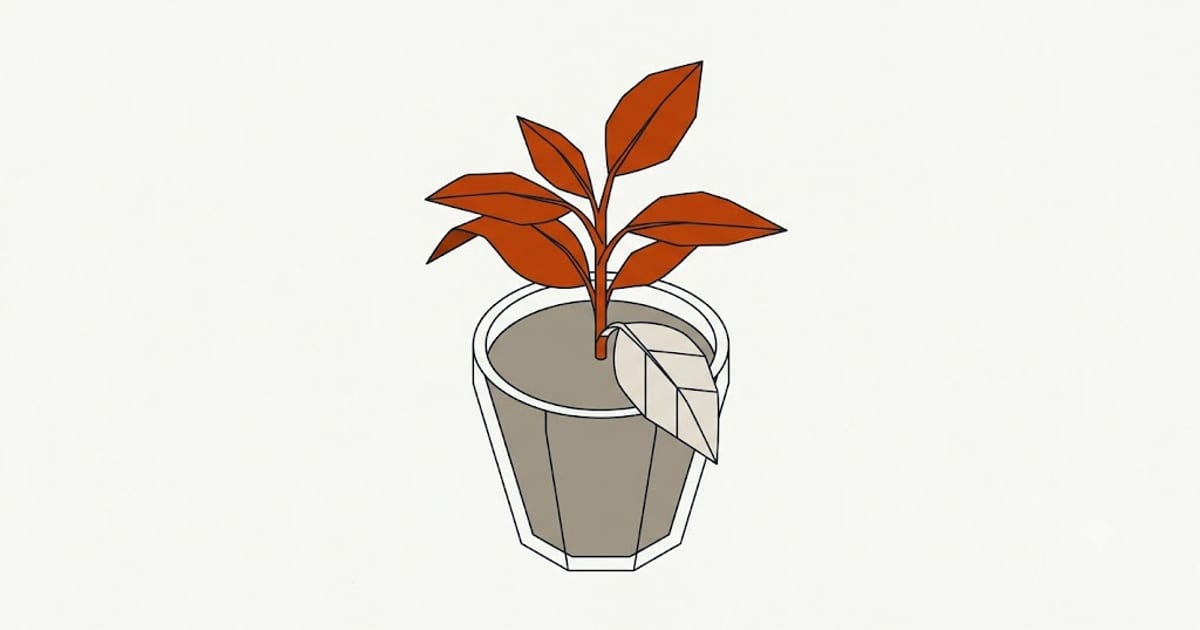
Losing a leaf or two after repotting is normal. Roots get disturbed, some are damaged, and the plant sheds what it cannot support while it re-establishes.
What matters is whether it stops.
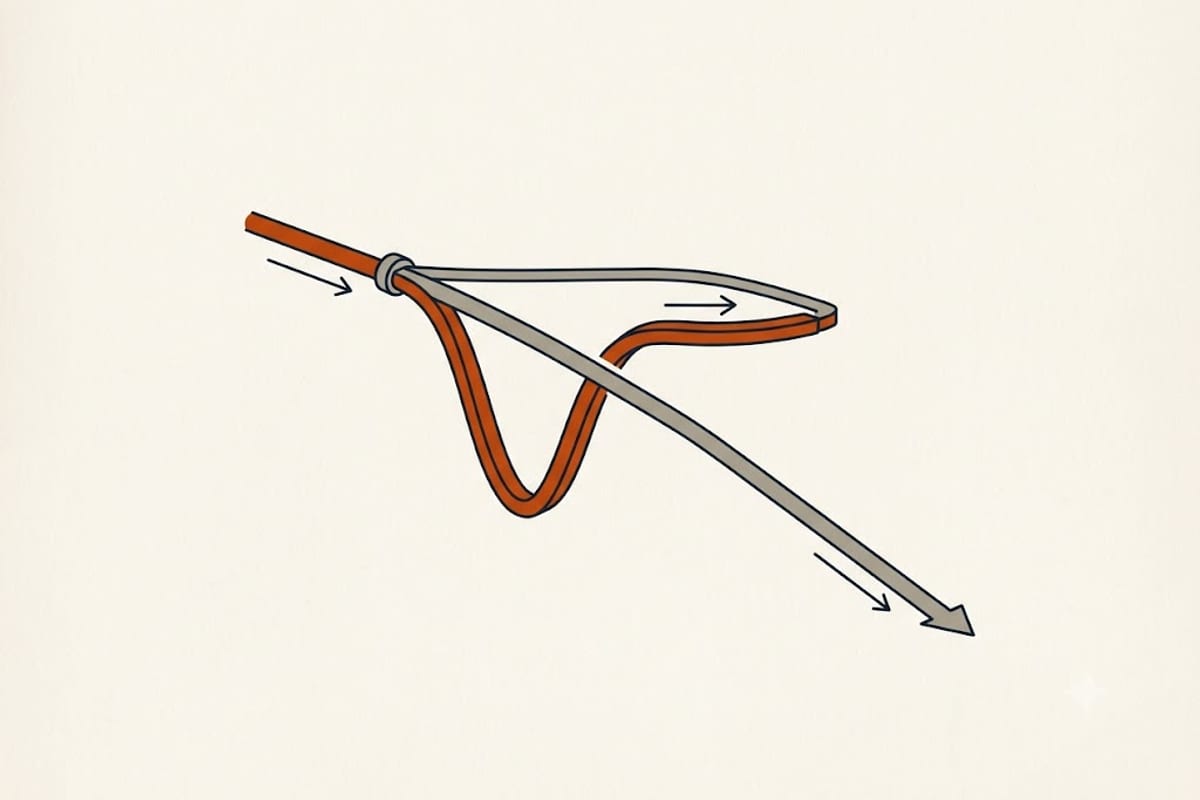
Normal shock
- One or two of the oldest, lowest leaves yellow and drop.
- It happens in the first one to three weeks.
- The rest of the plant looks unchanged.
- New growth appears within a month or so in the growing season.
Nothing to do. Do not fertilise, do not move it, do not repot again.
Not normal
- Yellowing continues past a month, or spreads upward.
- Several leaves at once, including newer ones.
- The stem is soft near soil level.
- The soil is still damp a week after watering.
That is not shock. Something about the new arrangement is holding water.
The pot size mistake
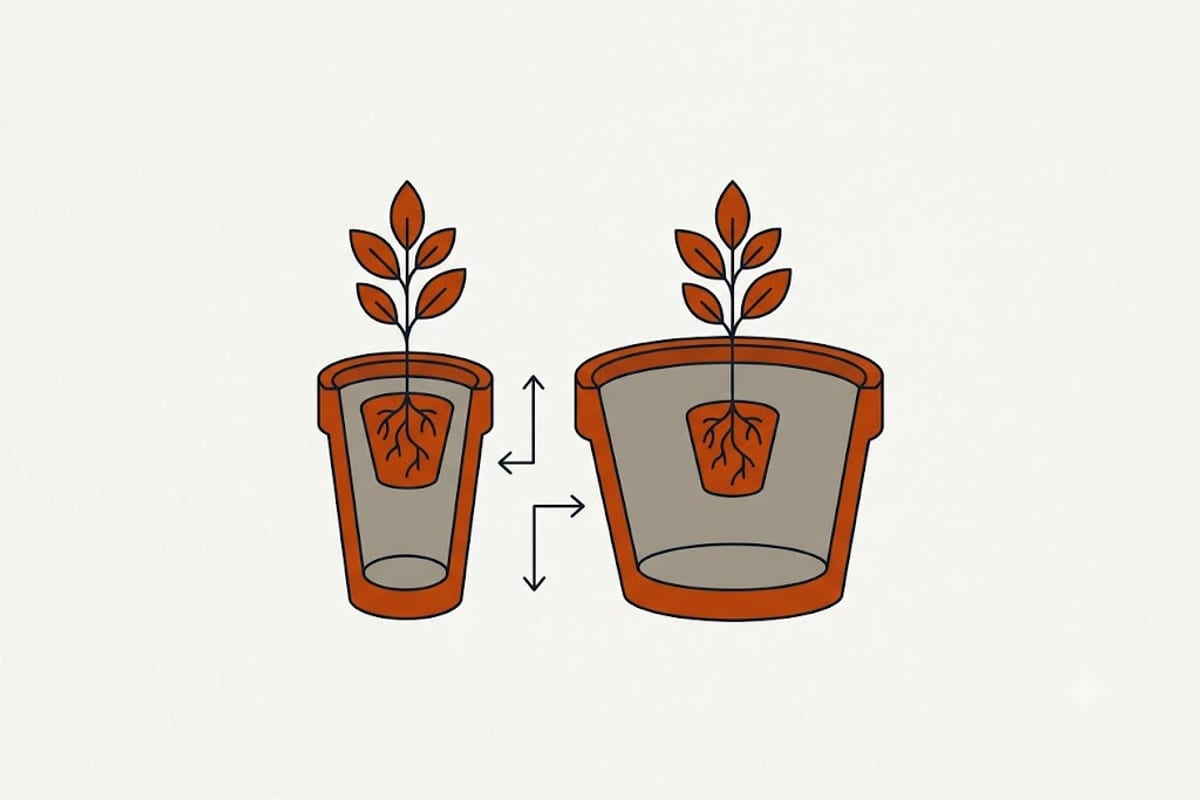
This is the most common cause by a wide margin, and it comes from good intentions — people move a plant into a much larger pot to save doing it again.
The problem: roots only occupy the middle. The surrounding volume of mix has no roots drinking from it, so it stays saturated for a long time after watering. Wet soil with no roots in it is exactly the condition that rots the roots that are there.
Go up one size — about 2 to 3 cm wider than the old pot. That is enough room for a season or two of growth and little enough that the plant can dry the whole volume.
The mix
Bagged houseplant compost is denser than most tropical houseplants want. Adding perlite, bark or coarse grit — roughly a quarter to a third by volume for most foliage plants — makes a large difference to how fast a pot dries.
If the old plant was in a chunky nursery mix and the new pot is fine compost, the plant has moved to a wetter environment even though nothing else changed.
Drainage
A new pot with no drainage hole guarantees this problem regardless of everything else. So does a layer of gravel at the bottom, which is old advice that does not work — it raises the saturated zone rather than draining it.
Timing
Repotting in autumn or winter carries much more risk than repotting in spring. A plant in active growth pushes new roots into fresh mix within weeks; a dormant plant sits in wet soil for months without doing so.
If a plant must be repotted out of season — because it has rotted, or the pot has broken — go smaller rather than larger and water very sparingly until growth resumes.
What to do now
If the soil is still wet: stop watering. Move the plant somewhere brighter and warmer with some air movement so the pot dries. If it is not drying within a week, take it out, remove the excess loose mix, and put it back in a smaller pot.
If the soil is drying normally and only old leaves are affected: wait. Water when the top third is dry, leave the plant where it is, and expect new growth within a month in the growing season.
Either way, do not fertilise for at least a month. Fresh mix usually contains enough, and damaged roots cannot take up more.
Repotting in a way that avoids all of this
Most post-repotting problems are decided before the plant goes in the new pot.
Choose the pot for the roots, not for the plant's height. A tall plant with a small root ball needs a small pot and something to stop it toppling, not a large pot full of wet soil.
Loosen the outside of the root ball gently rather than tearing it apart. Circling roots at the edge should be teased out so they grow outward, but the core is best left intact.
Use the same kind of mix the plant came in, or something a little more open. Moving from a chunky nursery mix to fine compost is a bigger change than moving pot size.
Water once, thoroughly, then leave it. Fresh mix is usually already damp, and the temptation to water again a couple of days later is where a lot of rot begins.
Keep it out of direct sun for a week or two. A plant with disturbed roots cannot support the water loss that strong light causes, and that is often what turns mild shock into serious leaf loss.