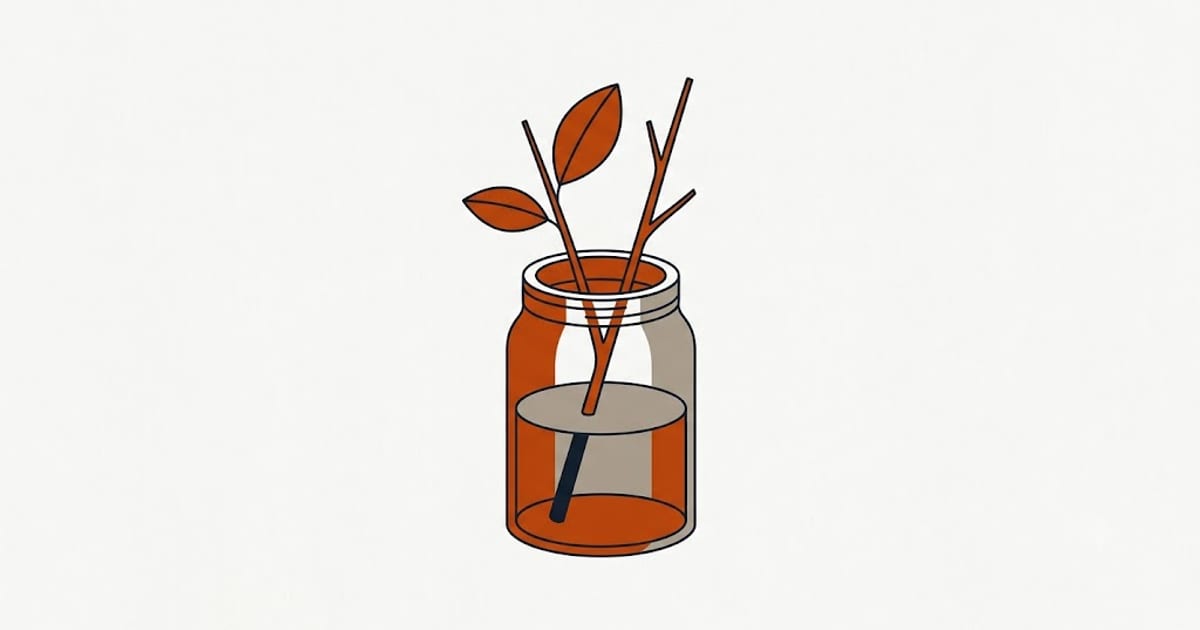
Most failed cuttings fail for one of four reasons, and the first is not a matter of care at all.
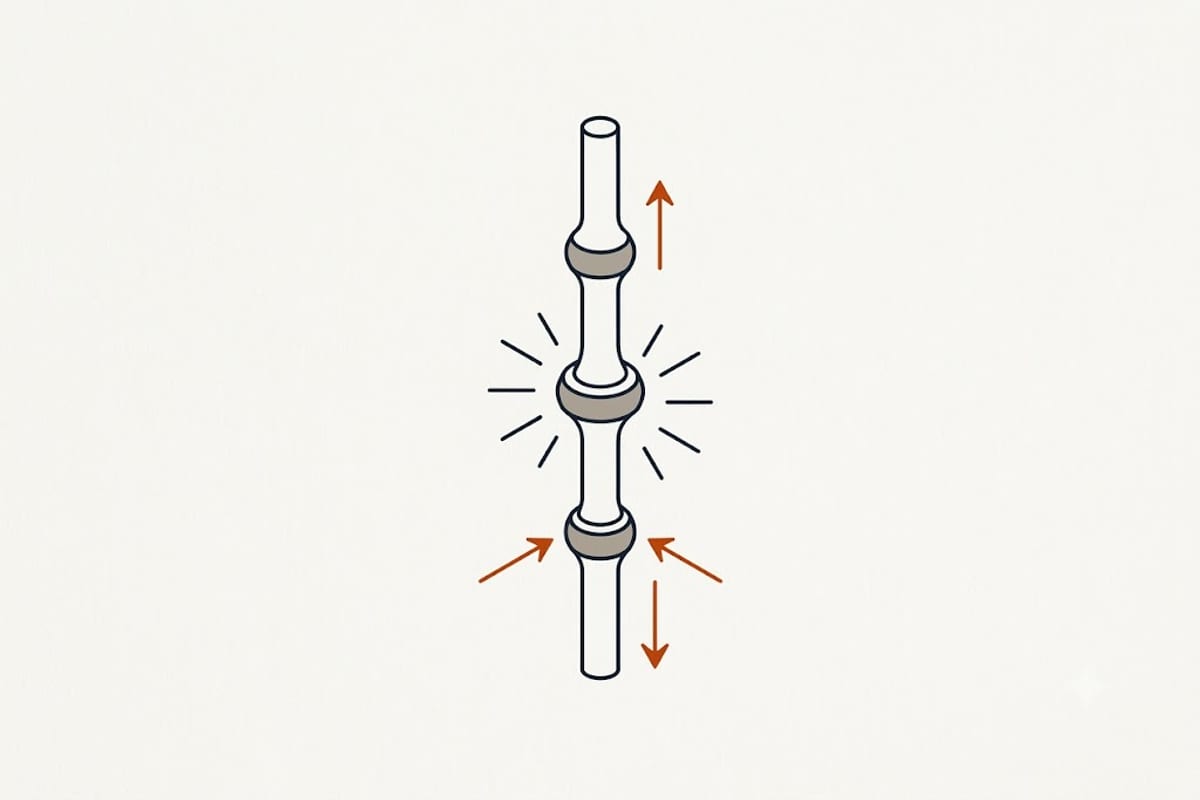
The cutting has no node
Roots emerge from nodes — the slightly swollen points on a stem where a leaf, an aerial root or a new shoot originates. A length of stem between nodes has no tissue capable of producing roots, and it will sit in water indefinitely, staying green, doing nothing, until it eventually rots.
This is the most common reason a pothos or monstera cutting fails, because a stem with a leaf on it looks like it ought to work. It needs at least one node below the water line. A single leaf on its own petiole, with no node, never will.
For a monstera, the node is the point where the aerial root and the leaf stem meet the main stem. For pothos, it is the small brown bump opposite each leaf.
The node is not in the water, or the leaves are
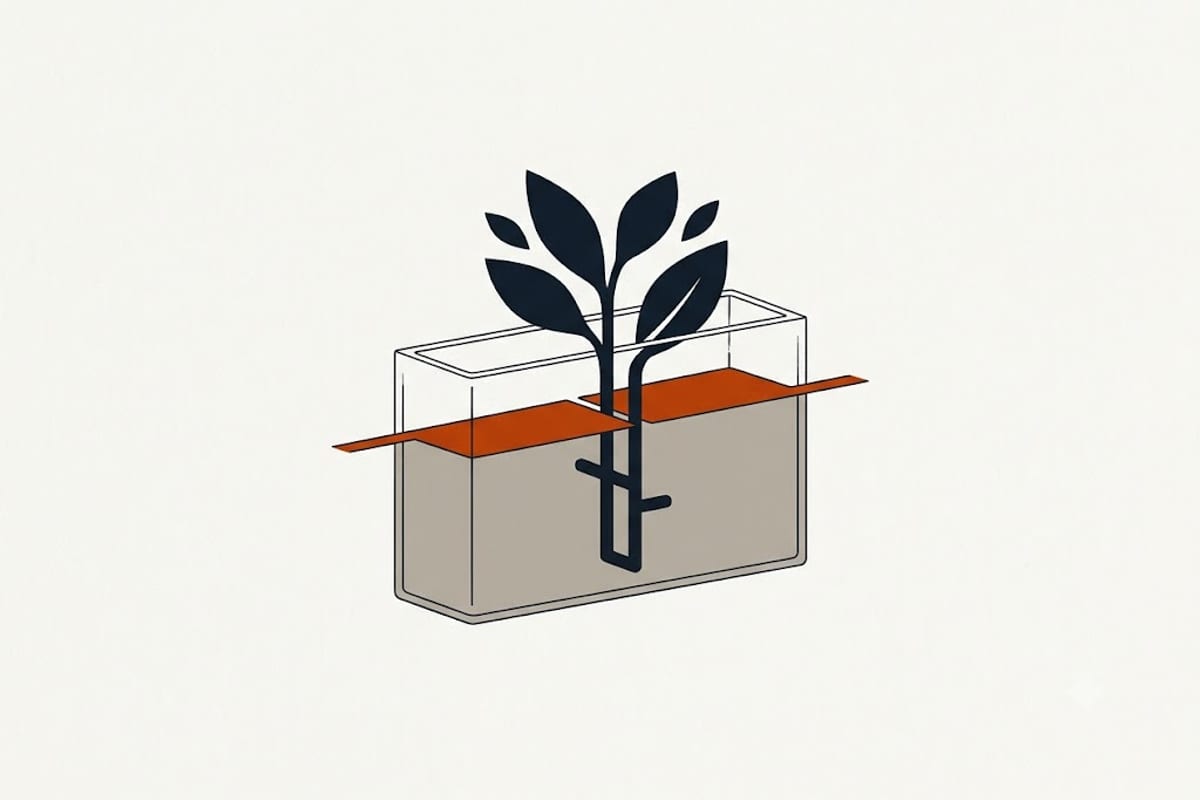
The node needs to be submerged and the leaves need to be clear of the water. Leaves left underwater rot within days, and the rot spreads back into the stem.
Strip the lowest leaves before putting the cutting in, so there is bare stem and a node below the water line.
It is too cold, or too dark
Root formation is temperature-dependent, and it more or less stops below about 18 °C. A cutting taken in October and left on a cool windowsill can sit unchanged for two months and then root in three weeks when spring arrives — the plant was not failing, it was waiting.
Light matters for the same reason. A cutting needs energy to build roots, and a bare stem with one leaf in a dim corner does not have much to work with. Bright indirect light speeds it up considerably; direct sun does not, because the cutting cannot replace the water it loses.
The water is stale
Change it every three to five days. Stale water becomes low in oxygen and high in bacteria, and roots that do form in it are weak and often fail on transfer to soil.
Rinse the container when you change it rather than just topping it up, because biofilm on the glass is part of the problem.
Species that simply take longer
Pothos and tradescantia root in one to two weeks. Monstera takes three to six. Fiddle leaf fig and rubber plant take two to three months and often fail. Snake plant leaf cuttings can take three months and root far more reliably in slightly damp mix than in water.
Judging a snake plant cutting after three weeks, or a ficus after a month, produces a lot of unnecessary worry.
Water roots and soil roots are different
Roots grown in water are structurally different from roots grown in soil — thinner, more brittle, adapted to a medium that holds no air pockets. Moving a cutting with long water roots into soil often results in most of them dying and the plant sulking for weeks while it grows replacements.
Transfer earlier rather than later, when roots are two to three centimetres long, and keep the mix damper than usual for the first fortnight while it adjusts. Rooting directly in moist mix from the start avoids the transition entirely, and for several species it works better.
Rooting hormone
It helps woody cuttings meaningfully and soft-stemmed houseplant cuttings marginally. If a pothos will not root, hormone is not the missing ingredient — a node is.