An overwatered plant and an underwatered plant both droop, both yellow, and both look like they are dying. The fixes are opposite, so getting it wrong makes it worse quickly.
Three checks separate them, and none of them is looking at the plant from across the room.
1 · Feel a drooping leaf
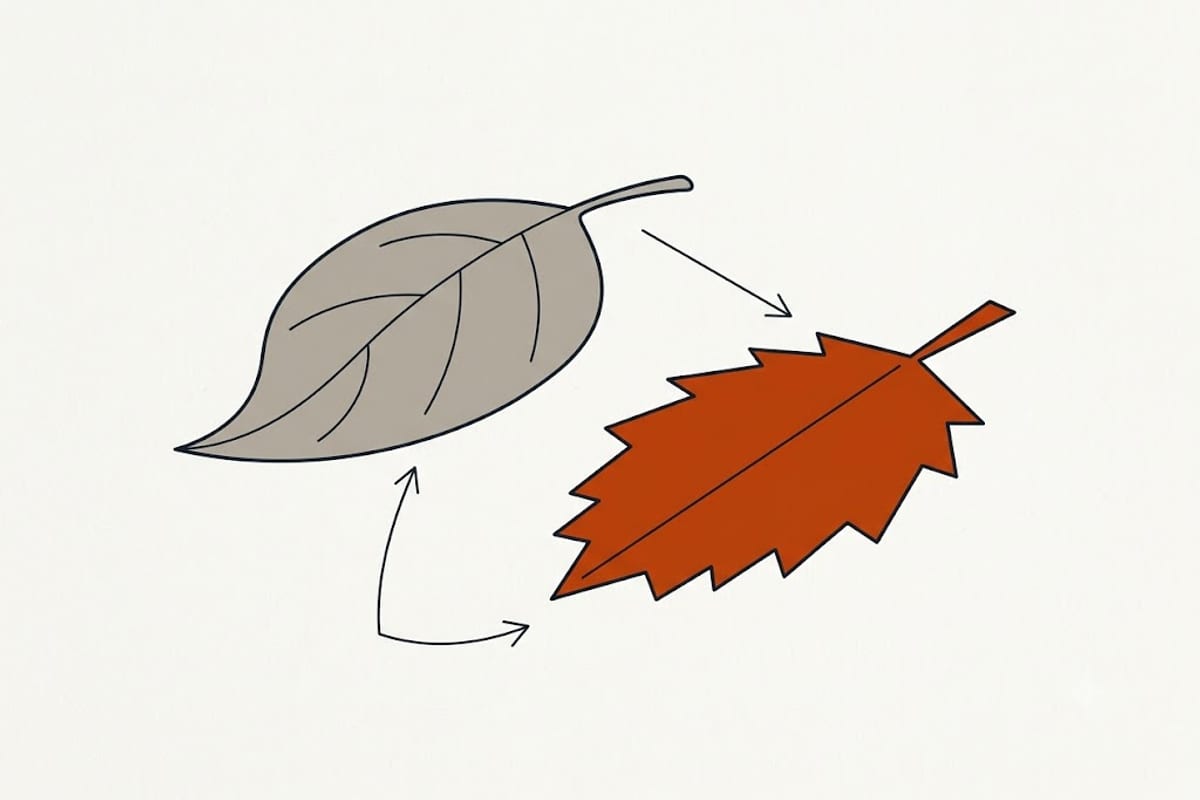
Soft, floppy, slightly translucent — too much water. The cells are damaged and cannot hold pressure.
Dry, papery, crisp at the edges — too little. The plant is out of water, so the leaf loses rigidity by drying out rather than by rotting.
This one test settles most cases.
2 · Check the soil at depth, not at the surface
Push a finger or a wooden skewer two-thirds of the way down the pot.
- Wet down there, and it has been for days — overwatering.
- Dry all the way, and the pot feels noticeably light — underwatering.
- Wet at the bottom, dry at the top — the mix has compacted or there is no working drainage, which is the overwatering case with an extra cause.
The top inch dries first and tells you almost nothing.
3 · Look at the roots
If the first two disagree, take the plant out of the pot.
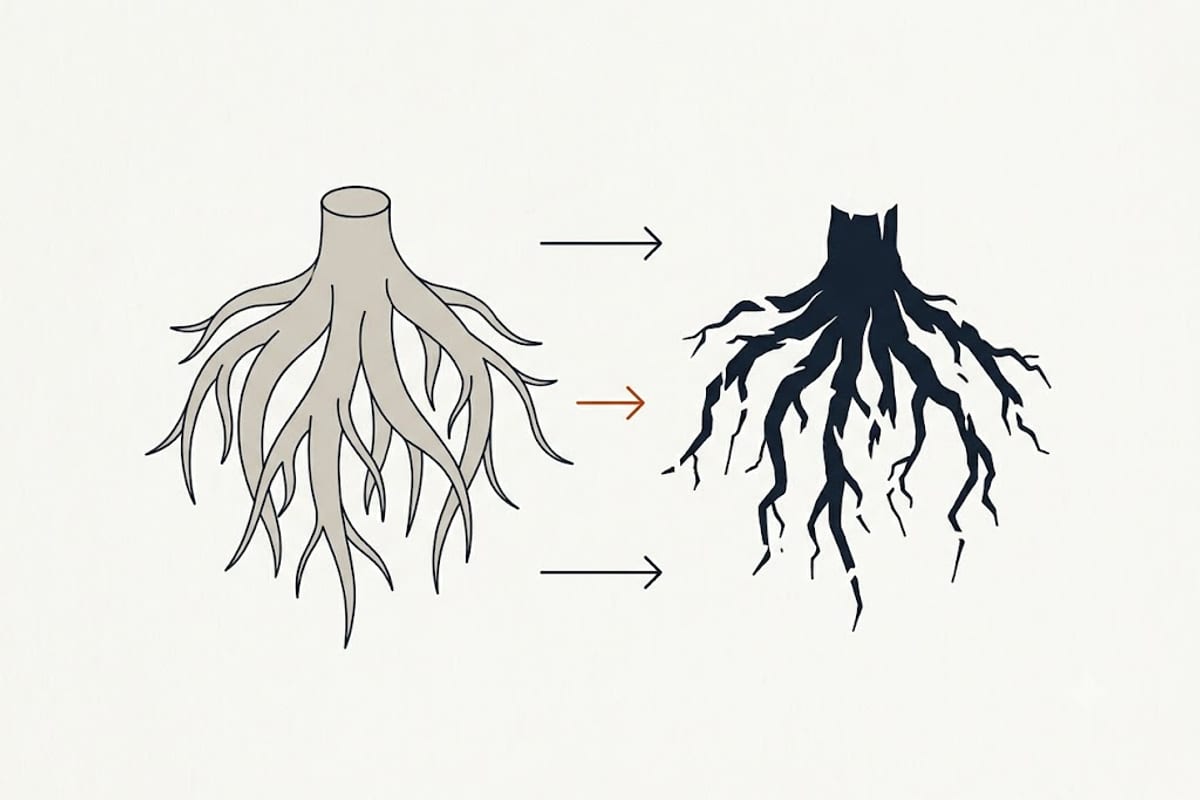
Healthy roots are firm and pale — white, cream, or light tan depending on species. Rotted roots are brown or black, soft, and often smell sour. They pull apart between the fingers instead of snapping.
Roots are the only place where the two conditions look genuinely different, which is why this is the deciding test.
What overwatering actually means
Not the volume of water. The length of time roots spend wet without air.
A plant in a gritty mix in a terracotta pot can be watered heavily twice a week and be perfectly happy. The same plant in dense compost in a pot with no drainage hole can be watered once a fortnight and rot.
So the usual advice — "water less" — often misses. The real fixes are drainage, pot material, and mix.
Fixing each one
Overwatered, roots still mostly firm. Stop watering. Move it somewhere brighter and warmer with moving air so the pot dries faster. If the mix is waterlogged, repot into fresh dry mix and remove any mushy roots. Do not fertilise — damaged roots cannot use it and the salts make things worse.
Overwatered, most roots gone. Salvage cuttings from healthy growth rather than trying to save the pot.
Underwatered. Water thoroughly until it runs out of the bottom. If the mix has dried into a solid plug that water runs straight past, stand the pot in a basin of water for half an hour so it rehydrates from below.
Signs that mislead
- Yellow leaves appear in both cases and in several others. On their own they mean nothing.
- Brown crispy tips usually mean dry air or salt build-up rather than either watering fault.
- Leaf drop right after repotting is normal for two to three weeks.
Give it time
Root damage takes weeks to show improvement, and damaged leaves never recover. Judge whether a fix worked by whether new growth appears healthy — not by whether the existing leaves recover, because they will not.
Why the same plant tolerates very different routines
Whether roots stay wet too long depends on four things, and only one of them is how often you water.
The mix. Dense peat-based compost holds water for days. A gritty or bark-heavy mix drains in minutes and holds air between the particles.
The pot material. Terracotta is porous and loses water through its walls; plastic and glazed ceramic do not. The same plant in the same mix dries roughly twice as fast in terracotta.
The pot size. A plant in a pot far larger than its root ball sits in a mass of wet soil that no roots are drinking from. This is the most common cause of rot after repotting, and it is why moving up one pot size at a time is the standard advice.
Light and warmth. A plant in a bright warm room uses water several times faster than the same plant in a cool dim corner. That is why a watering routine that worked all summer drowns plants in November.
Change any one of those and the correct watering interval changes with it.