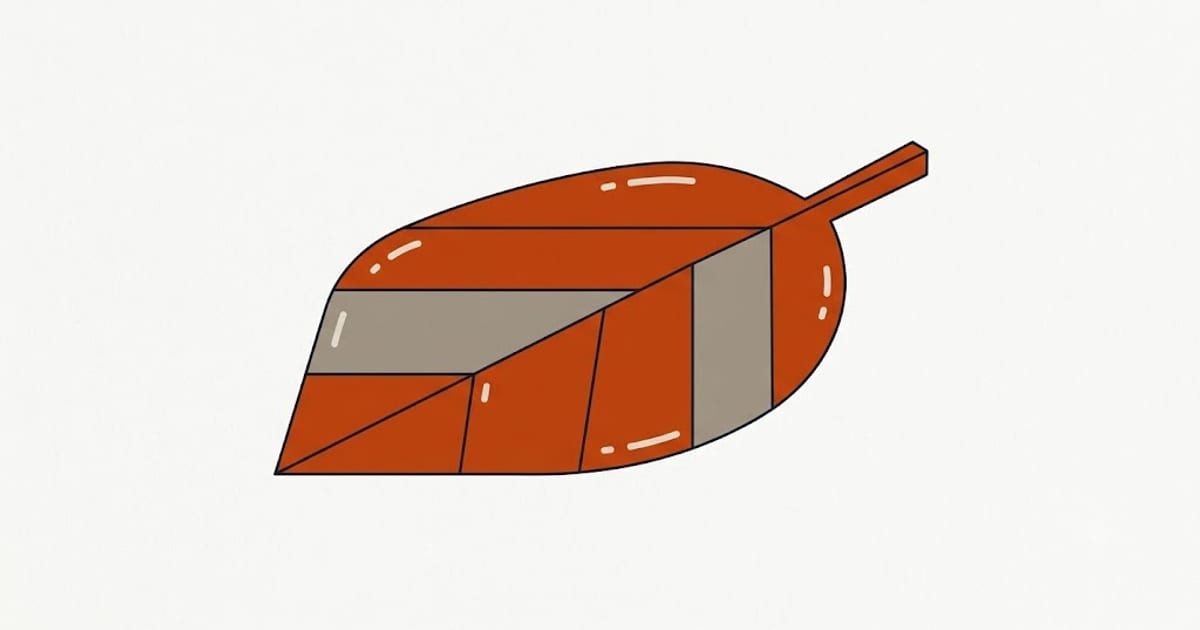
A houseplant does not make its leaves sticky on its own. The residue is honeydew — excess sap excreted by insects feeding on the plant.
So the question is not what the stickiness is. It is which insect, and where it is hiding.
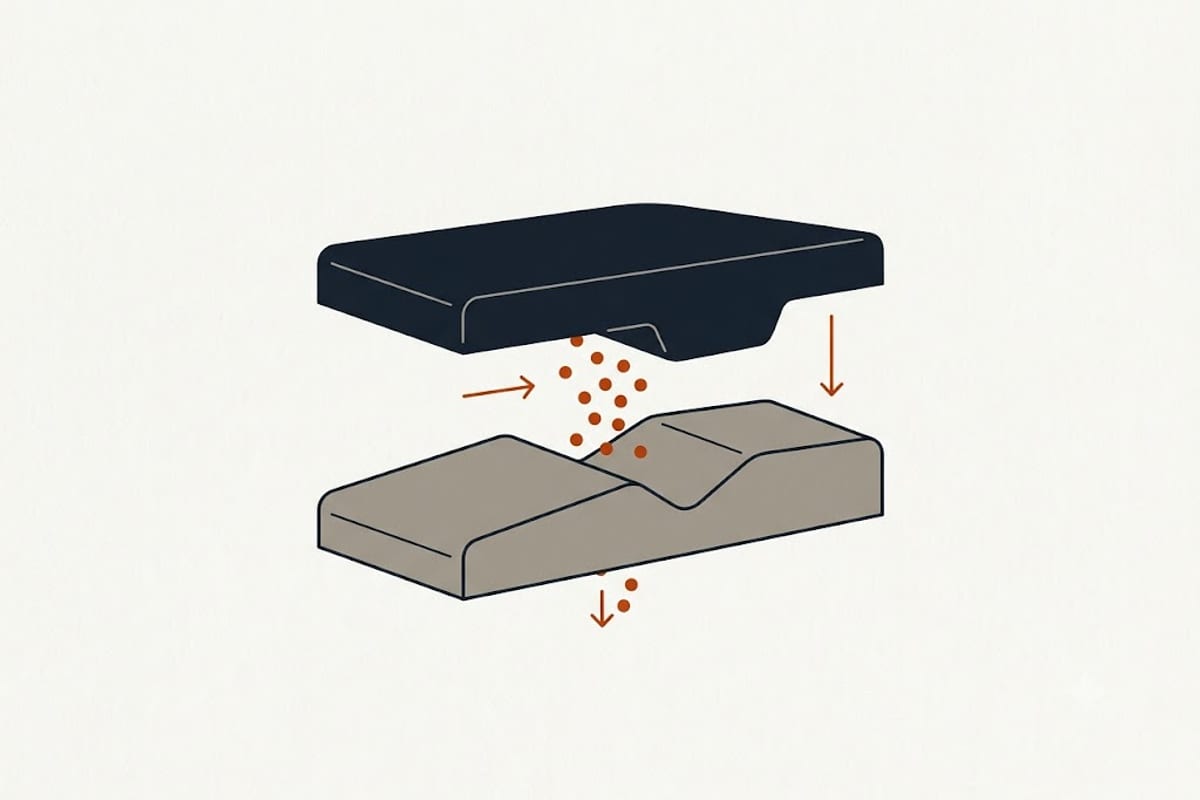
Note where the stickiness is. Honeydew falls, so the sticky leaves are usually below the insects rather than where they live. Sticky patches on a windowsill, a shelf or the floor point upward to the source.
Finding the culprit
Turn leaves over, look into the joints where leaves meet stems, and check new growth. Use good light and a magnifier if you have one.
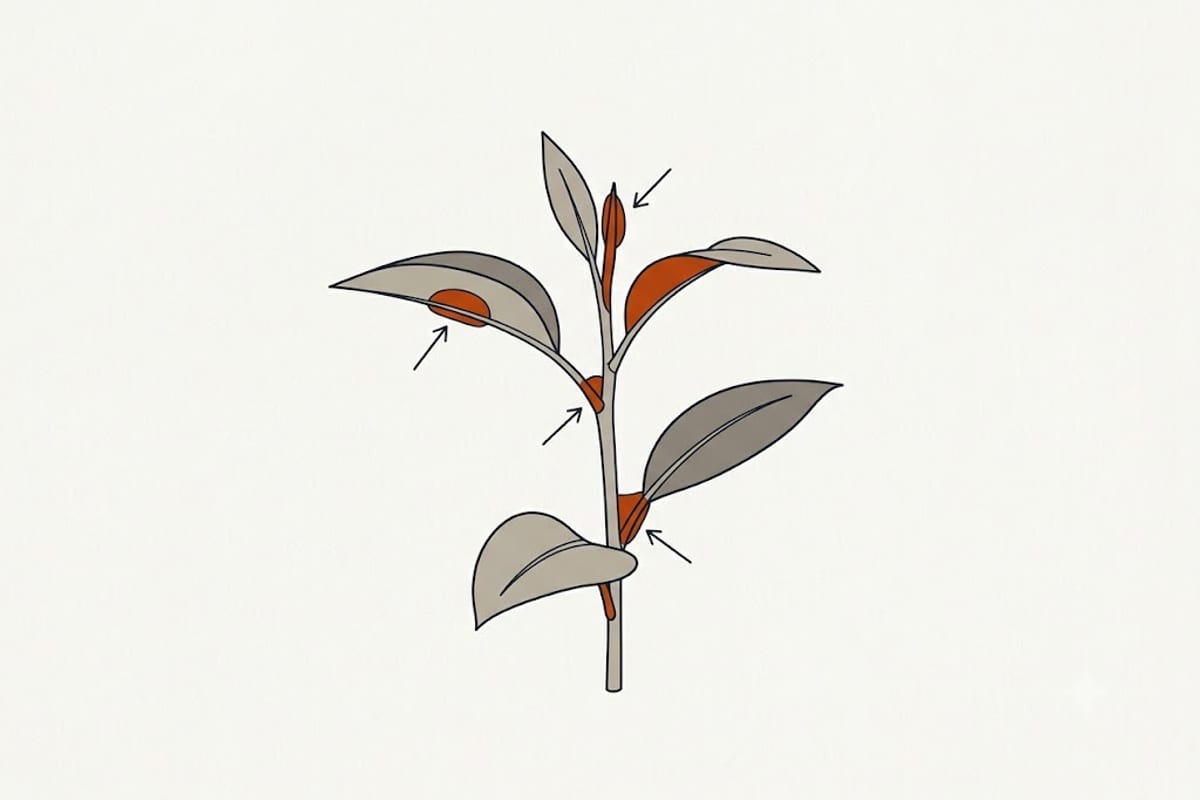
Scale insects. Small brown or tan bumps on stems and leaf undersides, often along the veins. They do not look like insects at all — people scrape at them thinking they are part of the plant. If it lifts off with a fingernail and leaves a mark, it is scale.
Mealybugs. White cottony fluff in leaf joints, at the base of stems, and in new growth. They look like mould until you look closely.
Aphids. Small green, black or pink insects clustered on new growth and flower buds. The most visible of the group.
Whitefly. Tiny white moth-like insects that fly up in a cloud when the plant is disturbed. Their nymphs sit flat on leaf undersides.
Soft scale on citrus and ficus is a particularly common cause of heavy honeydew indoors.
The black film that follows
Honeydew grows sooty mould — a black fungal coating. It does not attack the plant directly, but it blocks light and looks alarming.
It disappears once the insects are gone and the leaves are wiped. Treating the mould without treating the insects achieves nothing.
Dealing with it
Isolate the plant first. These spread readily to neighbours, and a plant with scale sitting in a group is a source rather than a victim.
Physical removal first. Wipe leaves with a damp cloth. For scale and mealybugs, a cotton bud dipped in rubbing alcohol kills on contact and lifts them off. This is tedious and it works better than anything else on a small plant.
Then a treatment. Insecticidal soap or a horticultural oil, applied thoroughly to leaf undersides and stem joints — the places you just found them. Coverage matters more than product choice, because these work by contact.
Repeat every 7 to 10 days for at least three cycles. Eggs and hidden individuals survive the first application, and stopping after one round is why infestations come back.
Why it happened
- A new plant brought in without quarantine. This is the usual source.
- A plant summered outdoors and brought back in.
- Dry indoor air, which suits several of these.
- Overfeeding with nitrogen, which produces soft growth that sap feeders prefer.
Quarantining new plants for two to three weeks away from the collection prevents most of it, and it is the cheapest thing on this page.
When it is not insects
Rare, but two cases exist. Some plants — a few ferns and certain flowering species — exude small amounts of sap or nectar naturally. And a plant sitting under another plant can be sticky because the one above it has the problem.
Check above the sticky plant before treating it.
Why these keep coming back
Every one of these insects has a life stage that survives a single treatment. Scale has a mobile crawler stage and a protected adult stage under a hard shell; mealybugs lay eggs in white cottony masses tucked into crevices; whitefly nymphs sit flat and immobile on leaf undersides where sprays reach them poorly.
That is why the standard advice is three treatments at 7 to 10 day intervals rather than one. The interval matters: treating too often wastes effort on a stage that is not vulnerable, and leaving too long lets a new generation mature and lay again.
Keep treating for two weeks after the last insect is seen. Stopping the moment they disappear is the single most common reason an infestation returns a month later looking worse than before.
Checking the rest of the collection
By the time honeydew is visible, the insects have usually been present for weeks, and anything within touching distance should be assumed exposed. Check leaf undersides and stem joints on every neighbouring plant before congratulating yourself on clearing the first one.
Plants that share a shelf, or whose leaves touch, are effectively one population as far as these pests are concerned.