A spider plant turns yellow for five reasons, and the roots or the pattern of yellow tell you which. Soil that stays wet rots its thick water-storing roots and yellows leaves across the plant. A pot packed solid with roots lets water run straight through and yellows the tips and edges. Fertiliser salts and hard tap water brown the tips and yellow a band beside them. Too much direct sun bleaches and yellows the leaves that face it. And the oldest outer leaves yellow and die one at a time as the plant grows, which is normal.
Look at which leaves are yellow, whether the pot is wet or dry days after watering, and, since this plant is easy to lift out of its pot, what the roots look like.
What the pattern tells you
| What you see | Most likely cause | Check this first |
|---|---|---|
| Yellow across the plant, leaves limp, soil wet days after watering, sour smell | Overwatering and root rot | Root check |
| Yellowing tips and edges, water runs straight through the pot, roots pushing out of the drainage hole | Root bound | Slide the plant out |
| Brown tips with a yellow band, white crust on the soil, recent feeding | Fertiliser salts or hard water | Soil surface; water source |
| Pale, bleached yellow on the leaves facing the window | Too much direct sun | Position |
| One or two outer, oldest leaves yellow, the rest firm and green, plantlets healthy | Natural aging | Nothing else changed |
| Yellow, limp leaves with dry soil pulled from the rim | Underwatering | Soil to the bottom |
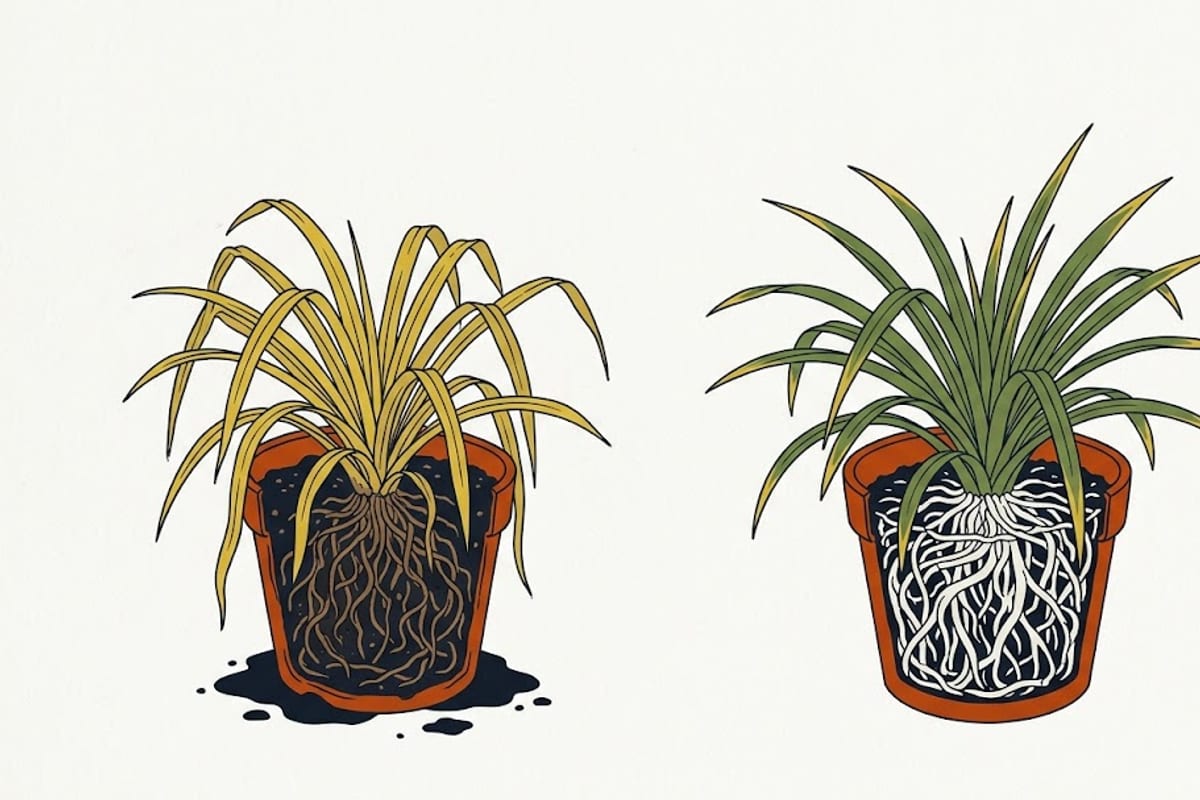
Overwatering and root rot
Spider plants store water in thick, fleshy white roots, which is why they tolerate being forgotten and why they rot when watered too often. In soil that stays wet the roots suffocate, turn brown and soft, and the leaves yellow across the plant, go limp, and sometimes develop soft brown patches at the base. The pot smells sour.
What to do: slide the plant out. Healthy roots are white, fat and firm; rotted ones are brown, soft and stringy. Cut rotted roots back to firm tissue, remove the old soil, and repot in fresh airy mix in a pot with drainage, no larger than the roots need. Water once to settle the mix and then not again until the top few centimetres are dry. Remove leaves that are mostly yellow.
Recovery: new roots in two to four weeks. If nearly all roots are gone, pot up the plantlets on the runners instead; each one roots in a week or two in moist mix.
Root bound
A healthy spider plant fills its pot with roots within a year or two. When the pot is solid roots, there is no soil left to hold water; watering runs straight through and out the drainage hole, the plant is thirsty within a day, and the leaf tips and edges yellow and brown. Roots push up through the soil surface and out of the drainage hole, and the pot may bulge or crack.
What to do: repot into a pot one or two sizes larger with fresh mix, or divide the plant into two or three clumps and pot each. Water thoroughly after repotting. The yellow tips stay; new leaves come in clean.
Fertiliser salts and hard tap water
Spider plants are sensitive to fluoride and to the salts in fertiliser and hard water. The mark is brown tips with a yellow band inside them, often on many leaves, with a white or tan crust on the soil surface.
What to do: flush the pot with plenty of water until it drains clear, feed at half strength only in spring and summer, and water with rainwater, distilled or filtered water if the tips keep coming.
Too much direct sun
Spider plants want bright indirect light. Several hours of direct sun through glass bleaches the leaves that face it to a pale yellow and scorches patches brown.
What to do: move the plant back from the window or filter the light. Bleached leaves do not regain colour; new leaves will.
Underwatering
Left dry too long, a spider plant's leaves go limp and yellow, the tips crisp, and the soil shrinks from the pot. What to do: soak thoroughly, rewet from below if the soil has shrunk, and check by finger weekly.
Natural aging
The oldest leaves on the outside of the rosette yellow and die one at a time as the plant produces new leaves in the centre. If the rest of the plant is firm and green and the plantlets on the runners are healthy, nothing is wrong. What to do: pull or cut the yellow leaf at the base.
The root check
Spider plants lift out of their pots easily. Tip the pot, support the base of the leaves, and slide the root ball out. Fat white firm roots are healthy; a solid mass of them shaped like the pot means root bound; brown soft stringy roots and a sour smell mean rot. This one look separates the two most common causes.
What to do today, by cause
- Overwatering: unpot, trim rotted roots, repot in airy mix, water only when the top is dry.
- Root bound: repot one or two sizes up, or divide.
- Salts or hard water: flush the pot, feed at half strength, use rainwater or filtered water.
- Direct sun: move back from the window.
- Underwatering: soak thoroughly, rewet from below if needed.
- Natural aging: remove the old leaf and change nothing.
Frequently asked questions
Should I cut yellow leaves off a spider plant?
Yes, once a leaf is mostly yellow. Pull it gently or cut it at the base with clean scissors. Trim yellow or brown tips on otherwise green leaves following the leaf's shape, leaving a hairline of brown so the cut does not brown again.
Why is my spider plant turning yellow even though I water it?
Either the pot is so full of roots that the water runs straight through without wetting them, or the roots have rotted from too much water and cannot take it up. Slide the plant out of its pot: a solid mass of white roots means repot larger; brown soft roots mean trim and repot in fresh mix, and water less.
Can a yellow spider plant turn green again?
Leaves that have turned yellow do not regain their colour. Once the cause is fixed, the plant stops yellowing and new leaves from the centre come in green. Remove the yellow leaves and judge recovery by the new growth.
How often should I water a spider plant?
When the top few centimetres of soil are dry, thoroughly, and then not again until it dries to that depth. A root-bound plant dries in a day or two and needs repotting rather than more frequent watering; a plant in a large pot of dense soil may take two or three weeks between waterings.