A snake plant leaf curls when it is losing water faster than the roots can supply it. That is the only mechanism, but there are three quite different reasons for it — and two of them are opposite.
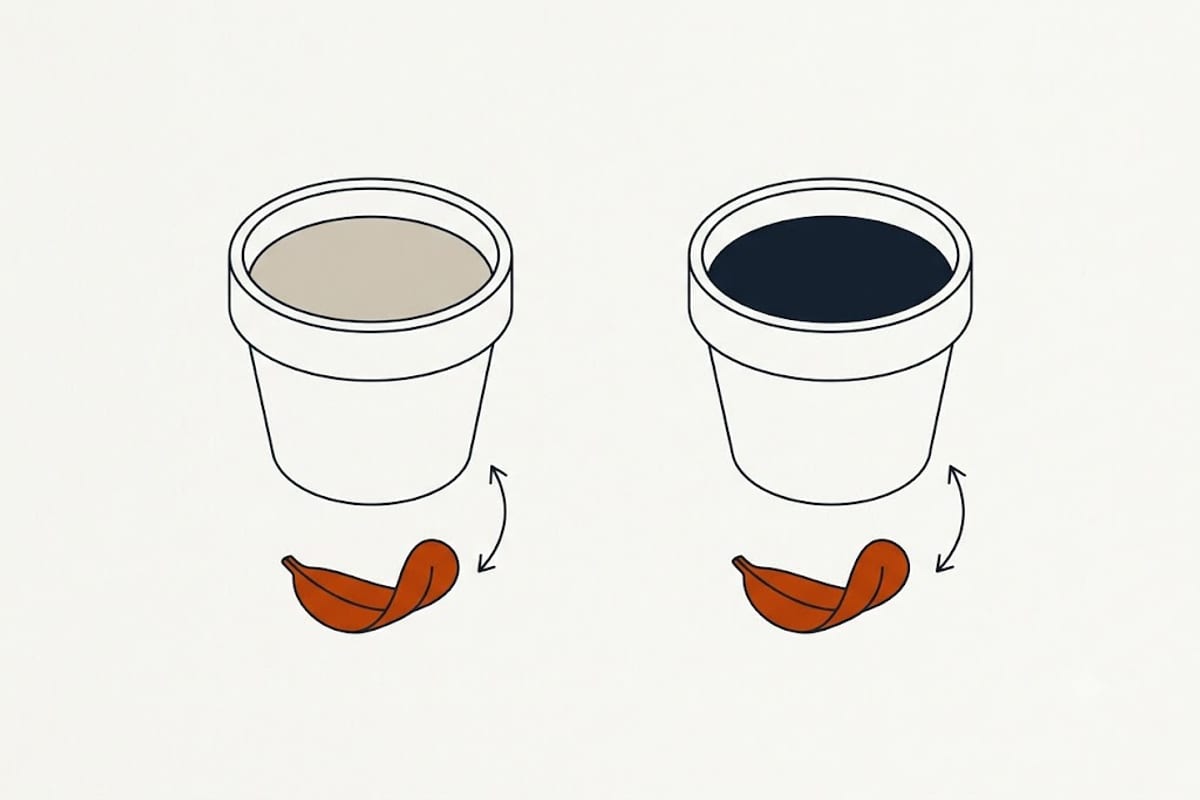
1 · Simple thirst
The straightforward case. Snake plants store water in their leaves, so by the time one curls it has been dry for a long time.
Confirming it:
- The pot feels light.
- A skewer pushed to the bottom comes out dry.
- The stems are firm at soil level.
- Leaves are wrinkled or thin as well as curled.
Water thoroughly until it runs from the bottom. The leaves plump up over several days. If the mix has dried into a solid plug that water runs straight past, stand the pot in a basin of water for half an hour so it rehydrates from below.
2 · Rotted roots
Here is the trap: a plant with dead roots cannot take up water either, so it produces exactly the same curling — while sitting in wet soil.
Confirming it:
- The mix is damp, and has been for days.
- The base of a leaf is soft when squeezed.
- Leaves may fall over or pull out easily.
- There may be a sour smell from the pot.
Watering this plant kills it faster. Take it out, cut away brown soft roots, remove affected leaves at the base, and repot into gritty mix in a pot with drainage. Wait a week before watering.
Squeezing the stem at soil level separates these two in three seconds, and it is the check worth doing before anything else.
3 · Thrips
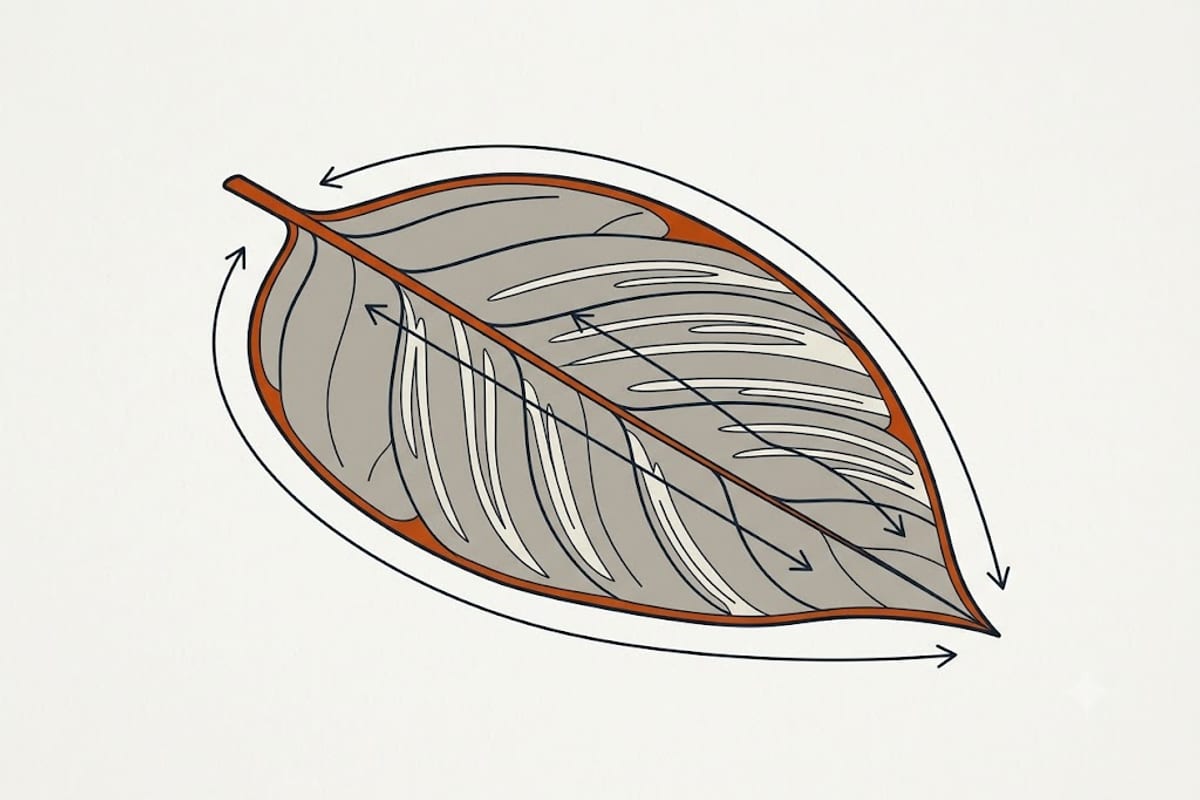
Less common but easy to miss. Thrips are tiny, slender insects that rasp at leaf surfaces, and snake plants are among their favoured hosts.
Signs: fine silvery or pale streaking running along the leaf, tiny black specks of excrement, and curling or deformity in newer growth. The insects themselves are just visible as slim moving slivers, usually in the folds.
Treatment needs contact coverage — insecticidal soap or a horticultural oil, applied thoroughly to both surfaces, repeated every 7 to 10 days for at least three rounds.
Less common causes
- Cold damage. Snake plants dislike temperatures below about 10 °C, and a leaf against a cold window in winter can curl and go soft in patches.
- Very low humidity plus heat, in a spot right above a radiator.
- Root-bound, where the plant has filled the pot so completely that water runs straight through without wetting anything.
- Fertiliser salts, which damage roots and reduce uptake. A white crust on the soil surface points here; flush the pot thoroughly.
What curling does not mean
- Too little light. That makes snake plants stretched, floppy and pale, not curled.
- Age. Old leaves dry from the tip and fall; they do not curl along their length first.
Recovery
A curled leaf may partly straighten if the cause was thirst and it is caught early. Severely curled leaves usually stay that way — the tissue has been damaged.
Judge the fix by new growth, which in a snake plant means new shoots pushing up from the soil rather than any change in the existing leaves.
Why the same plant behaves differently in winter
Snake plants slow almost to a stop in low light and cool temperatures. Water use falls with them, so the interval that was right in July delivers far too much in December.
That matters here because both causes of curling get more likely in winter for opposite reasons. Rot becomes more likely because the pot stays wet longer and the roots are colder. Thirst becomes more likely in centrally heated rooms where the air is dry and the plant is in a warm spot but not growing enough to signal clearly.
The practical rule is to stop watering by interval entirely and start watering by weight. Lift the pot after a thorough watering and remember how heavy it is; lift it again before deciding. A pot that is still heavy does not need water regardless of how long it has been.
Dividing an overgrown plant
A snake plant that has completely filled its pot takes up water poorly, because there is more root than mix and water runs straight through the gaps. Curling in a plant that is clearly root-bound often resolves simply by dividing it.
Tip it out, separate the rhizomes with a clean knife so each section has both leaves and roots, and pot each into gritty mix. Spring is the best time, and the divisions establish faster than most people expect.