A pothos turns yellow for one of five reasons, and it tells you which by where the yellow appears. The oldest leaves at the base going yellow one at a time is the plant retiring old growth. Many leaves yellowing at once, with soft stems and wet soil, is overwatering and root rot. Yellow, limp leaves over bone-dry soil is thirst. A whole plant gone pale yellow-green with small new leaves on long bare stems is too little light. Yellow patches around stippling, webbing or sticky residue are pests, and yellow patches with brown edges in old soil are hunger.
Look at which leaves are yellow, how fast the yellow spread, and what the soil feels like a few centimetres down. With the two-minute root check further down, that sorts out nearly every case.
What the pattern of yellowing tells you
| What you see | Most likely cause | Check this first |
|---|---|---|
| Only the oldest lower leaves yellow, one or two at a time, rest of the vine firm | Natural leaf aging | New growth healthy; nothing else changed |
| Many leaves yellow at once, stems soft near the soil, soil wet days after watering, sour smell | Overwatering and root rot | Root check |
| Leaves yellow and limp, soil dry and pulled away from the pot edge, pot light | Underwatering | Soil to the bottom; pot weight |
| Whole plant pale yellow-green, small new leaves, long bare stems reaching sideways | Too little light | Distance from the window |
| Yellow patches with brown edges or spots, plant in the same soil for years | Nutrient shortage and old soil | Last feed; last repot |
| Yellow stippling with fine webbing, white cottony specks or a sticky film | Pests | Undersides of leaves; leaf joints |
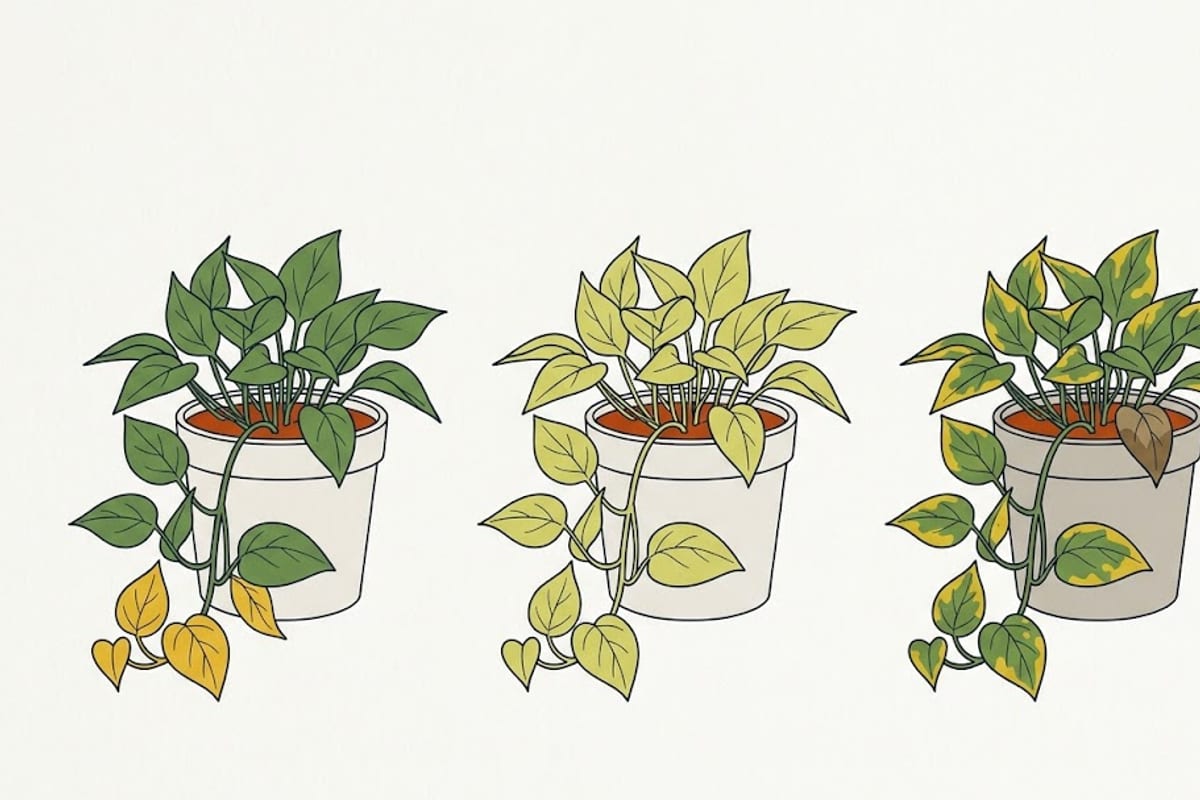
Overwatering and root rot
Pothos roots need air between waterings. In soil that stays wet, the air pockets fill, the roots suffocate, and rot moves into the dead tissue. Because the damaged roots cannot supply the vines, leaves yellow across the plant rather than at the base only, often from the edges inward, and the stems near the soil turn soft or dark. The pot smells sour when you put your nose to it, and the soil is still wet three or four days after watering.
What to do: slide the plant out of the pot. Healthy pothos roots are white to cream and firm; rotted ones are brown, soft, and slide apart when pinched. Cut every soft root back to firm tissue with clean scissors, shake off the old soil, and repot in a fresh airy mix in a pot with a drainage hole, no larger than the roots need. Water once to settle the mix, then not again until the top few centimetres are dry. Remove leaves that are more than half yellow. New roots form in two to four weeks; if almost none remain, cut healthy vine sections with a node and root them in water instead.
Underwatering
A pothos left dry yellows too, but the leaves go limp first and the tips and edges crisp brown rather than soft. The soil is dry to the bottom, the pot is light, and the soil has often shrunk away from the pot's edge so that water runs down the gap without wetting the roots.
What to do: water thoroughly until it runs from the drainage hole; if the soil has shrunk from the rim, stand the pot in a basin of water for twenty to thirty minutes so the root ball rewets from below. The vines lift within a day. Then check the soil by finger every few days and water when the top few centimetres are dry, rather than on a schedule.
Too little light
Pothos tolerates dim rooms, which is why it is put in them, but in too little light it cannot support all its leaves. The whole plant pales to yellow-green, new leaves come in small, the gaps between leaves lengthen as the vines reach sideways, and variegated types lose their marbling because plain green tissue makes more food.
What to do: move the plant to bright indirect light, near an east or north window or a metre or two back from a south one, out of hours of hot direct afternoon sun, which scorches. Improvement shows in the next new leaves; the old pale ones stay as they are.
Nutrient shortage and old soil
A pothos in the same soil for a year or two with no feeding runs out of nitrogen, and the older leaves yellow evenly while the newest stay green, sometimes with brown edges where the exhausted soil has also compacted and drained poorly.
What to do: feed at half the label strength once a month in spring and summer, or repot into fresh mix one size up if the roots fill the pot. Do not feed a plant that is yellowing from rot or drought.
Pests and disease
Spider mites leave fine pale stippling and, in numbers, webbing at the leaf joints. Mealybugs look like white cottony specks in the leaf axils. Scale sits as small brown bumps along the stems. All leave a sticky film and yellow patches around their feeding. Bacterial leaf spot produces brown spots with yellow halos, usually on plants whose leaves are kept wet.
What to do: check the undersides of leaves and the joints with a light. Wipe the plant down, treat with insecticidal soap or diluted horticultural oil, repeat weekly for a month, and isolate it. For leaf spot, remove the worst leaves and keep the foliage dry.
Natural leaf aging
Every pothos retires its oldest leaves at the base of the vine as it grows new ones at the tip. One leaf yellows evenly over a week or two and drops, while everything else stays firm and green. Nothing is wrong.
What to do: pinch the leaf off once it is fully yellow.
A two-minute root check
When the pattern says water and you are not sure which way, the roots settle it. Tip the pot on its side, support the base of the vines, and slide the root ball out. White, cream or tan roots that hold together and smell of soil are healthy, and the problem is thirst, light or feeding. Brown, soft or slimy roots that smell sour are rot, and the repot above is the fix.
What to do today, by cause
- Overwatering: unpot, trim rotten roots, repot in airy mix, water only when the top is dry.
- Underwatering: soak thoroughly, rewet from below if the soil has shrunk, check by finger every few days.
- Too little light: move to bright indirect light and judge by the next new leaves.
- Nutrient shortage: feed at half strength monthly in the growing season, or repot.
- Pests: inspect, wipe, treat weekly for a month, isolate.
- Natural aging: pinch the leaf off and change nothing.
Frequently asked questions
Should I cut off yellow pothos leaves?
Yes, once a leaf is more than half yellow. It will not turn green again and the plant spends nothing on it. Pinch or cut it at the base of its stalk. Leave leaves that are only slightly yellow until the cause is fixed; they may stop where they are.
Can yellow pothos leaves turn green again?
No. Once the green pigment has broken down it is not rebuilt. What recovers is the plant: new leaves come in green once the cause is fixed, and a leaf that is yellow only at the edge can hold its remaining green.
Why are my pothos leaves turning yellow after repotting?
Usually because the new pot is much larger than the old one, so the soil stays wet too long and the roots suffocate, or because the roots were damaged during the move. Check the soil moisture below the surface a few days after watering; if it is still wet, the pot is too big or the mix too dense.
How often should I water a pothos?
There is no correct number of days. Water when the top two or three centimetres of soil are dry, thoroughly, and then not again until it dries to that depth. In a bright warm room that may be weekly; in a cool dim room in winter, every three or four weeks.