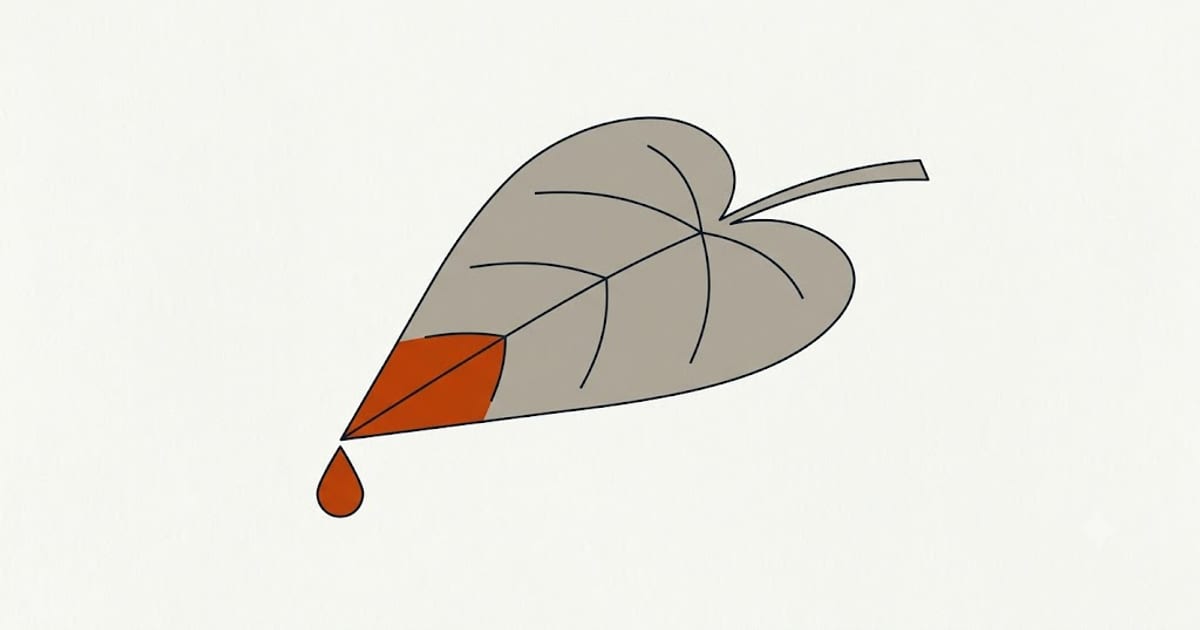
Droplets at the tips of pothos leaves, usually first thing in the morning, are guttation — not dew, and not the plant sweating.
What is happening
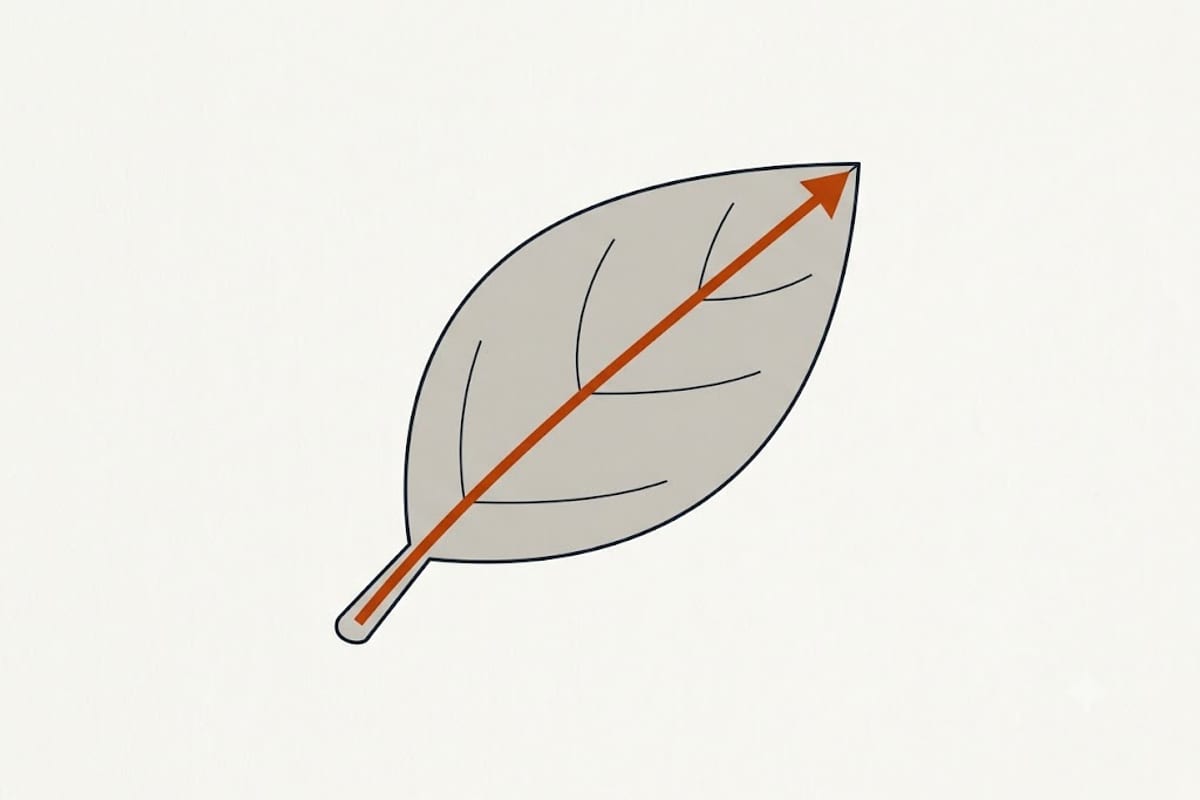
At night, when the air is still and humid, the plant stops losing water through its leaves in the usual way. The roots keep absorbing, and pressure builds in the plant's water-carrying tissue.
That pressure pushes excess fluid out through specialised pores at the leaf margins and tips. What comes out is not pure water — it is xylem sap, carrying dissolved minerals.
Why it matters
Guttation only happens when the roots have more water available than the plant is using. It is one of the more reliable signals that a pot is wetter than it needs to be.
On its own it is harmless. Combined with anything else, it is a warning:
- Guttation plus yellowing lower leaves — heading toward root rot.
- Guttation plus soil that is damp a week after watering — the pot is holding too much, or is too large.
- Guttation plus a musty smell from the soil — check the roots now.
- Guttation alone, plant otherwise thriving — water a little less often and carry on.
Why it appears at night and in winter
Guttation needs high humidity and low transpiration, which is why it shows up overnight rather than in the afternoon.
It also becomes far more common in autumn and winter, and the reason is a change in the plant rather than a change in you. Growth slows, water use drops, and a watering routine that was correct in July delivers more than the plant can use in November. The droplets are often the first visible sign of that mismatch.
The white marks it leaves
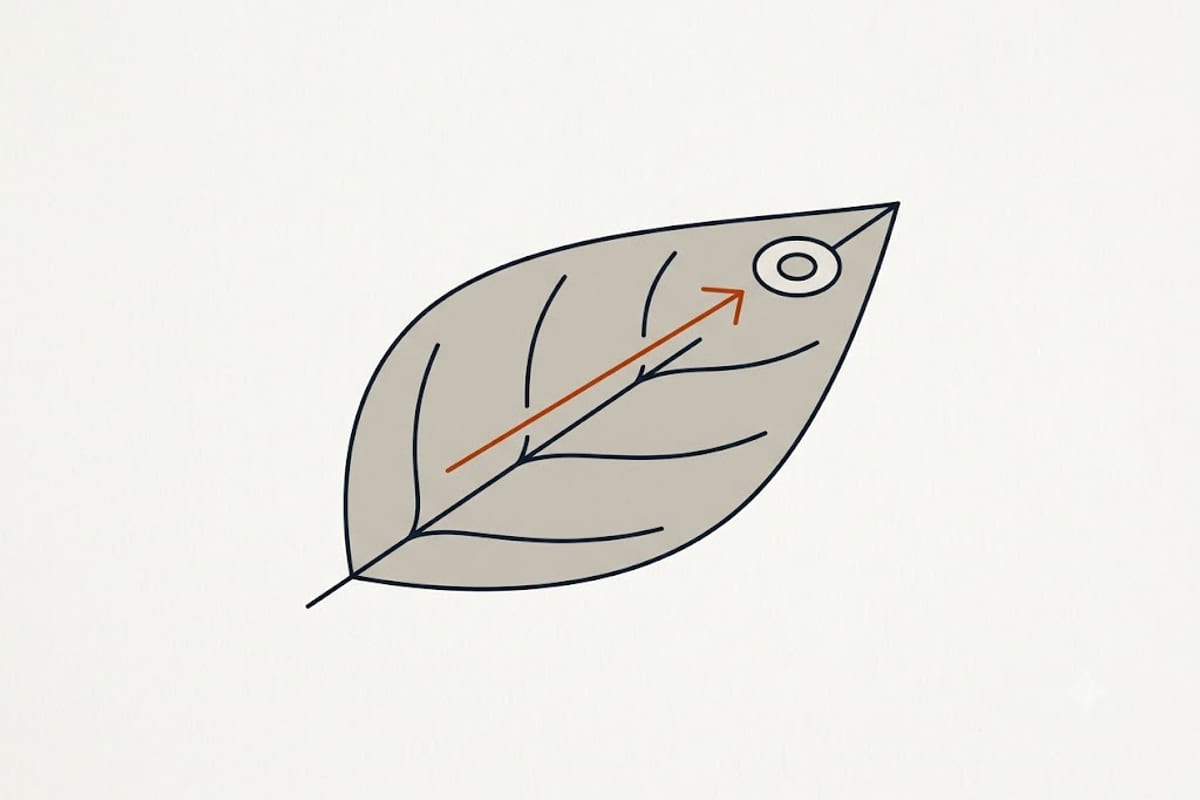
When a droplet evaporates it leaves the dissolved minerals behind as a pale crust or ring at the leaf tip. Over time that can irritate the tissue and produce a small brown mark.
Wipe the leaves occasionally if it bothers you. Heavy deposits usually mean either hard water or over-feeding, and flushing the pot thoroughly with plain water clears the excess salts.
Guttation versus other droplets
- Sticky droplets, anywhere on the leaf, and on furniture below — not guttation. That is honeydew from sap-feeding insects, and it needs treating.
- Droplets on the whole leaf surface, not just the edges — condensation from the room, or misting.
- Droplets on a plant in a closed cabinet or propagator — normal, and expected in that environment.
The distinguishing feature of guttation is the position: at the tips and margins, at the ends of the veins, and nowhere else.
What to do
Nothing, unless the soil is staying wet. If it is:
- Water when the top third of the mix is dry rather than on a schedule.
- Check the pot has working drainage and is not standing in water.
- Reduce watering noticeably from autumn through winter.
- If the pot is much larger than the root ball, move to something smaller.
A pothos that gutters occasionally is a well-hydrated plant. One that gutters every morning is being overwatered.
What the droplets say about the pot
Guttation is most useful as a diagnostic rather than as something to fix. It tells you that at the moment the droplets formed, the roots had surplus water available.
That is normal for a night or two after a thorough watering. It is not normal several days later, and it is definitely not normal every morning. A pot that produces droplets every night is holding water for far longer than the plant is using it, and the causes are the usual ones: a pot that is too large for the root ball, a dense mix, no working drainage, or a decorative outer pot holding a reservoir.
Other plants that do it
Pothos is one of the more visible cases, but guttation is common across many houseplants — monstera, philodendron, alocasia, calathea, and several others all do it, usually at the leaf tip or along the margin where the veins end.
Alocasia in particular is famous for it, to the point that people mistake it for a sign of good health. It is not a sign of poor health either, but the same reading applies: droplets every morning means the pot is wetter than it needs to be, and reducing the frequency of watering slightly usually stops it without any other change.