Yellow leaves are the most common thing a houseplant does and the least useful thing it can tell you on its own. Almost every problem produces them eventually.
What narrows it down is not the colour. It is which leaves turned, and in what order.
Start by finding the pattern
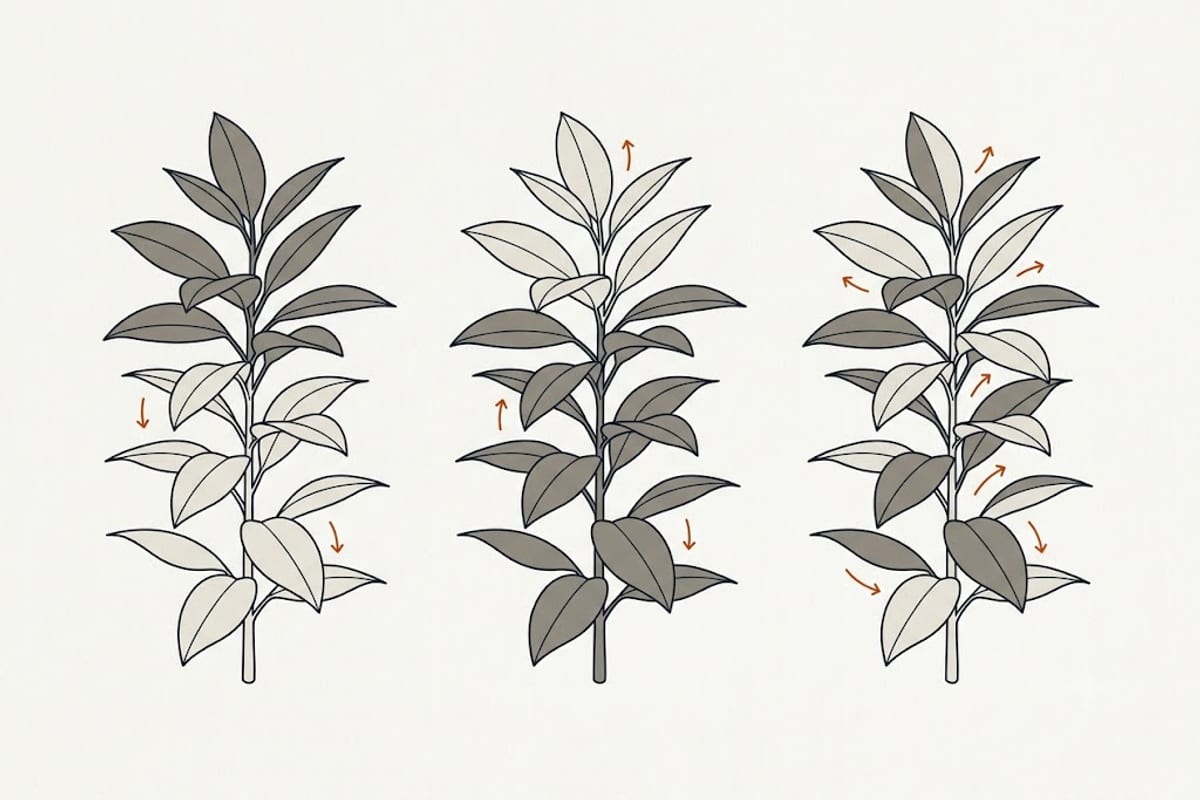
Look at the plant and answer one question: where is the yellow?
Oldest leaves first — the ones lowest down, or furthest from the growing tip. This is the plant making a decision. When a mobile nutrient is short — nitrogen most often — the plant moves it out of old leaves to feed new growth. The old leaf yellows evenly and eventually drops. It is also what happens when roots are struggling and cannot take up enough of anything.
Newest leaves first — the ones at the tip, still small. Immobile nutrients cannot be moved from old tissue, so a shortage shows up in new growth while old leaves stay green. Iron is the usual one, and it often shows as yellow between green veins rather than a flat yellow.
Scattered, no pattern, often with brown patches. This points at something acute rather than gradual — cold damage, sunburn, a pest, or root rot that has already killed part of the root system.
One or two lower leaves, slowly, on an otherwise healthy plant. This is normal. Plants shed old leaves. A leaf a month on a mature plant is not a symptom.
Then check moisture the right way
The advice "check if the soil is dry" fails because most people check the top inch, which dries first and tells you least.
Push a finger or a wooden skewer two-thirds of the way down. That is where the roots are, and where rot starts.
- Wet down there, and wet for days — the roots are sitting in water. This is the overwatering case, and the yellowing usually comes with soft, limp leaves rather than crisp ones.
- Dry all the way through, and the pot feels light — underwatering. Leaves usually go crisp at the edges before they yellow.
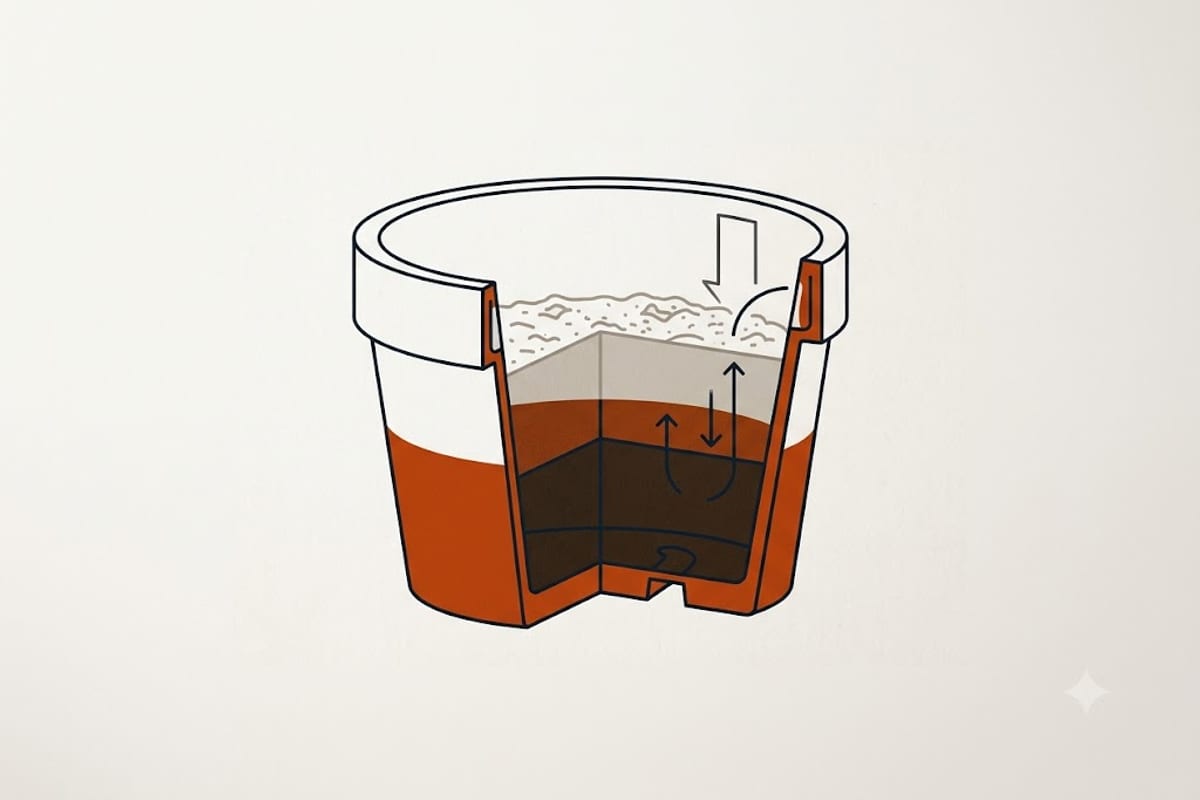
- Wet at the bottom, dry at the top, and it stays that way — the mix has compacted or the pot has no working drainage. The plant is drowning and thirsty at the same time.
Wet and dry can produce the same yellow leaf. The difference is in the texture of the leaf and the moisture at depth, not at the surface.
What overwatering actually is
It is worth being precise, because the word misleads.
Overwatering is rarely about the amount of water. It is about how long the roots stay wet without air. A plant in a fast-draining mix in a terracotta pot can be watered heavily every few days and be fine. The same plant in dense mix in a pot with no drainage hole can be watered once a fortnight and rot.
So the fix is usually not "water less". It is drainage, pot material, and mix.
Things that are not the cause, despite being blamed
- Tap water minerals — this produces brown crispy tips, not general yellowing.
- Not enough fertiliser — possible, but only after several months in the same soil and only in the oldest-leaves pattern above.
- Repotting shock — real, but it causes wilting and leaf drop more than yellowing, and it resolves in two to three weeks.
What to do next
- Note which leaves are yellow and photograph the plant.
- Check moisture at depth, not at the top.
- Change one thing only, and wait two weeks.
Changing watering, light, pot and fertiliser at once is the most common way people lose a plant that had one fixable problem. New leaves take weeks to appear, so a plant tells you whether a change worked on its own schedule, not yours.
A leaf that has turned yellow will not turn green again. Judge a fix by the new growth, not by the leaves that were already damaged.