A philodendron leaf browns at its edge when the tissue there dries out, and four common things dry it: air that is too dry, soil that went dry, a buildup of fertiliser salts in the soil, and hot direct sun. Overwatering can do it too, by damaging the roots so the edges are starved of water in a wet pot. Each leaves a slightly different mark, and the state of the soil and the plant's position finish the diagnosis.
Look at the edge closely: whether the brown is a thin crisp line or a wide margin, whether there is a yellow band between the brown and the green, whether the leaf is curling, and whether the marks are on every leaf or only the side facing a window.
What the edge tells you
| What you see | Most likely cause | Check this first |
|---|---|---|
| Thin, crisp, dry brown line along the edges of many leaves, plant near a heater, vent or in a dry room | Low humidity | Position; season |
| Wide dry tan margins, leaves curling inward, soil dry, pot light | Underwatering | Soil to the bottom; pot weight |
| Brown margin with a yellow band inside it, white crust on the soil, recent feeding | Fertiliser salt buildup | Soil surface; feeding history |
| Soft brown margins with yellowing across the leaf, soil wet days after watering | Overwatering and root damage | Root check |
| Bleached or brown patches on leaves facing the window | Direct sun | Position and hours of sun |
| Brown edges appearing after a change of water source | Tap water minerals | What the plant is watered with |
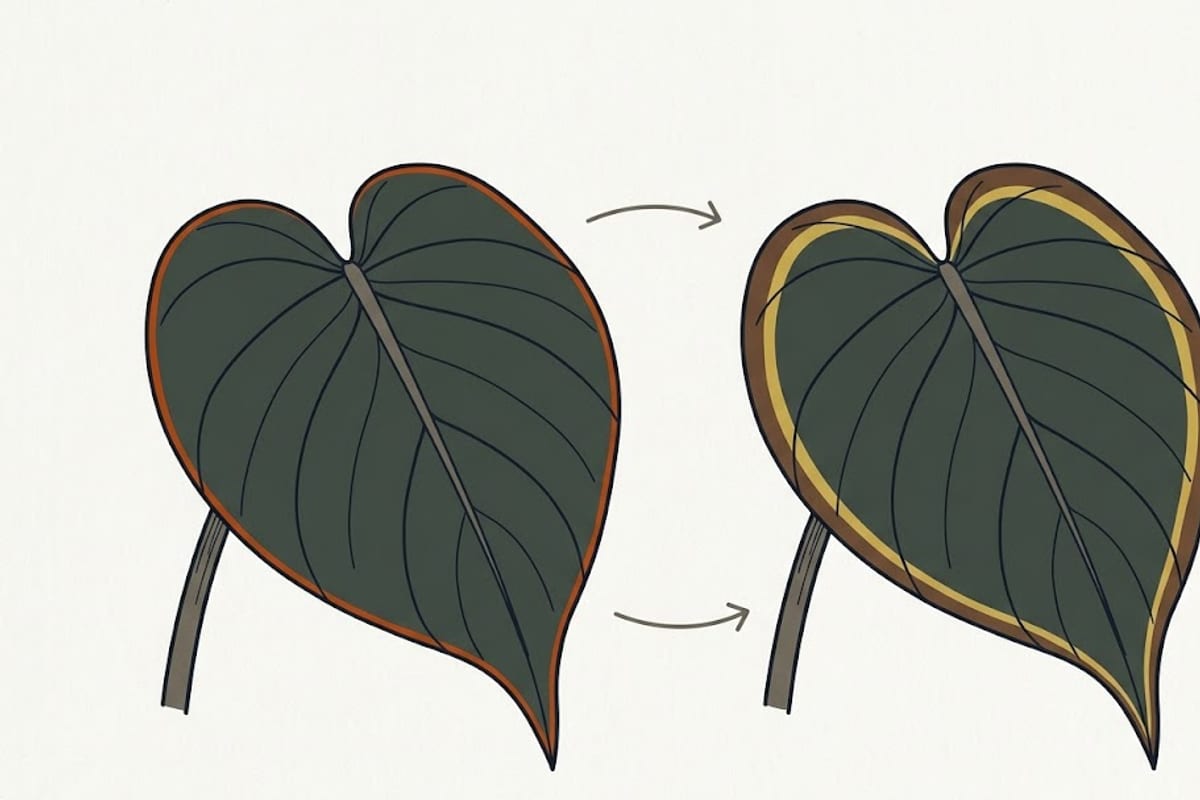
Low humidity
Philodendrons come from humid forest and tolerate ordinary rooms well, but the edges of the leaves, the farthest point from the water supply, dry out when the air around them is very dry. The mark is a thin crisp brown line along the edge, on many leaves at once, with the rest of the leaf healthy. It appears in winter when heating runs, and on plants near radiators, vents and fireplaces.
What to do: move the plant away from heat sources, group it with other plants so they share moisture, stand it on a tray of wet pebbles, or run a humidifier in the room. Misting wets the leaf for a few minutes and does not change the air; it is not a fix. Existing brown edges stay; new leaves come in clean.
Underwatering
When the soil goes dry, the leaf edges are the first tissue to go short of water. They brown in a wider, dry, tan margin, the leaf may curl inward or droop, and the soil is dry to the bottom of the pot, often shrunk away from the rim so that water runs down the gap.
What to do: water thoroughly until it runs from the drainage hole; if the soil has shrunk from the rim, stand the pot in a basin of water for twenty to thirty minutes to rewet from below. Then check the soil by finger every few days and water when the top two or three centimetres are dry.
Fertiliser salt buildup
Fertiliser is a salt, and salts accumulate in pot soil that is never flushed. Enough of them draw water out of the roots, and the leaf edges brown with a yellow band beside the brown. A white or tan crust on the soil surface or around the pot rim is the salt itself. The edges often brown within a week or two of feeding.
What to do: flush the pot by running water through it slowly for several minutes until it drains clear, and repeat monthly. Feed at half the label strength, only in spring and summer. If the crust is heavy, repot into fresh mix.
Overwatering and root damage
In soil that stays wet, philodendron roots suffocate and die, and a plant with damaged roots cannot supply its leaf edges even though the pot is full of water. The margins brown softly rather than crisply, the leaf yellows across, and the soil is wet days after watering.
What to do: slide the plant out and look at the roots. White and firm is healthy; brown and soft is rot. Trim rotted roots, repot in fresh airy mix in a pot with drainage, and water only when the top of the soil is dry.
Direct sun
Philodendrons grow in dappled light under trees. Several hours of direct sun through glass scorches the leaves that face it, producing bleached or brown patches, often starting at the edges nearest the window.
What to do: pull the plant back from the glass or filter the light with a sheer curtain; move it to bright indirect light.
Tap water minerals
Some philodendrons brown at the edges on hard tap water or water treated with fluoride, and the marks appear after a change of water source. What to do: water with rainwater, distilled or filtered water for a few weeks and compare the new leaves.
Trimming brown edges
Brown edges do not recover, and they do not harm the plant, but they can be trimmed for appearance. Use clean scissors and cut just inside the brown, following the leaf's natural shape, leaving a hairline of brown rather than cutting into green tissue, which would brown again. Remove a leaf entirely only if more than half of it is brown.
What to do today, by cause
- Low humidity: move away from heaters and vents, group plants or use a humidifier.
- Underwatering: soak thoroughly, rewet from below if the soil has shrunk, check by finger every few days.
- Salt buildup: flush the pot until it drains clear, feed at half strength in the growing season only.
- Overwatering: unpot, trim rotted roots, repot in airy mix, water only when the top is dry.
- Direct sun: move back from the glass or filter the light.
- Tap water: switch to rainwater or filtered water and compare new leaves.
Frequently asked questions
Will brown edges on philodendron leaves go away?
No. Brown tissue does not turn green again. What stops is new browning: once the cause is fixed, the existing edges stay the same and new leaves come in clean. Judge the fix by the next few leaves.
Should I cut brown edges off philodendron leaves?
You can, for appearance. Cut just inside the brown with clean scissors, following the leaf's shape, and leave a hairline of brown so the cut does not brown again. Remove whole leaves only when more than half is brown.
Does misting help philodendron brown edges?
No. Misting wets the leaf surface for a few minutes and does not raise the humidity of the room. If dry air is the cause, group plants, use a pebble tray or run a humidifier, and move the plant away from heaters and vents.
Why does my philodendron have brown edges but the rest of the leaf is green?
Because the edge is the farthest point from the roots and the first to go short of water when the air is dry, the soil is dry, or salts in the soil are drawing water away. The green centre means the leaf is otherwise healthy and the cause is one of those three.