
A peace lily flower is not a flower in the everyday sense. The white hood is a modified leaf called a spathe, and the actual flowers are on the small column it surrounds.
It lasts a few weeks, then does what a leaf does: it ages.
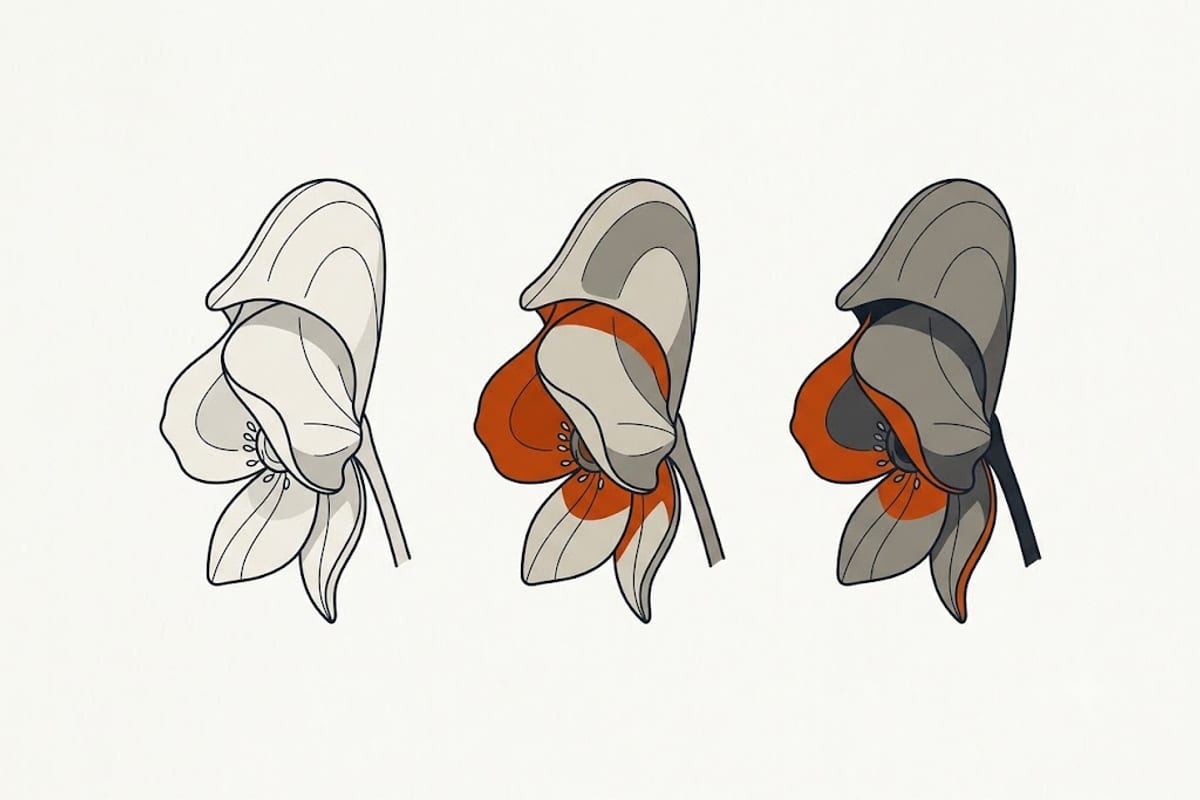
The normal sequence
White and upright, then gradually greening as it matures, then browning at the edges, then dying back entirely. Green is not a warning sign — it is the middle of the flower's life.
Cut the stalk right down at the base once it has browned. Leaving it does no harm to the plant but looks untidy, and removing it lets the plant put energy into leaves.
A plant that flowers, browns, and later flowers again is behaving exactly as it should.
When browning is a symptom
The tell is whether the leaves are affected too.
- Flower browns while every leaf is glossy and green — the flower is finishing.
- Flower browns and leaves have brown tips — water quality or humidity.
- Flower browns and leaves droop or yellow — a root or watering problem, and the flower is the first thing the plant sacrifices.
- Flowers brown very quickly after opening, repeatedly — usually direct sun, or a very dry spot.

Brown leaf tips
Peace lilies are sensitive to a few things that most houseplants shrug off.
- Fluoride and chlorine in tap water. This is a genuine and well-known sensitivity in this species, and it shows as brown tips rather than general yellowing. Letting water stand overnight helps with chlorine; filtered or rainwater helps with both.
- Fertiliser salts. Peace lilies need very little feed. Monthly at quarter to half strength in the growing season is plenty, and a white crust on the soil means it is time to flush the pot.
- Dry air. They come from humid forest floors. Radiators and winter heating produce exactly the conditions they dislike.
Trim brown tips with scissors if you want, following the leaf shape. It is cosmetic — the tissue is dead and will not recover.
The drooping trick, and why not to rely on it
A peace lily wilts dramatically when thirsty and recovers within hours of watering. It is such a reliable signal that many people use it as their watering schedule.
That works, but it costs the plant something. Each wilt-and-recover cycle stresses the roots slightly, and plants watered this way often develop more brown tips over time. Watering when the top few centimetres are dry — before the collapse — gives a better looking plant.
A peace lily that wilts and does not recover after watering has a root problem, and that needs the pot tipped out and looked at.
No flowers at all
Not enough light. Peace lilies survive in dim corners and flower in bright indirect light, and the difference between surviving and flowering is usually a metre or two closer to a window.
Shop plants are often treated with a hormone to force flowering, so a plant bought in bloom may take a year or more to flower again on its own. That gap is normal and is not something you did.
Why supermarket plants often decline at home
Peace lilies sold in supermarkets and garden centres have usually been grown in ideal glasshouse conditions and then treated to flower on schedule. The plant arriving in your house has been at high humidity, under strong even light, watered mechanically, and fed precisely.
Your living room is none of those things, and the plant spends its first few months adjusting rather than growing. Flowers browning, a couple of leaves yellowing, and no new growth for a while are all part of that adjustment rather than signs of a problem.
The practical response is to change as little as possible at first. Do not repot immediately, do not fertilise for the first couple of months, and put it somewhere with good indirect light rather than moving it around looking for the perfect spot. A plant that is already adjusting does not benefit from more change.
Repotting, and when it is actually needed
Peace lilies flower better when slightly snug in their pot, so the usual instinct to repot a struggling plant into something larger often makes things worse. Move up a size only when roots are visibly circling the pot or coming out of the drainage holes, and only in spring.
Fresh mix every couple of years matters more than pot size. Old compost compacts, holds water for longer, and accumulates the fertiliser salts that produce the brown tips this plant is prone to.