Browning on a monstera leaf is two different problems, and the useful distinction is not the shade of brown but the texture and the position.
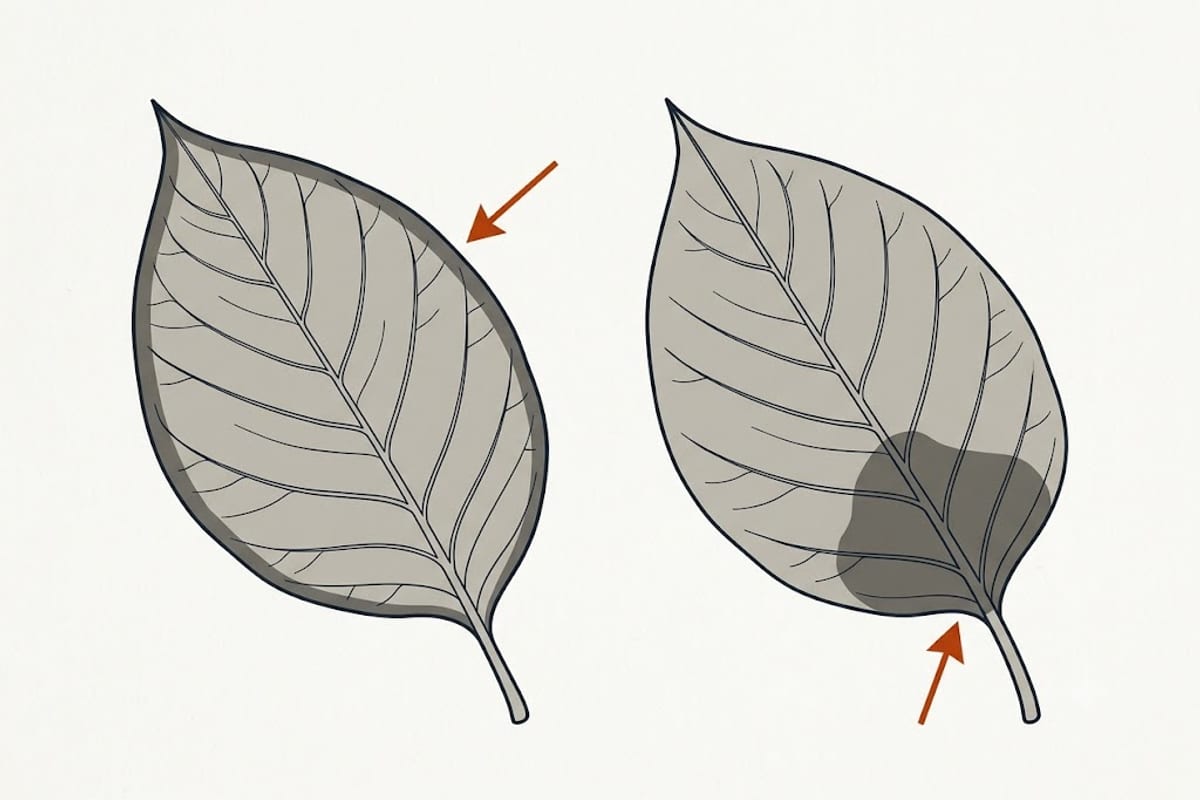
Crisp and papery, around the margin and at the tips
This is water stress at the parts of the leaf furthest from the stem, and in a heated indoor room it is usually about air rather than soil.
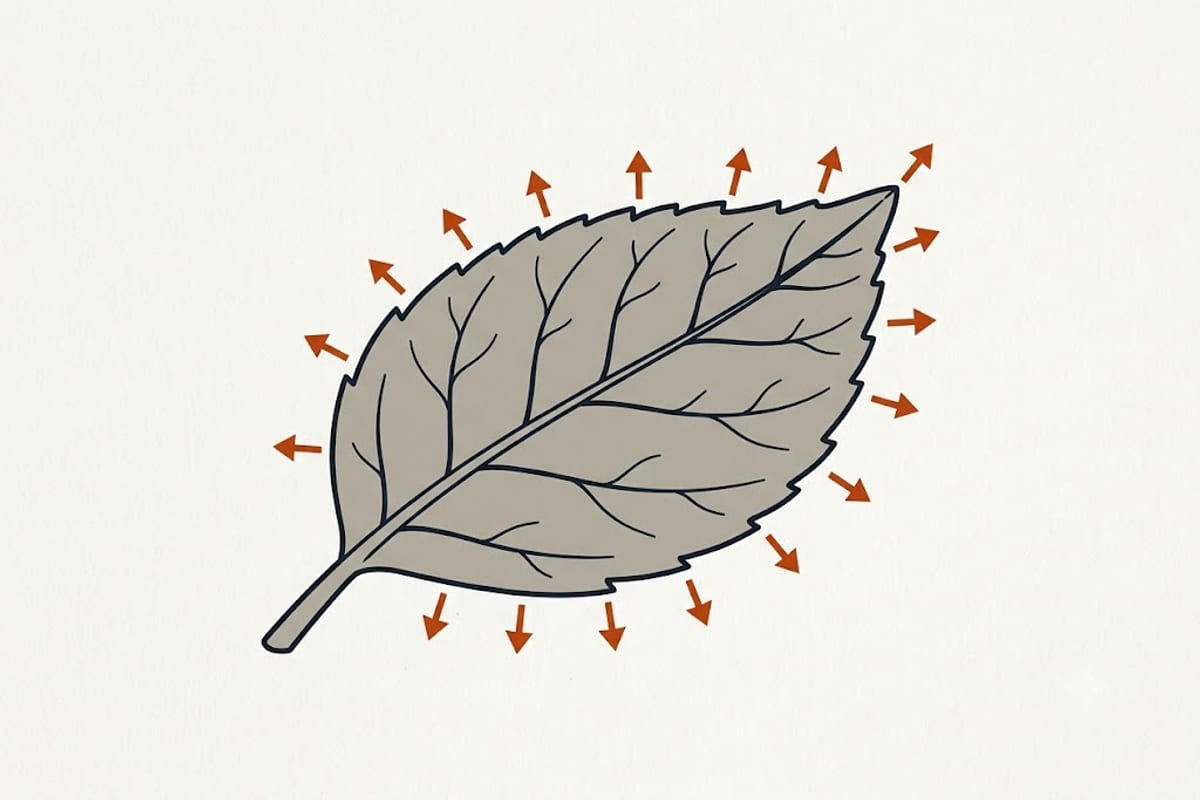
Monstera comes from humid forest understorey. Indoor winter air in a heated house is drier than almost anywhere it would naturally grow, and the leaf loses water at the margins faster than the roots can replace it. The result is a thin dry brown border, sometimes with a yellow band just inside it.
Three contributors, usually together:
A radiator or a heating vent near the plant creates a stream of dry warm air. Accumulated salts from tap water and fertiliser concentrate at the leaf margins as water evaporates, and they damage the tissue there first. And a pot that has been allowed to dry out completely, even once, produces the same pattern a week or two later.
The responses are correspondingly simple. Move the plant away from direct heat sources. Flush the pot occasionally by pouring several pot-volumes of water through it, which washes accumulated salts out. Water before the mix is bone dry rather than after. Grouping plants together raises local humidity more effectively than misting, which evaporates within minutes.
Soft and dark, starting near the stem end
Different problem entirely. Soft brown or black tissue spreading from where the leaf joins its stem, usually on the lowest leaves first, points at the roots rather than the air.
The plant is losing its ability to move water, and the leaves lowest in priority fail first. Take it out of the pot and check: firm pale roots are fine, soft dark ones that pull apart are not. That is root rot, and it needs the dead material cut away and a repot into fresh chunky mix rather than any change to humidity.
Discrete spots with a yellow halo
A third pattern, less common than either of the above. Soft spots in the middle of the leaf, ringed with yellow, spreading over days and appearing on other leaves, indicate a leaf infection rather than an environmental problem.
Remove affected leaves at the stem, stop wetting the foliage, and improve air movement. A still humid corner is where these thrive, which is one of the few situations where more humidity is the wrong answer.
Damage that is not a symptom
A brown mark along one edge only, matching the shape of something, is physical — a wall, a curtain, or being knocked in passing. Monstera leaves bruise and the bruise browns.
New leaves emerging with small brown marks that do not spread are also common and usually mean the leaf was damaged while still furled.
What to expect afterwards
Damaged tissue never recovers. A brown margin stays brown for the life of the leaf, and trimming it is cosmetic.
The only meaningful evidence that a change has worked is the next leaf. Monstera produces one every four to six weeks in the growing season and much more slowly in winter, so the observation window is longer than most people are prepared for.
Misting does not raise humidity
It is worth being direct about this because it is the most common response to brown edges and it is close to useless. A misted leaf is wet for a few minutes and then the water evaporates, leaving the surrounding air no more humid than it was. The effect on the plant lasts about as long as the droplets do.
What does work is grouping plants together so their combined transpiration raises humidity in a small area, standing pots on a tray of damp pebbles with the pot base clear of the water, or running a humidifier in the room. Moving the plant away from a heat source achieves more than any of them.
There is also a cost to misting that is rarely mentioned: leaves that stay wet, in still air, are where leaf infections start. Given that the third pattern above is exactly such an infection, misting a plant with brown spots can make matters worse rather than better.
Reading a leaf that has several things wrong
Older monstera leaves often show a combination — a dry margin from last winter, a bruise from a move, and a yellowing lower leaf from ordinary ageing. Trying to explain all of it with one cause leads to changing everything at once.
The useful discipline is to look only at the newest fully opened leaf. It shows what conditions have been like for the last month, uncomplicated by history, and it is the only leaf that will tell you whether a change has worked.