A calathea gets brown spots, as distinct from brown edges, for four reasons: sunlight focused through water droplets left on the leaf, a fungal or bacterial leaf spot infection, sap-sucking pests, and rot reaching up from wet soil. Each produces a spot with a different shape and position, and the difference matters because two of the causes (scorch and infection) both involve water on the leaf and need it stopped, while the others need something else entirely.
Look at the spot: its shape (round or irregular), its edge (a dry papery rim or a yellow halo), its size (pinpoint or the size of a fingernail), where it sits (the sunny side, scattered, or spreading from the leaf base), and whether new spots keep appearing.
What the spot tells you
| What you see | Most likely cause | Check this first |
|---|---|---|
| Round or oval dry tan spots with pale papery centres, on the upper surface, on leaves facing the window, no spread | Sun scorch through water droplets | Misting habit; hours of direct light |
| Irregular brown spots with yellow halos, sometimes wet-looking at first, appearing on new leaves week after week | Fungal or bacterial leaf spot | Whether foliage is wetted; air movement; spread |
| Tiny pale or brown pinpoint spots in clusters, a dull leaf surface, fine webbing on the underside | Spider mites | Underside with a light; webbing at leaf joints |
| Small brown bumps that scrape off, sticky film | Scale | Stems and midribs |
| Soft dark brown patches spreading from the leaf base or stem, soil wet, sour smell | Rot from overwatering | Root check |
| Brown edges and tips only, no spots in the leaf | Not spots: dry air or water quality | See brown edges |
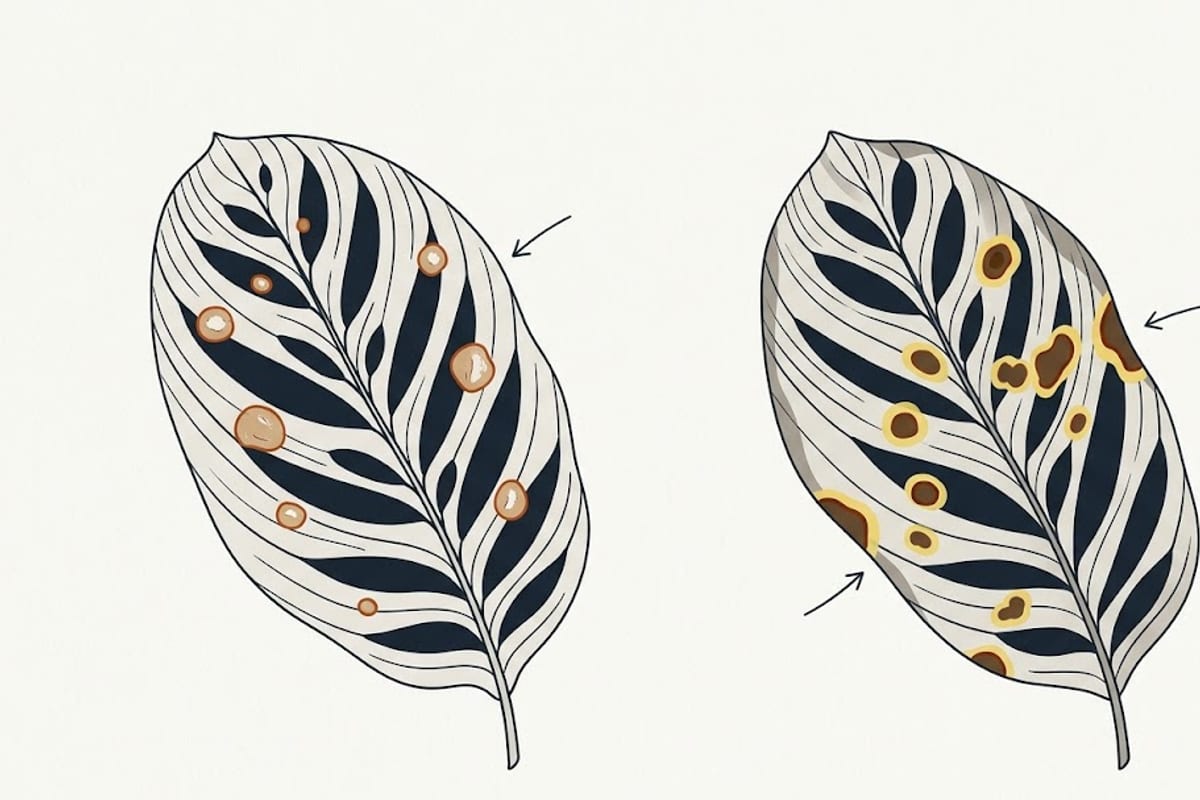
Sun scorch through water droplets
Calatheas are often misted, and a droplet of water on a leaf in direct sun focuses light onto the tissue underneath and burns a small round spot. The spots are dry and tan with pale, papery centres, sit on the upper surface of leaves facing the window, appear after a sunny morning, and do not spread once the leaf dries. Fluoride in tap water left to dry on the leaf can leave similar small marks.
What to do: stop misting, or mist only in the evening when no direct light will reach the leaves. Move the plant out of direct sun to bright indirect light. Existing spots stay; new leaves come in clean.
Fungal or bacterial leaf spot
Infections thrive on calatheas because the plant is kept humid and often wet. The spots are irregular, brown, usually ringed with a yellow halo, sometimes wet-looking or translucent at first and drying later, and they keep appearing on new leaves over weeks. Several spots may merge into a larger dead patch. Still air, crowded plants, and leaves that stay wet overnight all favour them.
What to do: remove the worst-affected leaves and dispose of them. Stop wetting the foliage. Water the soil, not the leaves, and do it in the morning. Space the plant away from others and improve air movement; a small fan in the room helps. Let the top of the soil dry slightly between waterings. A fungicide labelled for houseplants can slow a spreading fungal infection; bacterial spots do not respond to fungicides and are controlled by keeping the leaves dry. Recovery shows as new leaves without spots.
Spider mites
Spider mites are common on calatheas in dry rooms. They pierce individual cells, and the leaf develops tiny pale or brown pinpoint spots in clusters, a dull greyish surface, and, in numbers, fine webbing on the underside and at the leaf joints. Leaves yellow and dry as the damage spreads.
What to do: check the underside of a spotted leaf with a light or a magnifier. Wash the plant with a strong spray of water, then treat with insecticidal soap or diluted horticultural oil on both leaf surfaces, repeating weekly for four weeks. Raise the humidity, which mites dislike, and isolate the plant.
Scale
Scale insects sit as small brown bumps along the midribs and leaf stems and leave a sticky film. They look like spots but scrape off with a fingernail. What to do: wipe them off with a cloth dipped in soapy water or diluted alcohol, treat with horticultural oil, and repeat weekly for a month.
Rot from overwatering
In soil that stays wet, calathea roots and the leaf bases rot, and soft dark brown patches spread up from the base of the leaf stalks into the leaves. The plant droops, the soil smells sour, and new leaves come in small or not at all.
What to do: slide the plant out. Trim brown mushy roots and remove leaves that are soft at the base. Repot in fresh airy mix in a pot with drainage and water when the top of the soil is slightly dry. Calatheas want to be evenly moist, never soggy.
Brown edges are a different problem
Thin crisp browning confined to the edges and tips of the leaves, without spots inside the leaf, is caused by dry air, tap water minerals or inconsistent watering rather than by any of the causes above. That is covered on the calathea brown edges page.
What to do today, by cause
- Sun scorch: stop misting in daylight, move out of direct sun.
- Leaf spot infection: remove the worst leaves, keep foliage dry, water in the morning, improve air movement.
- Spider mites: wash, treat both leaf surfaces weekly for a month, raise humidity, isolate.
- Scale: wipe off, treat with oil weekly for a month.
- Rot: unpot, trim, repot in airy mix, keep moist but never soggy.
Frequently asked questions
Should I remove calathea leaves with brown spots?
Remove leaves with spreading infection spots, so they do not seed new ones, and leaves that are more than half damaged. A leaf with a few scorch spots or old mite damage and plenty of green can stay; it still feeds the plant.
Why does my calathea get brown spots after misting?
Because water droplets on a leaf in direct light focus the sun and scorch a small round spot under each drop, and because leaves that stay wet invite fungal and bacterial spots. If you mist, do it in the evening away from direct light, or raise humidity with a humidifier or pebble tray instead.
Will brown spots on a calathea spread?
Scorch spots and pest damage do not spread once the cause is removed. Fungal and bacterial spots do, to new leaves, until the foliage is kept dry and the worst leaves are removed. If new spots keep appearing week after week, treat it as an infection.
Are brown spots on calathea the same as brown edges?
No. Brown edges come from dry air, tap water or uneven watering and stay at the margin. Spots inside the leaf come from scorch, infection, pests or rot. The two often appear together on a struggling plant but have different fixes.